REVIEW · BOLOGNA HIGHLIGHTS & HIDDEN GEMS TOURS
Private or semi-private tour of the historic center of Bologna
Book on Viator →Bookable on Viator
Bologna’s secrets start at Piazza Maggiore. This small-group historic-center walk keeps you from wandering around with a map, while a licensed local guide charts the architecture, power plays, and university history that shaped the city. You’ll cover major sights in a relaxed rhythm, with time for the side details that usually get skipped.
I love the focus on real storytelling—how each building fits into Bologna’s political life and student culture—and I especially like the way the walk turns toward food culture at the right moments. One thing to consider: some basilica elements may require optional audio support for groups, and the English level can vary a bit depending on the guide day to day, so give yourself a little patience for questions.
In This Review
- Quick hits before you go
- Getting oriented fast: Piazza Maggiore without the map headache
- Fountain of Neptune: Il Gigante and the Pope’s water empire
- Palazzo Re Enzo: a municipal building with a prisoner backstory
- Palazzo d’Accursio / Palazzo Comunale: almost a castle, really a timeline
- San Petronio: Bologna’s main church, and why it doesn’t fit the usual script
- Archiginnasio: the old university building that still feels alive
- Via Pescherie Vecchie: medieval market lanes for wine and street food
- How long it really takes: 2 hours, small-group pacing, and light walking
- Price and value: what you’re paying for (and what you’re not)
- Language and guide style: Isadora’s storytelling, plus one fairness note
- Practical tips to get the most from the walk
- Should you book this Bologna historic center tour?
- FAQ
- How long is the Bologna historic center tour?
- What group size is the tour limited to?
- Is the tour offered in English?
- Where does the tour start?
- Where does the tour end?
- What’s included in the price?
- Are tickets or entry fees included?
- Do I need an audio guide?
- Is there walking involved, and who can join?
- What if the weather is bad?
Quick hits before you go
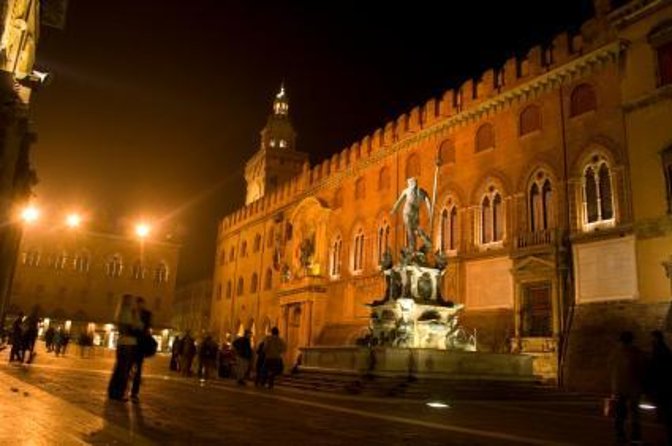
- Piazza Maggiore set the stage: from Lucio Dalla’s Piazza Grande to Bologna’s Pulcinella-flavored side notes
- Fountain of Neptune symbolism: Pope power, four river putti, and Flemish sculptor Giambologna
- Two major palazzi: Palazzo Re Enzo and Palazzo d’Accursio, with a staircase and city-government clout
- San Petronio highlights: Bolognini Chapel, the long sundial, and four crosses
- Archiginnasio time-travel: university customs, coats of arms, old books, and the anatomical theater vibe
- Via Pescherie Vecchie for your stomach: medieval market lanes with historic shops, wine, and street food
Getting oriented fast: Piazza Maggiore without the map headache
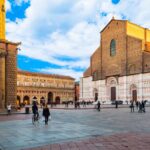
If you’ve ever tried to follow a Bologna map while your brain is juggling towers, arcades, and tiny streets, you’ll appreciate this format. The tour starts where most first-time plans should start: Piazza Maggiore—which is also known as Piazza Grande, as Lucio Dalla liked to call it. From the first minutes, you get the big-picture geography of the center and how the key buildings relate to each other.
Here’s what makes this stop work: the guide doesn’t just point at landmarks. You get context for what you’re seeing—why this square became the city’s “center,” how power and civic life played out here, and where Bologna’s famous character fits in. It’s a smart way to get your bearings fast so the rest of the walk feels logical instead of random.
You can also read our reviews of more private tours in Bologna


Fountain of Neptune: Il Gigante and the Pope’s water empire
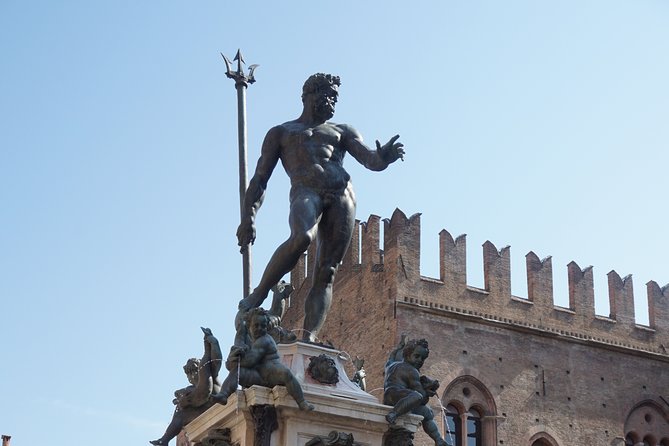
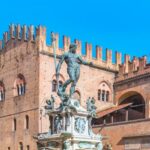
Next comes the Fountain of Neptune, Bologna’s second symbol and locally known as Il Gigante. The story is political in the fun way: the sculptor is Giambologna (a Flemish artist), the project links to Tommaso Laureti, and the work runs from 1563 to 1566. It was commissioned by Pope Pius IV, and the guide’s explanation ties the imagery directly to papal power.
Neptune dominates the waters, and the message is basically: the Pope dominates the world. At the base, you’ll spot four putti representing major rivers—Ganges, Nile, Amazon River, and Danube—depicting the continents as they were understood at the time. If you only take one photo during this stop, take one where you can see the base details too. The “tall statue” is only half the point.
Palazzo Re Enzo: a municipal building with a prisoner backstory
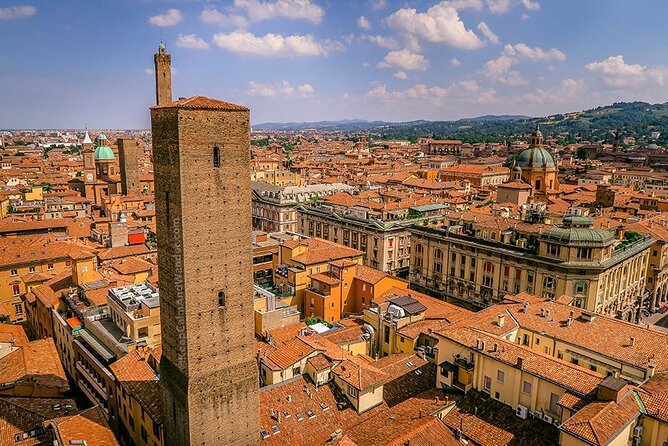
Bologna’s history loves irony, and Palazzo Re Enzo is a perfect example. This building sits in the Piazza Maggiore area and dates to the mid-1200s as an extension of the municipal buildings. Then the story shifts: it’s called Re Enzo because King Enzo of Sardinia was held there as a prisoner following the Battle of Fossalta.
The practical takeaway is how the space would have worked. The ground floor held war machines, while the loggia on the first floor hosted popular council sessions. So even when the city was imprisoning a king, it was also running civic life right above the storage—Bologna never fully commits to one mood.
Palazzo d’Accursio / Palazzo Comunale: almost a castle, really a timeline

The tour then moves into the orbit of Palazzo d’Accursio, also called Palazzo Comunale. This complex is the historic seat of Bologna’s municipality since 1336, built by joining older structures that the city acquired at the end of the 1200s. If you like architecture, this is one of the best stretches because you get both the “what” and the “why”: how buildings expand over time, and what that says about a city that kept growing.
One highlight here is the chance to view areas connected with the inside experience. The guide points out how you climb the 1500s cordoned staircase attributed to Bramante. The staircase is also tied to the idea of a ceremonial ascent—originally imagined for city-government representatives in a triumphal setting.
Inside, the building now hosts a major cultural center. The timeline is a little mind-bending in a good way: from Villanovan huts of the 7th century BC, to Etruscan Felsina, to the Roman Bononia founded in 189 BC. You’re not just seeing “old stuff.” You’re seeing layers—made readable through what’s been excavated and displayed in the right light and setting.
San Petronio: Bologna’s main church, and why it doesn’t fit the usual script
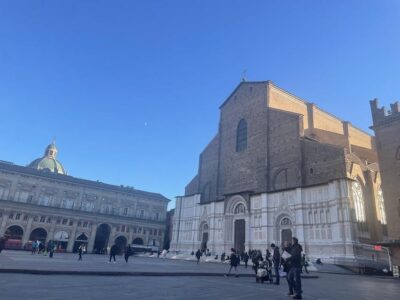
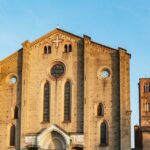
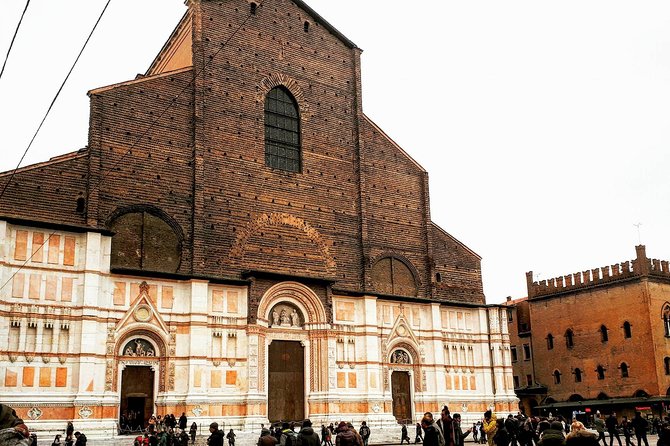
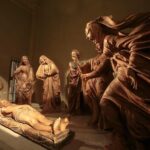
Most visitors expect the biggest church to be the cathedral. Bologna’s Basilica di San Petronio bends that expectation on purpose, and the guide explains why it’s not the standard canonical setup. The basilica is the main place of worship in Bologna, and walking in with context helps you notice details you might otherwise miss.
Inside, you’ll focus on two big elements: the Bolognini Chapel and the sundial connection. The chapel includes the four crosses, and there’s also a famous feature described as the longest sundial in the world. You can stand there and just watch people point at it—then the guide’s explanation makes it feel less like trivia and more like a window into how science, faith, and power used to mix.
Practical note: audio support can come into play. For groups larger than 2 people, renting an audio guide at the entrance is required, and that audio time is noted at about 30 minutes. It’s not included in the tour cost. If you’re the type who hates stopping for extra paperwork, plan to handle this smoothly on arrival.
You can also read our reviews of more historical tours in Bologna

Archiginnasio: the old university building that still feels alive
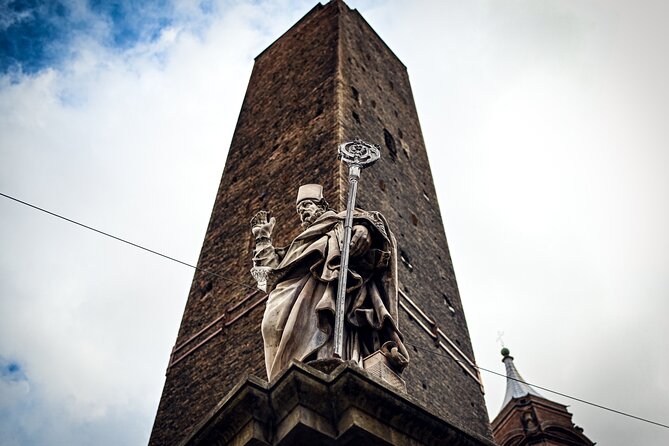
After San Petronio, the tour heads to Archiginnasio, Bologna’s student-and-professor hub for about three centuries. This is the building where you can feel Bologna’s academic identity in a physical way. The university is the oldest in the world, and the guide uses that fact not as a brag, but as a lens for what you see.
Inside, you’ll notice heraldic coats of arms, illuminated manuscripts, and ancient books. You also get a sense of old student and professor customs—plus details like the anatomical theater with its wooden figures. If you’re even a little curious about how teaching worked before modern classrooms, this stop pays off.
Best part for your planning: the tour keeps your visit from turning into museum wandering. You’re given the key anchors, then you can look around with purpose. That means less “What am I looking at?” and more “Oh, that’s why this matters.”
Via Pescherie Vecchie: medieval market lanes for wine and street food
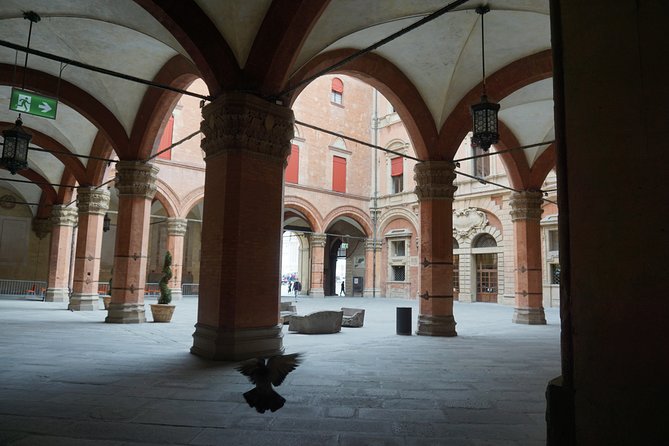
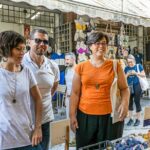
Last stop: Via Pescherie Vecchie, the old central market of Bologna. In the Middle Ages, this area functioned as the main trading center, and now it’s a maze of historic shops where you can snack, sip, and browse. The tour time here is short, about 15 minutes, but it’s exactly the right amount for tasting the vibe and deciding where you’ll go next.
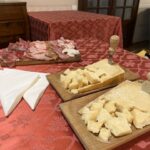
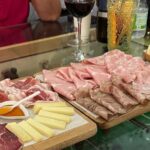
You’ll notice how the street still behaves like a market even if you’re not buying anything. Expect a cluster of places to grab a glass of wine and street food while you weave through the narrow lanes. The guide’s role here matters too: you’re not just shown the lane—you’re given ideas for what to eat and what style of stop fits your schedule.
How long it really takes: 2 hours, small-group pacing, and light walking
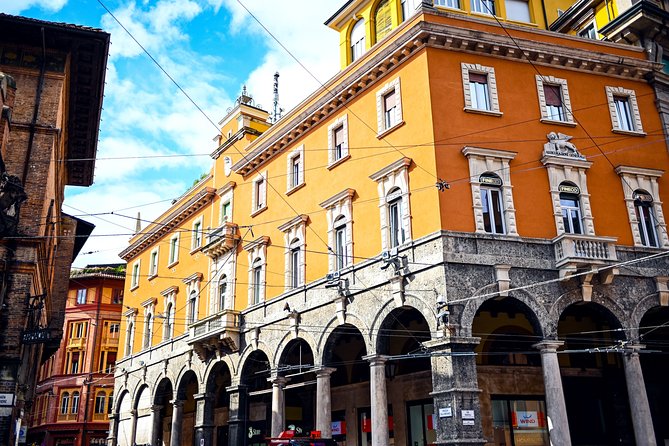
The tour is listed at about 2 hours, but your experience will depend on crowd flow and how many questions you ask. The walking is described as light walking, and the tour is set up for most people, with a maximum of 10 travelers for a more intimate pace.
This matters for value. With a small group, the guide can slow down when you want details, and they can speed up if you just want the key points and photos. One of the strongest themes in the tour feedback is that guides keep a good pace—enough information to make the city click, not so much that it feels like homework.
The walk also ends where it starts—back at the meeting point—so you’re not forced into a confusing transfer at the end of your sightseeing day. That’s a small thing that saves time.
Price and value: what you’re paying for (and what you’re not)
At $132.15 per person, this isn’t a budget “wander with a poster” tour. You’re paying for a licensed guide, a route that skips the map effort, and a tight selection of major stops: Piazza Maggiore, Fountain of Neptune, palazzi, San Petronio, Archiginnasio, and Via Pescherie Vecchie.
Admission details are mixed by stop. Many elements connected to the Piazza and market area are described as free, while San Petronio is specifically noted as having admission ticket not included. Audio support is also not included and may be required for groups larger than 2. If you like having everything handled for you, budget a bit extra for that audio step at the basilica entrance.
So is it worth it? For first-time visitors, I think the value comes from compression. You’re getting a guided understanding of the center’s “why,” not just a checklist of “what.” And in the best cases, the guide also gives food and drink suggestions that help you eat like a local instead of choosing the closest place to your hotel.
One reality check: a reviewer noted it may feel slightly overpriced for what you get, especially if you’re comparing against cheaper cities in Italy. Bologna can be pricey, so it’s not a surprise. If you’re price-sensitive, this is still a good option when you can’t spare a full day for planning.
Language and guide style: Isadora’s storytelling, plus one fairness note
The guide name that shows up consistently is Isadora. Across feedback, the common thread is friendly, local, and focused on blending history with practical advice—especially food recommendations. The pacing is described as relaxed, and the tour is set up so you see major sites and also get guided through smaller lanes you might skip on your own.
English seems generally solid, but one review mentioned it wasn’t 100% fluent at every moment. That’s not a deal-breaker if you stay curious and you speak up with questions. Still, if language precision matters for you, plan to go in with patience. The bigger win here is the structure and the way the guide makes the city feel like a connected story.
Practical tips to get the most from the walk
A few things will make this tour smoother right away:
- Wear comfortable walking shoes. Even “light walking” in a historic center adds up fast.
- Bring a charged phone for the mobile ticket.
- If you’re visiting with more than 2 people, plan on the audio guide requirement at San Petronio entrance.
- Keep a little appetite left for Via Pescherie Vecchie. Snacks aren’t included, but the area is built for quick bites.
Also, a quick strategy: ask the guide for one lunch plan and one snack plan. The tour naturally moves toward food culture, and having a short “where should we go next” list will save you time after the walk ends.
Should you book this Bologna historic center tour?
Book it if you want a smart first pass through Bologna’s center and you’d rather spend your energy looking at buildings than studying maps. It’s especially worth it when you want the university side of Bologna made understandable—San Petronio plus Archiginnasio is a great combo—and when you care about getting local food ideas without guessing.
Skip it if you’re traveling with a very tight schedule and you hate paying extra for guided interpretation at multiple major stops. Also think twice if you’re extremely sensitive to audio-guide steps or you dislike any required extras inside churches.
If you’re in the middle—curious, on your first visit, and ready for a well-paced walk—this one is a strong pick. You’ll leave with the city’s layout in your head and a much better sense of what you’re looking at when you wander back out on your own.
FAQ
How long is the Bologna historic center tour?
The tour lasts about 2 hours.
What group size is the tour limited to?
The maximum group size is 10 travelers.
Is the tour offered in English?
Yes, it is offered in English.
Where does the tour start?
It starts at Libreria Giannino Stoppani, Via Rizzoli, 1/f, 40125 Bologna BO, Italy.
Where does the tour end?
The tour ends back at the meeting point.
What’s included in the price?
You get a guided tour with a licensed guide and RC insurance, and you’ll use a mobile ticket.
Are tickets or entry fees included?
Some stops are noted as free, but San Petronio is noted as not included for admissions. Audio guidance is also not included.
Do I need an audio guide?
Audio guides are optional, but for groups of more than 2 people an audio guide rental at the entrance of the basilica is necessary. Audio is not included in the tour cost.
Is there walking involved, and who can join?
There is light walking, and most travelers can participate. Service animals are allowed, and it is near public transportation.
What if the weather is bad?
The experience requires good weather. If it’s canceled due to poor weather, you’ll be offered a different date or a full refund.