REVIEW · BOLOGNA HIGHLIGHTS & HIDDEN GEMS TOURS
Bologna: Private Top Historical Sites Guided Walking Tour
Book on GetYourGuide →Operated by TUI Musement · Bookable on GetYourGuide
Bologna is a city where stone tells stories. On this private Top Historical Sites walking tour, you’ll connect major landmarks into one clear medieval narrative. I love how the route strings together civic power, religious art, and everyday food life in just two hours, and I also like that you’re not stuck reading signs—you get a guide who can point out what matters.
One thing to keep in mind: the tour does not include entry to Archiginnasio, and you’ll need to pay a site fee (€3.50 per person) if you want to go inside.
In This Review
- Key highlights at a glance
- Bologna in 2 hours: why this route works
- Piazza Maggiore and Neptune’s Fountain: the civic heartbeat
- Palaces and towers: how power shows up in stone
- San Petronio: Gothic scale and Cassini’s sun dial
- Portico del Pavaglione and the Archiginnasio university legacy
- Mercato di Mezzo: the medieval city still eating today
- Santo Stefano: The Seven Churches and the quiet ending
- How the 2-hour private walk feels in practice
- Price and value: is $147.27 per person worth it?
- Who this tour suits best
- Should you book the Bologna private historical sites walk?
- FAQ
- What’s the duration of the Bologna private historical sites guided walking tour?
- Where do I meet the guide?
- Is Archiginnasio entrance included?
- What languages is the live guide available in?
- What’s included in the price?
- Is luggage allowed?
- Does the tour run in the rain?
Key highlights at a glance
- Piazza Maggiore start point energy: the civic heart of old Bologna, with big palaces and the Neptune fountain nearby
- San Petronio’s Gothic interiors: including the Cappella Bolognini and an astronomer-linked sun dial by Cassini
- Portico del Pavaglione walk-by viewpoints: architecture and university heritage in the same stretch
- Mercato di Mezzo food shops: a sensory break that keeps the tour grounded in real local life
- Santo Stefano complex (The Seven Churches): Romanesque churches that shift the mood from grand to peaceful
Bologna in 2 hours: why this route works
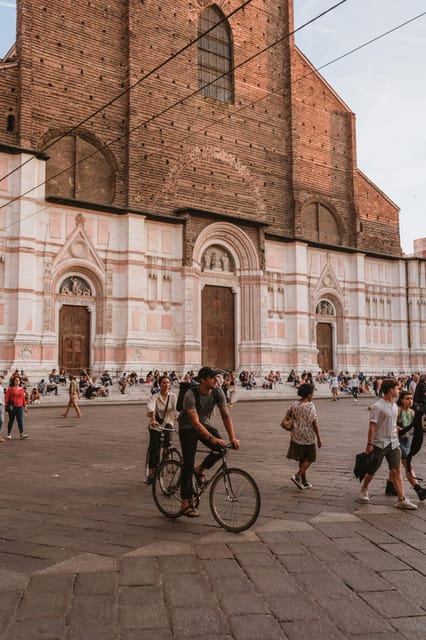
If you only have a morning or afternoon in Bologna, this style of tour is one of the best ways to get your bearings fast. You’ll cover the medieval core on foot, moving from public squares to major churches to food-focused lanes without feeling like you’re crisscrossing the city.
What makes it especially useful is the way the stops fit together. You start with Bologna’s civic identity in the great square, then you shift into religion and art at San Petronio, then you walk through the arcades and university buildings, and finally you end in the Santo Stefano complex—often associated with the Seven Churches. It’s not just a checklist. It’s a logic.
And since it’s a private group, you get a more conversational pace. If something catches your attention—like a particular façade detail or a symbolic artwork—you’re more likely to get it explained than you would on a larger tour.
You can also read our reviews of more walking tours in Bologna


Piazza Maggiore and Neptune’s Fountain: the civic heartbeat
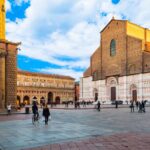
You meet your guide in front of Biblioteca Salaborsa, with a TUI flag in hand. From there, the walk leads you right into the action at Piazza Maggiore, Bologna’s signature central square.
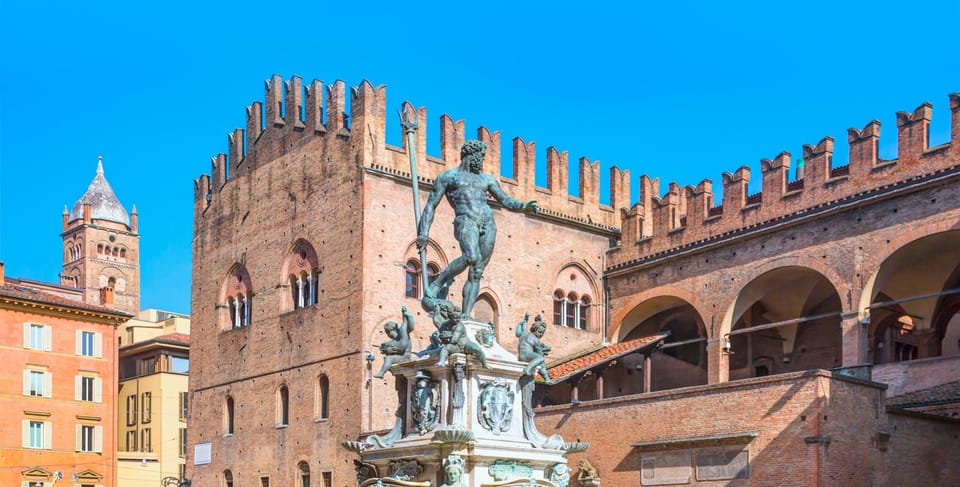
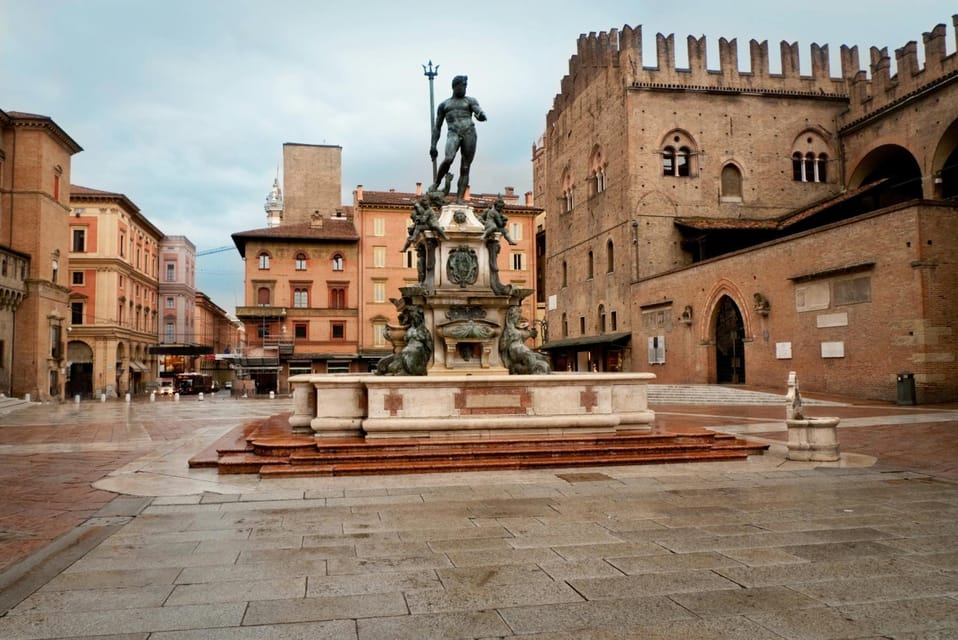
This is where the city’s “why” shows up. You’ll see grand medieval civic palaces facing the square: Palazzo di Re Enzo, the Palazzo of the Notaries, and the Palazzo dei Banchi. They’re not just pretty backdrops; they help explain how Bologna organized power—government, legal life, and commerce all clustered here.
Then comes the Fountain of Neptune, topped by late Renaissance sculpture by Giambologna. Even if you’ve seen fountains elsewhere, this one hits different because the sculpture is framed by the square’s medieval buildings. Your guide will help you notice what you’d otherwise miss—how the artwork becomes part of the city’s statement about authority and prestige.
Tip for your photos: stand back a little before you shoot. The square is wide, and Neptune looks best when you can catch both the fountain and the surrounding façades in the same frame.
Palaces and towers: how power shows up in stone
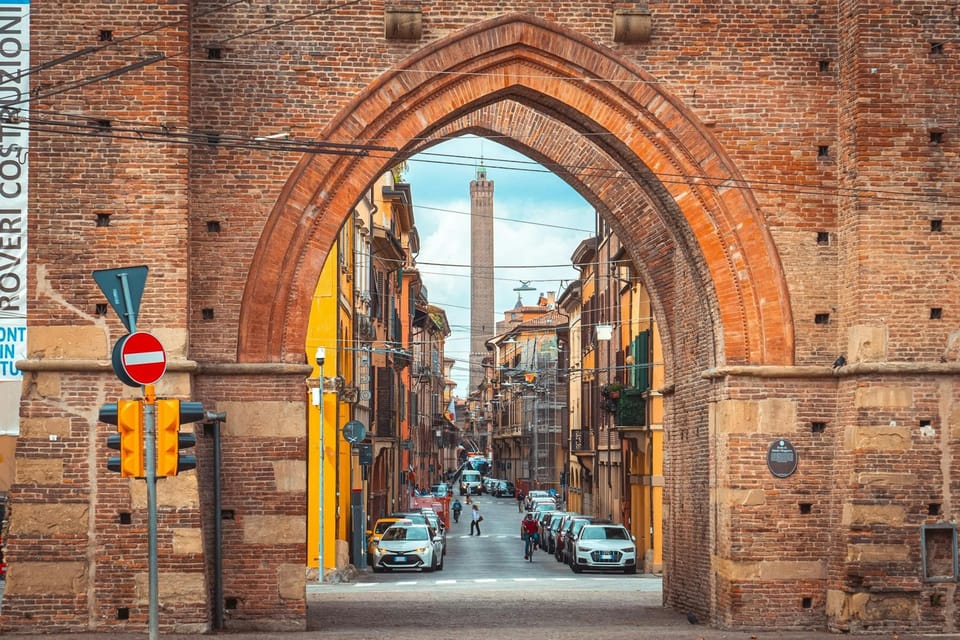
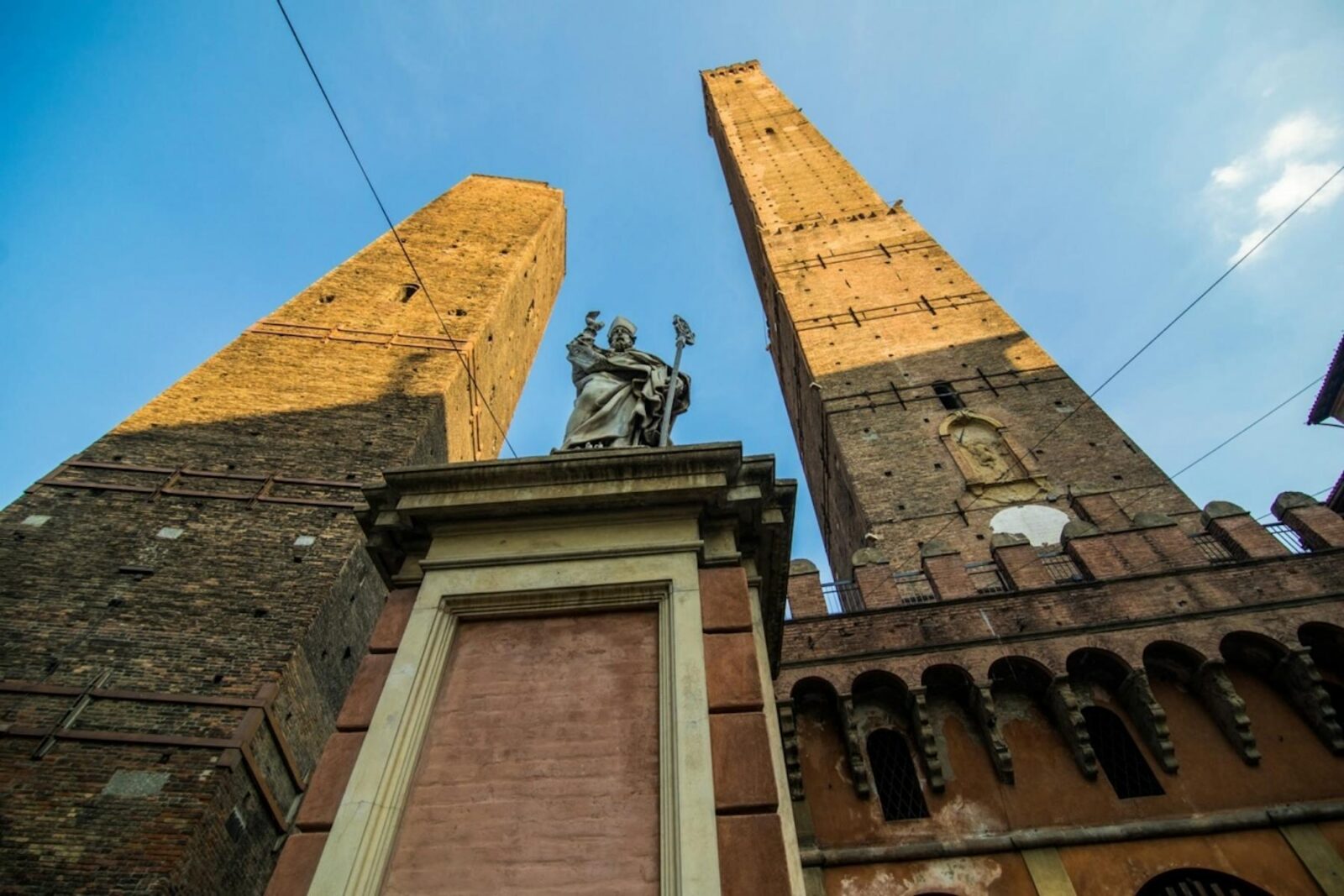
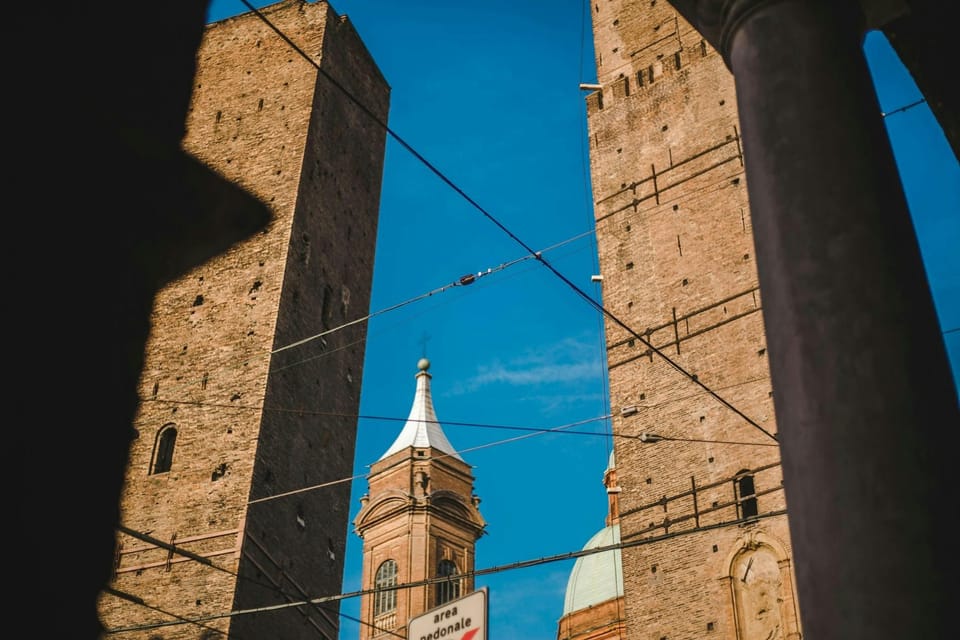
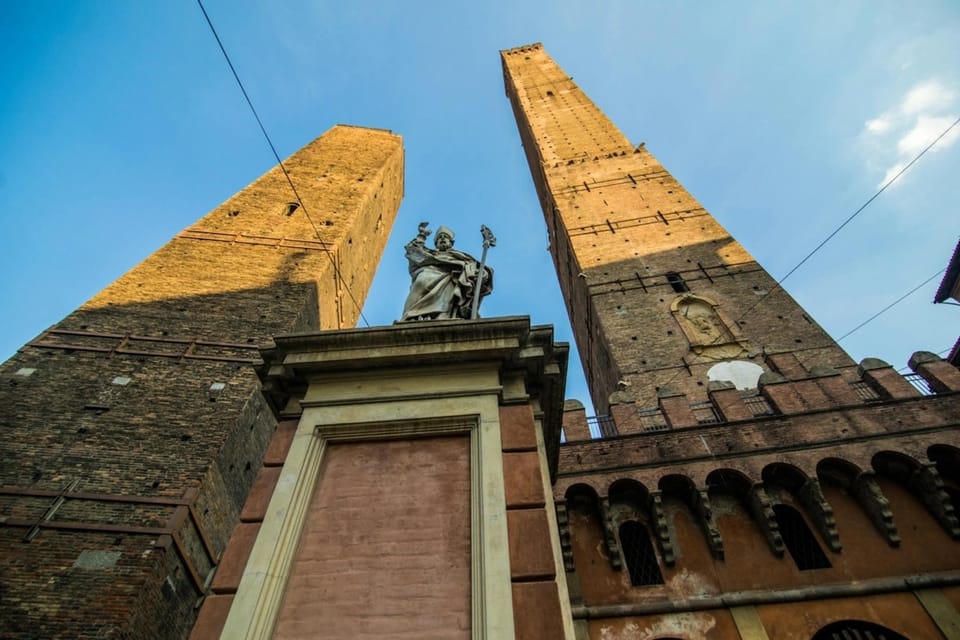
After Piazza Maggiore, you’ll pass two towers of Bologna. Even when they’re not the main focus, towers act like orientation markers—vertical reminders that this city once competed in height, influence, and visibility.
From there, the palaces keep the story going. You’ll walk by Palazzo Re Enzo and the Palazzo dei Notai and Palazzo dei Banchi, with guided moments that help translate architecture into meaning. Think of it like turning the city’s skyline into a timeline. Bologna’s medieval center isn’t just old; it’s readable.
One of my favorite aspects of this part is the balance between “look up” and “look closer.” You get big visual impressions, but you also get reasons behind the details. That makes it far easier to remember later, because you’re not just seeing landmarks—you’re learning what each building was for.
San Petronio: Gothic scale and Cassini’s sun dial
Next, you’ll shift from civic power to spiritual and artistic grandeur at Basilica of San Petronio. This is the stop where the architecture really starts doing the talking.
San Petronio is famous for its Gothic impact, and the tour gives you time to register what that means inside. You’ll see the Cappella Bolognini with late Gothic frescoes, where color and narrative detail reward slower looking. Even if you’re not a museum person, it’s the kind of interior that makes you stop mid-walk and crane your neck.
Then there’s the sun dial designed by astronomer Cassini. The idea alone is a great conversation-starter: science and art sitting side by side in a major church space. Your guide helps you understand why that matters, instead of leaving you to figure it out from a small label on a wall.
Practical note: churches mean different light levels than the square. Bring patience for slower viewing, and expect you’ll want a minute or two to step back and take it all in.
Portico del Pavaglione and the Archiginnasio university legacy
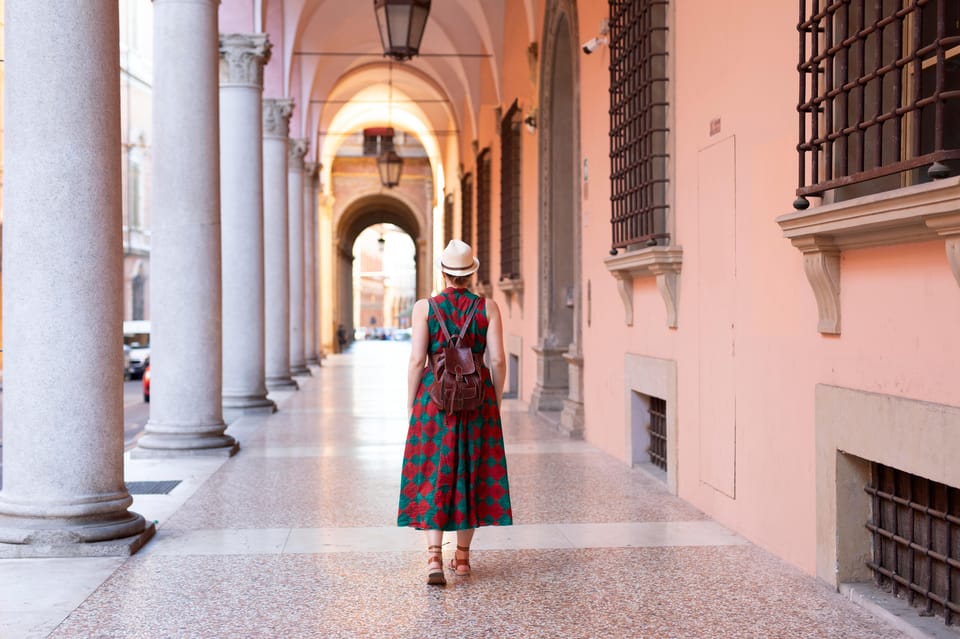
From the basilica, you’ll walk along the Portico del Pavaglione. This is one of those Bologna features that changes how you experience the city: covered arcades, shopfront rhythms, and an everyday flow that feels both historic and still in use.
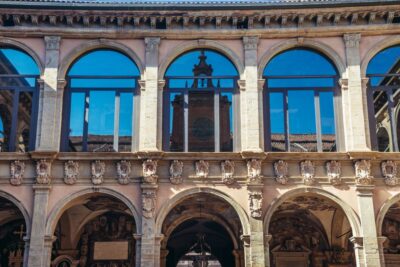
As you pass through this area, you’ll also come to the Archiginnasio Palace, Bologna’s former university building. This is where Bologna’s identity as a learning center becomes visible in a very concrete way.
Inside the university heritage (and this is the part you should plan for), you’ll see why the Archiginnasio is so closely tied to students and academic life. The building is known for student coat of arms—nearly 6,000 of them. It’s a visual record of people and time, not just a single landmark moment.
Here’s the one cost consideration again: Archiginnasio site entry fee is not included, and it’s €3.50 per person. If you’re the type who loves historical interiors, factor that into your budget and don’t treat it like an optional add-on.
You can also read our reviews of more guided tours in Bologna


Mercato di Mezzo: the medieval city still eating today
After churches and palaces, the tour turns toward Mercato di Mezzo, Bologna’s historic market district. This is a key emotional switch: from monuments to daily life.
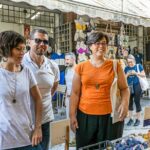
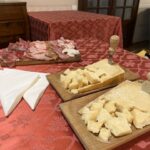
You’ll move through lanes where the atmosphere feels lively and local, filled with the aromas and colors of traditional food shops. You’re not just walking through a pretty neighborhood—you’re experiencing the kind of urban space that keeps a historic center alive.
Why I like this stop: it prevents the tour from turning into pure architecture sightseeing. Even if you don’t plan to do a full meal here, you’ll get a sense of Bologna’s food culture in the exact place where commerce used to (and still does) happen.
If you want to make this part practical, bring a small wallet for a snack. Even a quick tasting can turn what you learned about Bologna’s food culture into something you can remember on the way back to your hotel.
Santo Stefano: The Seven Churches and the quiet ending
The last stop takes you to Piazza Santo Stefano, where the Santo Stefano complex sits—the cluster often called the “Jerusalem of Bologna” and also known as The Seven Churches.
This ending matters because it changes your pace and mood. Earlier stops—Piazza Maggiore, civic palaces, the scale of San Petronio—push you into grandeur. Santo Stefano is more about intimacy and calm. Even as you’re still moving through an organized tour route, the area feels designed for reflection.
Architecturally, you get a pocket of small Romanesque churches that create a different texture of Bologna’s medieval past. Your guide will help you make sense of the complex rather than treating it as seven separate small stops with no connection.
If you’re the kind of traveler who enjoys feeling the shift in a city’s “tone,” this is the portion that tends to stick in memory.
How the 2-hour private walk feels in practice
This is a short tour, so you should expect a steady walking pace. The upside is that it doesn’t drag. In two hours, you’ll hit the core sites without the fatigue that comes from trying to do everything solo.
Meeting point is straightforward: you meet your guide in front of Biblioteca Salaborsa, and your guide will hold a TUI sign/flag. The tour ends back at the same meeting point. So you can plan a meal, museum visit, or late afternoon plans without worrying about getting stuck across town.
A couple more practical notes from the tour rules:
- No luggage or large bags are allowed.
- The tour runs even when raining, but if it’s exceptionally heavy rain, it may be cancelled for a full refund.
I’d bring a compact umbrella or a light rain layer anyway. Bologna weather can be moody, and you’ll appreciate staying comfortable while you keep moving.
Language-wise, you can book the guide in Spanish, English, French, German, or Italian, so you’re not stuck with one default voice.
Price and value: is $147.27 per person worth it?
At $147.27 per person for a private 2-hour walking tour, the value depends on what you want from your Bologna day.
Here’s what you get for your money: a guide plus a focused circuit through major medieval sites—Piazza Maggiore, major palaces and civic landmarks, a big church interior at San Petronio, the Portico del Pavaglione area, the historic market district, and the Santo Stefano complex. That’s a lot of ground and meaning packed into one guided block.
If you tried to do this alone, you could certainly see the places. But the key difference is interpretation. The guide is what turns a fountain, a church, and a palace into a coherent story. You also avoid decision fatigue: you don’t have to figure out what to prioritize, which entrances to care about, or how to connect things thematically.
Two small budget reminders:
- Archiginnasio entry is extra (€3.50 per person).
- You’ll want to bring comfortable shoes since it’s a walking tour.
Overall, I’d call it good value if you’re after “high signal” sightseeing—seeing fewer things but understanding them better.
Who this tour suits best
This fits you if you want a guided taste of Bologna’s medieval center without spending your whole day in transit. It’s especially strong for:
- first-timers who need structure and context
- people who like architecture but also want the story behind it
- food-minded travelers who still want markets included, not just churches
It’s less ideal if you have mobility limitations. The tour is not suitable for people with mobility impairments, and since it’s a walking route through historic areas, you should choose another option if accessibility is a concern.
It’s also a great match for couples, friends, or solo travelers who want privacy but don’t want the burden of planning every step.
Should you book the Bologna private historical sites walk?
If you’re torn between doing Bologna on your own and booking a guide, this is the kind of tour that tips the scale. You’ll get the big-picture medieval story of Bologna in a compact route, with enough time at key sights—especially San Petronio—that it doesn’t feel rushed.
Book it if you:
- want a guided path through major landmarks
- like learning the meaning behind façades and interiors
- want the tour to end somewhere atmospheric like Santo Stefano
Skip it if you:
- prefer self-paced exploring with no guide
- don’t want to add the €3.50 Archiginnasio fee
- need an accessibility-friendly route
For most visitors, this private format makes Bologna feel less like a list of stops and more like one connected walk through the city’s identity.
FAQ
What’s the duration of the Bologna private historical sites guided walking tour?
The tour lasts 2 hours. Starting times vary, so you’ll need to check availability.
Where do I meet the guide?
Meet your guide in front of Biblioteca Salaborsa, and the guide will hold a TUI sign/flag.
Is Archiginnasio entrance included?
No. Archiginnasio site entry fee is not included, and it costs €3.50 per person.
What languages is the live guide available in?
The live guide is available in Spanish, English, French, German, and Italian.
What’s included in the price?
The tour includes a guide and the walking tour.
Is luggage allowed?
No. Luggage or large bags are not allowed on this tour.
Does the tour run in the rain?
Yes, the tour takes place even when it’s raining. If there is exceptionally heavy rain, the tour may be cancelled and you’ll receive a full refund.