A quiet city turns into a game. This Bologna self-guided secrets quest uses an app and 14 puzzle challenges to steer you from square to square, with a story that makes you stop and look up. I like that it’s easy to pause and resume on your own schedule, so you can take breaks without falling behind.
Two things that really work for me: it’s designed to be played without an internet connection, and it’s built for groups that want freedom instead of a fixed walking pace. The one thing to consider is tech hiccups: a small number of people reported trouble downloading the app or mismatched map links, so it’s smart to test your setup before you start.
In This Review
- Key Points That Matter Before You Go
- Price and Value: What $6.60 Buys in Bologna
- Offline App Adventure: How It Works (and How to Avoid Frustration)
- Where You Start and Finish: The Route Ends Near Via Giuseppe Petroni
- Entering the Quest at Piazza di Porta Ravegnana and the Two Towers Area
- Palazzo Isolani and Piazza Santo Stefano: Porticos, Power, and Family Names
- Piazza Galvani and the Silk-Market Past Near Archiginnasio
- The Quadrilateral: Craft Streets, Medieval Arches, and Old Pharmacies
- Neptune’s Fountain: Bronze Details and Giambologna’s Story
- Porta Nova and the Torresotti Ring: Reading Bologna’s Wall Logic
- Torre Prendiparte: Fortress Bricks and 12th-Century Defense
- Piazza Giuseppe Verdi: Student Life and the Il Giro di Bologna Vibe
- How Long It Really Takes (and Why Your Group’s Pace Matters)
- Who This Quest Is Best For (and Who Might Prefer Something Else)
- Should You Book Bologna Secrets Quest? My Take
- FAQ
- FAQ
- How long does the Bologna secrets quest take?
- Is this experience offered in English?
- Do I need an internet connection to play?
- Where do I start and where does it end?
- What is included with the quest?
- Do I need a physical tour guide?
- What does it cost?
- When can I do it?
- Can I cancel and get a full refund?
Key Points That Matter Before You Go
- Offline-friendly app play means you can keep your phone simple and stop worrying about data.
- 14 short challenges turn major landmarks into questions you solve while you wander.
- Flexible pacing lets you pause for gelato, bathroom breaks, and kid stamina.
- Start at the Two Towers area and move through iconic squares, fountains, and wall remnants.
- Private activity means it’s only your group doing the quest (no joining strangers mid-route).
- Good value for families and friends at a low per-person price with mobile access.
Price and Value: What $6.60 Buys in Bologna
At $6.60 per person, this is priced like an inexpensive activity, not a full-blown guided tour. For that money, you get more than “points of interest.” You get a structured route, a storyline, and puzzle prompts that help you notice details you’d normally miss while rushing between photos.
The time target is about 1 hour 30 minutes, but that’s a planning estimate. If you read carefully, stop for snacks, or get curious about architecture, you may stretch it longer—and that’s still part of the value. You can also pause and resume, so you’re not punished for taking real-life breaks.
If you’re traveling with kids or a mixed group, the cost-to-flexibility ratio is strong. Everyone can play at their own tempo, and you’re not stuck listening to one voice for the whole walk.
You can also read our reviews of more guided tours in Bologna



Offline App Adventure: How It Works (and How to Avoid Frustration)
This quest is app-based, delivered through a mobile access code, and it’s designed to work without an internet connection to play. That’s a big deal in Italy, where data can be pricey and connections can be flaky in older streets.
Here’s how to set yourself up for smooth play:
- Arrive with your phone charged.
- If possible, open the app and confirm you can access your quest before you leave your hotel.
- Once you start, keep your focus on the clue prompts rather than constantly switching screens.
A small number of users ran into problems like download trouble or map links not matching the clue locations. If something feels off, don’t guess wildly. Use the contact method provided by the provider and include details about where you got stuck (you’ll typically get a faster fix with specifics). I also recommend taking a quick screenshot of key screens from the start, just in case.
Where You Start and Finish: The Route Ends Near Via Giuseppe Petroni
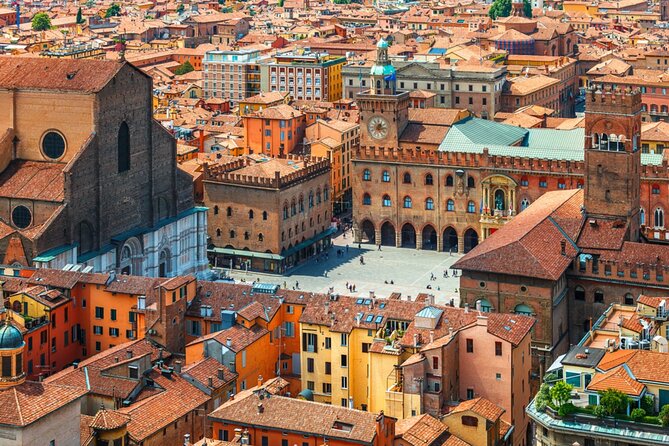
Your quest starts at Piazza di Porta Ravegnana, by the Two Towers (Two Towers area). The route then sends you through Bologna’s center and ends at Via Giuseppe Petroni, 37.
That matters because you can plan your day. If you’re already in the Two Towers area, you’re ready to go. And if you’re staying near the city center, finishing near Via Giuseppe Petroni can make it easier to wrap up and transition to dinner without backtracking across town.
Also note the schedule window: the experience is available daily from 12:00 AM to 11:59 PM within the listed dates. That means you’re not forced into one tight time slot. Pick a moment when you want to walk—late morning, golden hour, or whenever the kids finally stop bouncing off the walls.
Entering the Quest at Piazza di Porta Ravegnana and the Two Towers Area
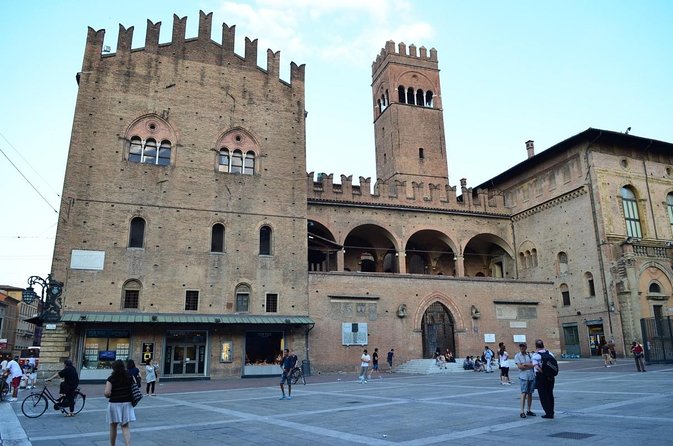
The adventure begins at Piazza di Porta Ravegnana, originally connected to Porta Ravennate. This is one of those Bologna spots where the city’s medieval layer feels close to your feet. It’s about four blocks east of Piazza Maggiore and the cathedral area.
What makes this start good is the challenge format. Instead of a lecture, you’re prompted to look around to find answers and advance to the next location. That’s where a puzzle quest is better than a standard walk: it forces you to take in the square’s structure and nearby landmarks.
Practical tip: this is a good place to steady your phone and start slow. The first questions can set the pace for the whole game, so don’t multitask with a crowded street and a half-charged battery.
Palazzo Isolani and Piazza Santo Stefano: Porticos, Power, and Family Names
Next up is the Palazzo Isolani on Via Santo Stefano #16, facing Piazza Santo Stefano. This palace mixes Gothic and Renaissance features, and the quest uses the site to push you into the story behind the architecture.
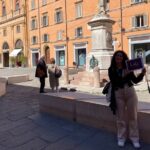
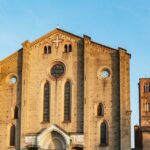
Then you step into Piazza Santo Stefano, a square used for cultural events, flea markets, and concerts, with porticos along both long sides. The basilica occupies the short side, and to the left sits a complex of buildings linked to the powerful medieval Isolani family.
What you gain here is a sense of cause and effect. The Isolani weren’t just names on a plaque; they’re tied to the way the area developed. The quest’s structure nudges you to connect family, buildings, and street layout without needing a guide to explain every line.
A small consideration: if you’re sensitive to crowds (markets and events can bring people), plan your start time accordingly. The quest is flexible, but you still need space to look at details and solve puzzles.
You can also read our reviews of more tours and experiences in Bologna



Piazza Galvani and the Silk-Market Past Near Archiginnasio
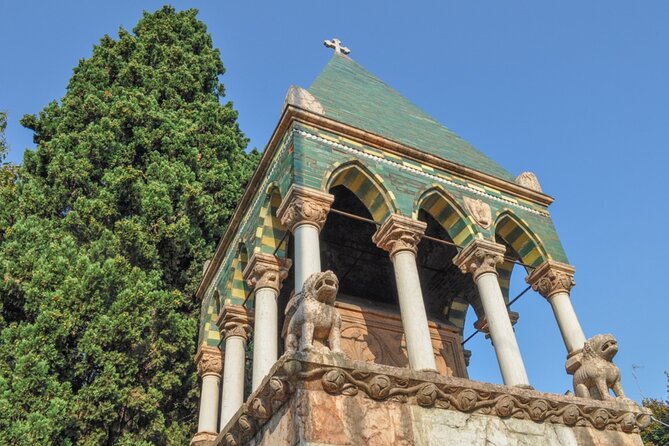
At Piazza Galvani, the storyline points to the shift from commerce to civic life. From the 15th to the 17th century, the space was dedicated to the silk market. Later, Palazzo dell’Archiginnasio started being built from 1563, and the surrounding block was demolished to open up a larger piazza with more prominence.
This is a helpful historical pivot because it explains why the square feels like it does. You’re not just seeing buildings; you’re seeing how Bologna rearranged space for changing needs—trade first, then education and institutional importance.
Expect the quest to keep you moving quickly through the area. The stop isn’t long on paper, but that’s ideal for keeping this activity within the 1.5-hour window. If you want deeper reading, take a break while you’re paused in the app, then return when you’re ready to continue solving.
The Quadrilateral: Craft Streets, Medieval Arches, and Old Pharmacies
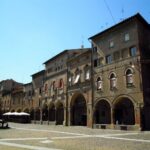
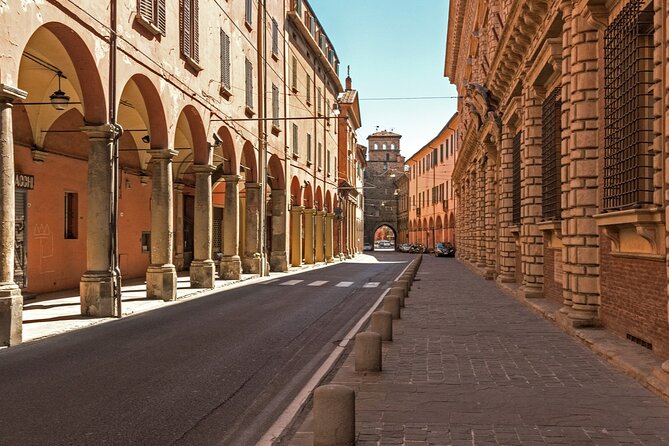
One of the most fun parts of this route is the push into the Quadrilateral, the tight, historic market area with medieval trading roots. The quest guides you past the tall, perspective archways and into the narrow alley network that stretches behind Piazza Maggiore.
Here’s what makes it worth your time, quest or not:
- Specialized shops and categories of goods have long traditions.
- Some storefronts and interiors appear to be handed down through generations.
- The area has that distinctive “holes” feature tied to the medieval arcade style.
- You might even spot historic chemist shops with the atmosphere of old pharmacies.
This is where a puzzle quest shines again. You’re not just walking; you’re looking for clues that connect the feel of the market to its physical details. And if you’re traveling with kids, this section often works because it’s visual and filled with small discoveries.
Bring a little patience here. Streets are narrow and crowds can show up. If your group needs shopping time, pause the quest and do that on purpose rather than forcing puzzle solving through congestion.
Neptune’s Fountain: Bronze Details and Giambologna’s Story
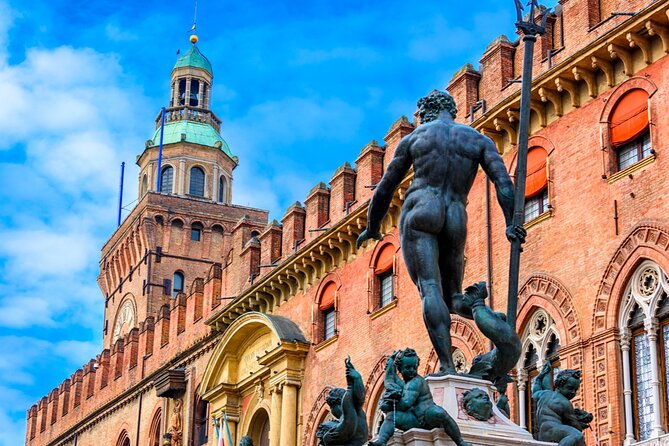
Then comes Neptune’s Fountain, completed in 1565. The bronze Neptune figure was completed around 1567 and fixed in place. The quest also references an artistic connection: the figure design traces to Giambologna, who submitted a model for a Neptune fountain in Florence but lost the commission to Baccio Bandinelli.
Even if you’ve seen fountains before, this kind of detail changes your relationship with it. You start noticing what you wouldn’t think to ask—who made it, where ideas traveled, and why a particular artist mattered.
This stop also works well at the right pace. It’s a clear landmark you can anchor on, so even if you take a break elsewhere, you can still find your way back into the game’s rhythm.
Porta Nova and the Torresotti Ring: Reading Bologna’s Wall Logic
A more “architecture-nerd” moment arrives at the torresotto, also called Porta Nova gate. It’s part of the second ring of walls, the Torresotti ring, completed in 1192.
The quest’s clue prompts you to notice the wall logic:
- The ring stretched about 4 km with 16 gates and 2 posterns.
- Walls were about 8 m high.
- They were decorated with brick merlons.
- Bologna had three rings of walls, built over centuries.
- The oldest ring used seni-te (selenite) blocks, an older local-stone layer.
If you’re new to Bologna’s layout, this part helps you understand the city as something that grew outward in structured phases. It’s not just a pretty wall. It’s an urban system.
Practical tip: take your time here, even if the clue is short. A few minutes spent observing how the wall segments connect can make the next stops feel more coherent.
Torre Prendiparte: Fortress Bricks and 12th-Century Defense
Next you’ll reach Torre Prendiparte, also known as Coronata Tower. Built in the 12th century by the Guelph Prendiparte family, it served a defensive purpose. The tower is known for Bologna’s classic look: red bricks and solid selenite blocks, giving it the feel of an impregnable medieval fortress.
This stop is valuable because it makes defense tangible. From a distance, it’s easy to treat towers like background scenery. But the quest nudges you to recognize what those building materials and massing were meant to do.
Also, if you’re walking with kids, a tower can be a clear visual target. Solve the clue, then do one quick “guess what era this is” moment to keep them engaged before moving on.
Piazza Giuseppe Verdi: Student Life and the Il Giro di Bologna Vibe
The quest rounds out in the social engine room of the city: Piazza Giuseppe Verdi. It sits about halfway along the student street Via Zamboni, and it’s described as a constant hub of energy with students and bon vivants alike.
The area has La Scuderia Café, and it’s tied to the rhythm of il giro di Bologna, the city’s social scene—events, concerts, markets, street performances, and club nights.
This is a nice balance to all the medieval architecture earlier. After walls, towers, and fountains, you get a feeling for today’s Bologna, where the streets still function as meeting spaces.
One practical note: this is a great place to pause and reset. If you’ve been solving puzzles for a while, you’ll likely appreciate a snack and a slower moment here before you finish the route.
How Long It Really Takes (and Why Your Group’s Pace Matters)
The scheduled duration is about 1 hour 30 minutes, and each stop is listed at roughly 5 minutes. In real life, your time will depend on how your group handles:
- Reading the prompts on the app
- Looking closely for answers
- Crowd levels at markets or event squares
- Phone speed and navigation within the app
Some people reported losing extra time due to construction affecting clue locations. So here’s my practical advice: treat this as a guided-by-puzzles walk, not a race. If you run into construction and a clue seems temporarily blocked, pause, check the app, and move forward carefully rather than forcing it.
And yes, there’s another real-world variable: you might walk more than the route estimate. Wear shoes you’d happily use for a long stroll, not “nice but questionable” sneakers.
Who This Quest Is Best For (and Who Might Prefer Something Else)
This is a strong fit if you want:
- A low-cost way to connect landmarks into a story
- Family-friendly walking where kids can participate
- A group of friends who prefer control over pacing
- An activity that works for several different energy levels (serious walkers and slower strollers)
It also suits you if you like learning-by-seeing. The questions make you stand in front of things and notice the details—the kind of “study” that doesn’t feel like homework.
Who might want an alternative? If your group needs very clear, spoken guidance at every step, you’ll be doing the explaining yourselves. This quest has no physical guide, and it’s puzzle-driven, so you need a little comfort using your phone in public.
Should You Book Bologna Secrets Quest? My Take
If you’re visiting Bologna and want a playful, affordable way to connect the city’s big sights with the smaller details, I think this is worth booking. Offline app play, 14 challenges, and the option to pause and resume are practical wins, especially for families and mixed groups.
But book with open eyes. Test your phone setup before you start, and expect that occasional map or clue issues can happen with any app-based experience. If you plan for that, you’ll spend your time outside, not stuck troubleshooting.
If your ideal day includes short stops, problem-solving, and wandering through Bologna’s squares and arcades at your own pace, this quest fits nicely.
FAQ
FAQ
How long does the Bologna secrets quest take?
It’s listed at about 1 hour 30 minutes (approx.).
Is this experience offered in English?
Yes, it’s offered in English.
Do I need an internet connection to play?
No. The app-based adventure is designed to work without an internet connection to play.
Where do I start and where does it end?
It starts at Two Towers, Piazza di Porta Ravegnana, 40126 Bologna and ends at Via Giuseppe Petroni, 37, 40126 Bologna.
What is included with the quest?
You get a mobile access code, 14 puzzle-based challenges, an immersive storyline about Bologna’s mysteries, and the ability to pause and resume anytime.
Do I need a physical tour guide?
No. This is a self-guided activity with no physical tour guide.
What does it cost?
The price is $6.60 per person.
When can I do it?
It’s available daily, listed as 12:00 AM to 11:59 PM.
Can I cancel and get a full refund?
Yes. Free cancellation is available up to 24 hours in advance for a full refund.