REVIEW · BOLOGNA HIGHLIGHTS & HIDDEN GEMS TOURS
Bologna: City Center Walking Tour
Book on GetYourGuide →Operated by BOLOGNA TOUR & BEST ITALY TOUR · Bookable on GetYourGuide
Bologna rewards slow, guided walking. This city center route strings together the places that explain Bologna’s personality, from tower power to the big, blunt drama of San Petronio. I especially like the Basilica of San Petronio stop and the way the guide links the towers of Bologna to what you see in the streets. Guides such as Victoria and Maria come up in recent feedback, and you can tell the best ones know how to turn landmarks into stories.
I also like the market segment, because the Quadrilatero Market walk gives you context, not just sightseeing. One drawback: this tour is not recommended if you have limited mobility, and you’ll need to keep to the required church clothing rules while you move through busy areas.
For me, this is a smart first-trip tour: it’s short (2 to 3 hours), cover-heavy, and built for people who want a clear sense of where things fit in Bologna. If you want an efficient orientation to the centro storico, it’s a good place to start.
In This Review
- Key points that matter before you go
- Meeting Point Game Plan: Neptune’s Fountain and a Fast Start
- Bologna’s Tower Lesson: Asinelli and the Two Towers Story
- Neptune Fountain: The Wish Ritual Plus City Meaning
- Palazzo d’Accursio and Piazza Maggiore: The Civic Center You Can Feel
- Basilica of San Petronio: The Big Church Stop That Really Explains Bologna
- Quadrilatero Market Walk: History, Not Just Snacks
- Piazza della Mercanzia and Piazza Santo Stefano: Squares With Stories
- Pacing and Timing: How the 2 to 3 Hour Walk Feels
- Price and Value: Why $26 Can Make Sense Here
- What to Wear: Church Rules and Comfortable Shoes
- Who This Tour Is Best For (And Who Should Skip)
- Should You Book This Bologna City Center Walking Tour?
- FAQ
- How long is the Bologna city center walking tour?
- How much does the tour cost?
- Where does the tour start?
- What are the main sights on the route?
- Is there a small group option?
- What languages are the guides available in?
- What should I bring?
- Are there any clothing restrictions?
- Is the tour suitable for people with limited mobility?
- Is free cancellation available?
Key points that matter before you go
- Certified guides tell the story behind the skyline, squares, and churches
- Basilica of San Petronio is the anchor stop, with real context for why it matters
- Two Towers focus helps you understand Bologna’s height obsession and civic identity
- Quadrilatero Market is more than a photo stop, with historical and practical pointers
- Neptune fountain moment gives you the wish ritual plus the meaning behind it
- Small group keeps it easier to move, hear your guide, and take photos
Meeting Point Game Plan: Neptune’s Fountain and a Fast Start
The tour is built around easy, central meeting options, and the most common one is the Fountain of Neptune area (also listed as Neptune’s Fountain). That’s a practical choice because you’re already near the heart of the old city, where the walking starts to make sense.
Meeting points can vary based on the option you choose, so I’d treat this like a small scavenger hunt: confirm your exact starting address in advance and arrive a few minutes early. Bologna’s centro storico is tight and busy, and being prompt saves you from having to guess where your group is.
Once you meet your guide, you’ll quickly get the rhythm: short walking stretches, frequent pauses for explanation, and enough regrouping that you don’t feel yanked along. Many reviews praise pacing and hearing clarity, including the use of headphones on some departures, which is a huge help in crowded squares.
You can also read our reviews of more walking tours in Bologna


Bologna’s Tower Lesson: Asinelli and the Two Towers Story
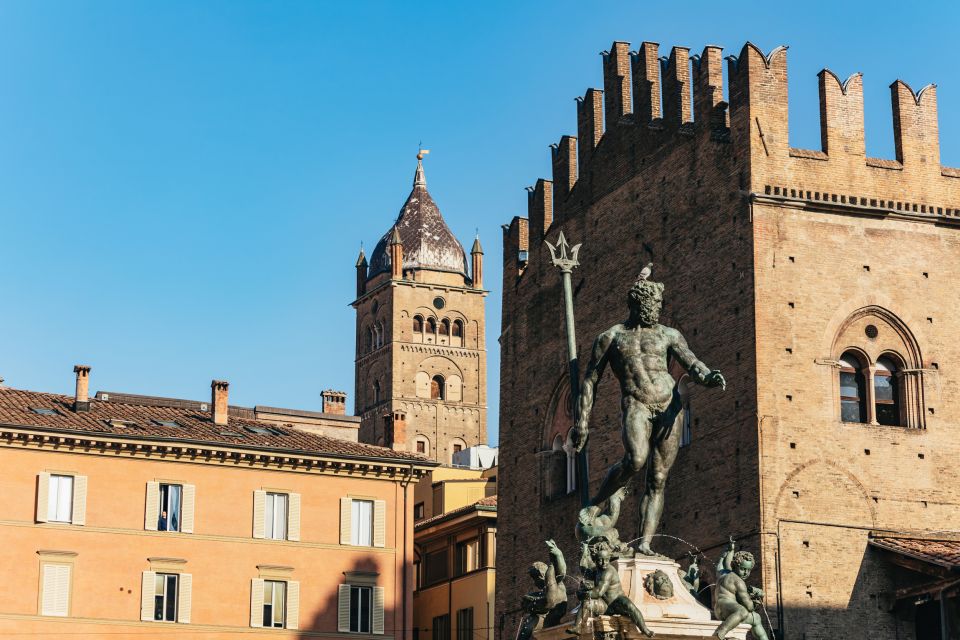
Bologna’s towers aren’t random. They’re part of the city’s identity, a visible record of power, family rivalry, and civic life that you can actually read as you walk. This tour spotlights the Asinelli Tower and the broader “two towers” story, so you’re not just seeing height—you’re learning why it mattered.
What I like about this approach is that tower talk connects directly to street-level details. When you know what the towers represent, you’ll start noticing cues in the architecture and layout, even between major landmarks. It turns the city into a puzzle you can solve in real time.
One thing to consider: you’ll be doing a lot of outdoor walking. In hot weather, plan on shaded breaks being limited, and comfortable shoes become non-negotiable.
Neptune Fountain: The Wish Ritual Plus City Meaning
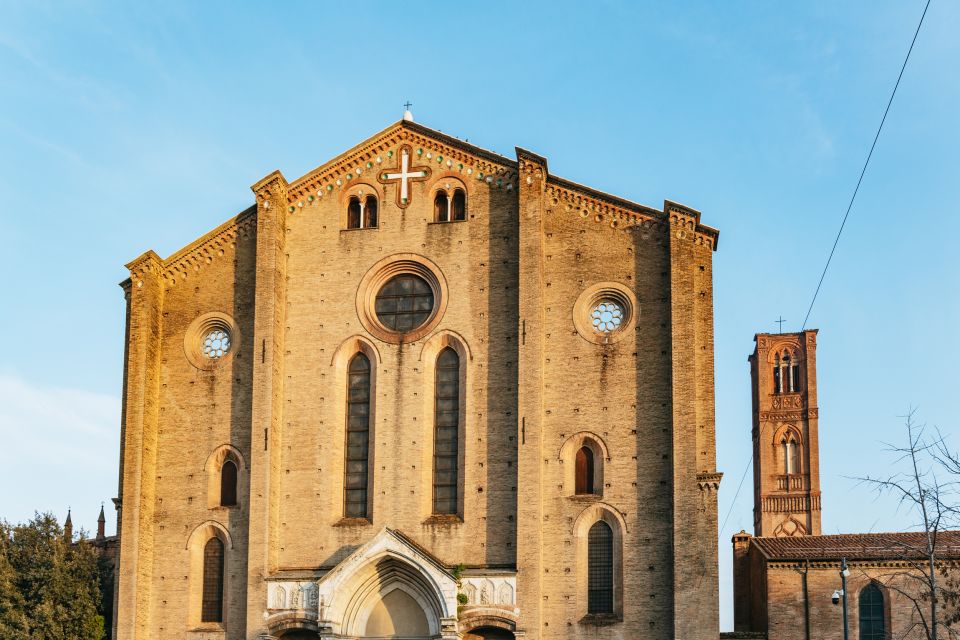
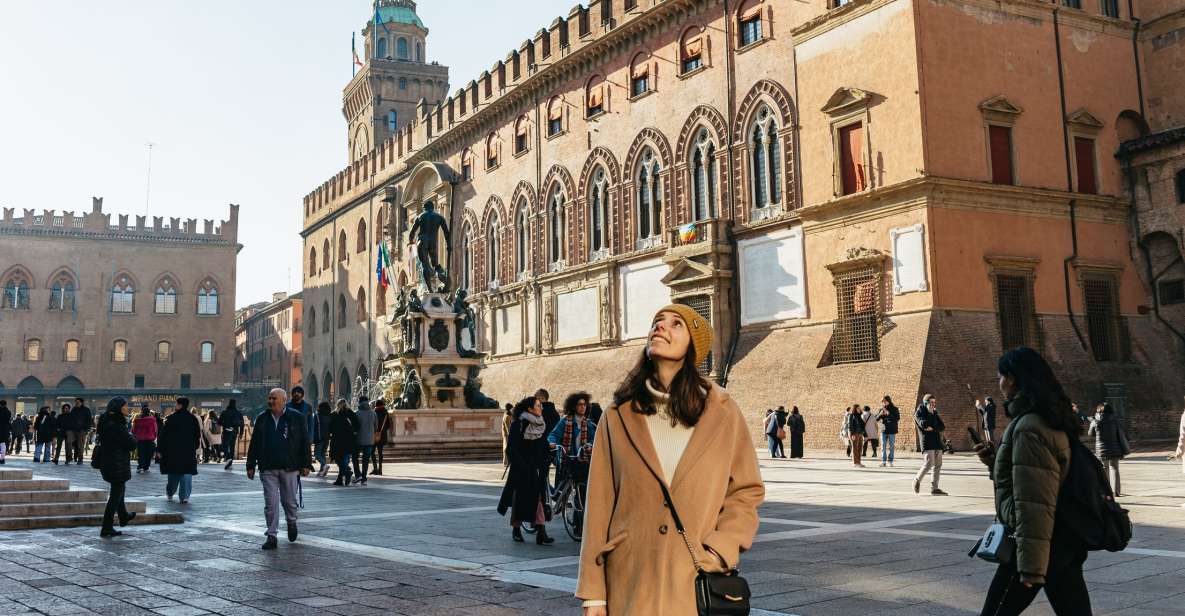
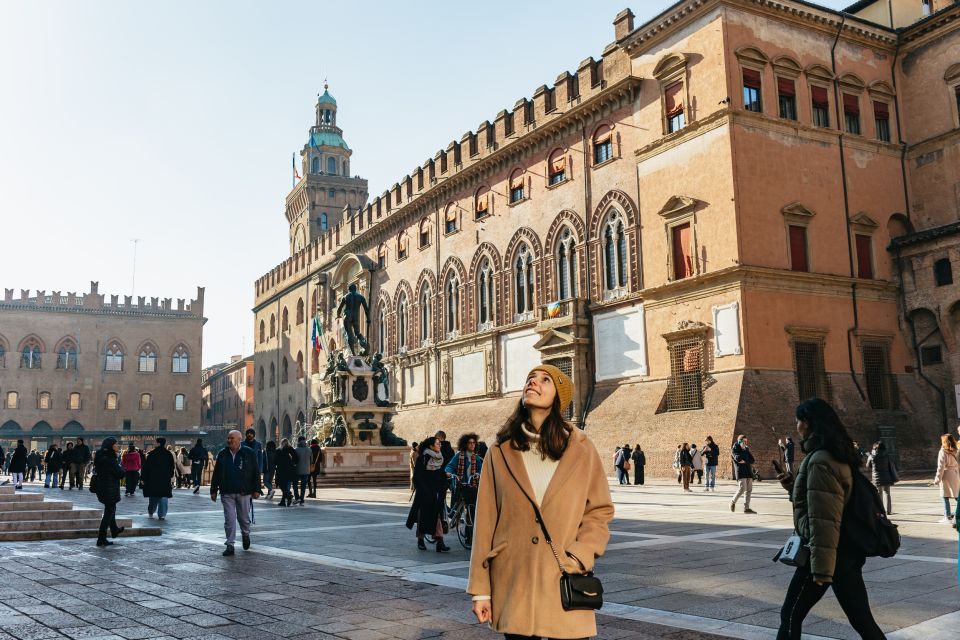
The Neptune fountain stop is a classic Bologna moment, and the tour doesn’t treat it like a quick selfie wall. You’ll get the ritual (make a wish) and also the backstory your guide ties to the site’s place in the city’s identity.
This is one of those stops that works well even if you’re not a “fountain person.” When a guide adds meaning—who it was for, what it signaled, and how it fits into the surrounding squares—it turns a familiar image into a real piece of civic theater.
Also, Neptune is a great landmark for orientation. After you’ve seen it once with context, you’ll remember where you are, which makes the rest of your day in Bologna feel smoother.
Palazzo d’Accursio and Piazza Maggiore: The Civic Center You Can Feel
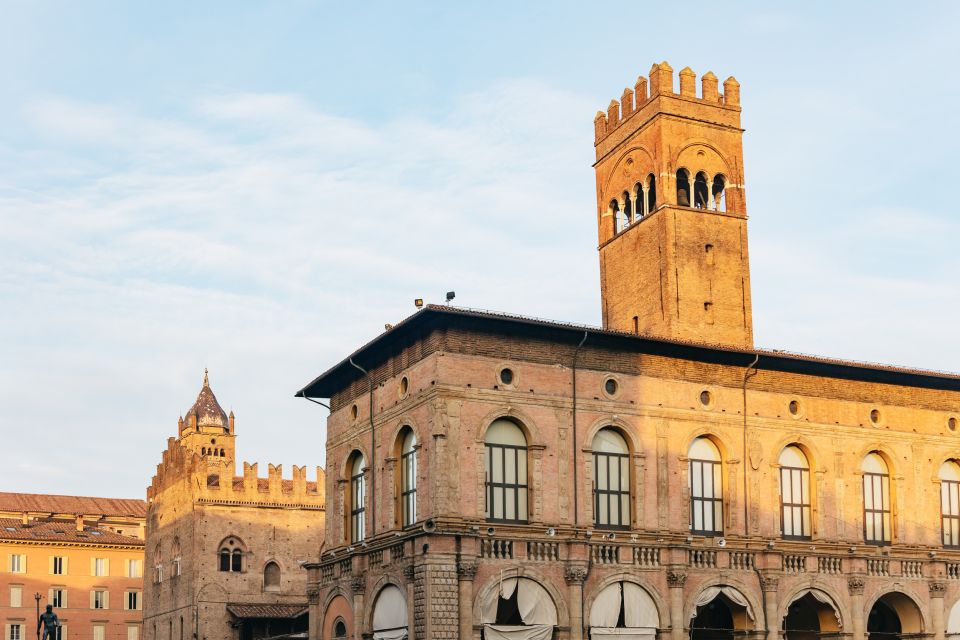
As you move through the core, your route touches key civic spaces like Palazzo d’Accursio and Piazza Maggiore. These aren’t just pretty backdrops; they’re where Bologna’s public life has played out for centuries, which is exactly why they’re worth stopping for.
The tour’s advantage here is focus. Instead of trying to explain everything at once, your guide narrows to what you can look at right now—forms, symbols, and the logic of the square. That makes the explanation feel grounded instead of like a lecture.
Piazza Maggiore is also a practical hub for photos and for catching your bearings. If you’re the type who likes to return to places later for a slower look, this stop gives you the “why” and then the exact “where.”
Basilica of San Petronio: The Big Church Stop That Really Explains Bologna
This is the star for many people, and it shows up as a highlight again and again: the Basilica of San Petronio. The tour’s approach matters here. You’re not just told that it’s impressive—you’re guided through what makes it significant and how the guide’s story helps it click.
San Petronio is a huge draw, but the value is in the context: why Bologna built something so big, how it fits the city’s mindset, and what you should notice while you’re standing there. Reviews consistently call out the passion and depth at this stop, and you can see why—this is the kind of place where a guide’s story changes how you look at the building.
A practical note: you’ll be visiting a place of worship, and the required clothing rules apply. Bring something that meets the guidelines so you’re not stuck improvising on the street.
You can also read our reviews of more city tours in Bologna


Quadrilatero Market Walk: History, Not Just Snacks
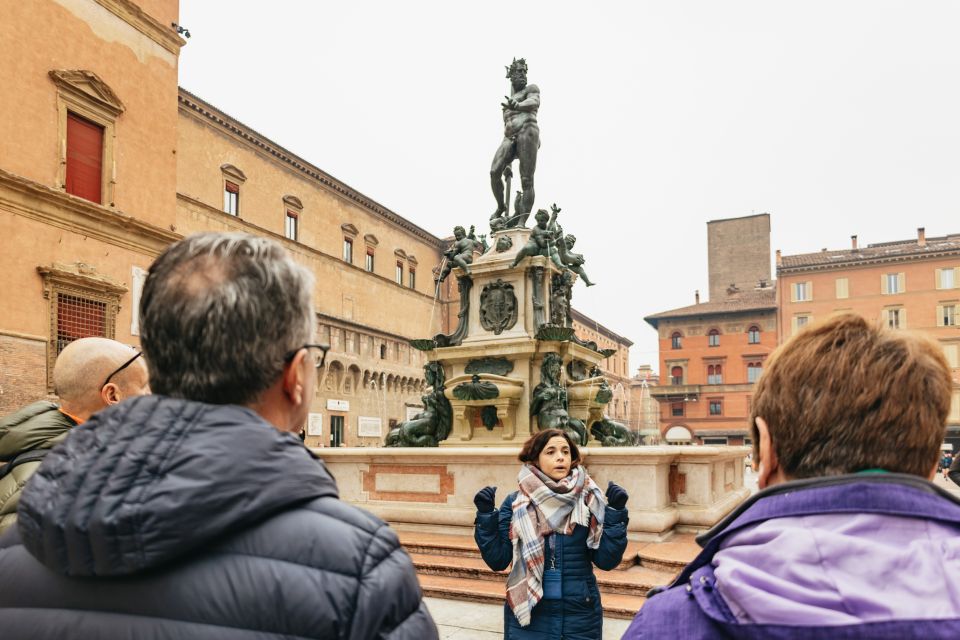
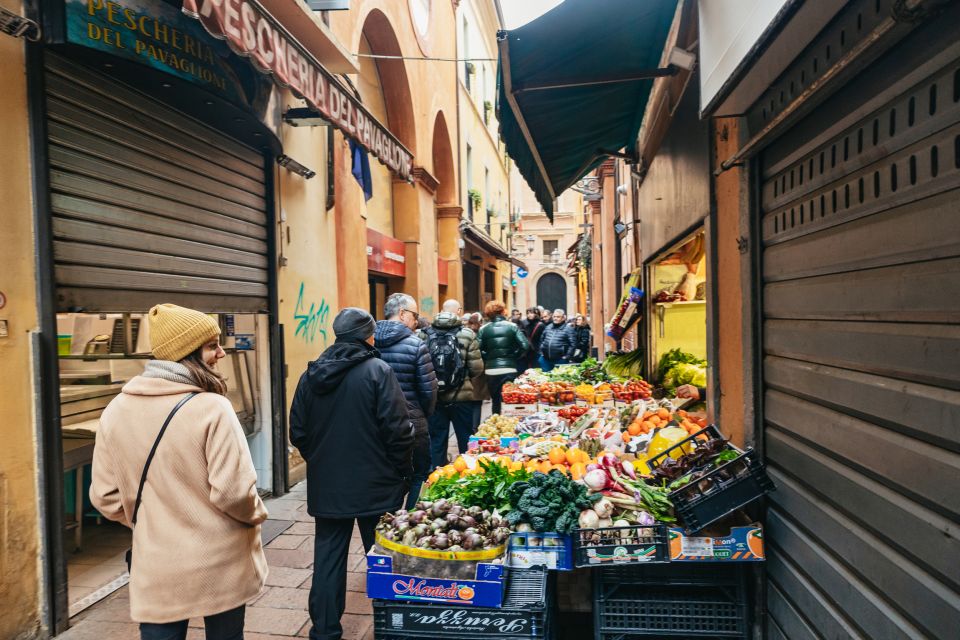
The Quadrilatero Market segment is one of the best parts of doing a guided walk early in your trip. The market area is busy and tempting, but it can also feel like a blur if you walk through alone.
Here, your guide slows you down just enough to understand what you’re looking at, with historical facts and practical pointers. One common theme in reviews is that guides share good leads for where to eat and what to try locally, which can help you avoid the easiest tourist traps.
If you’re hungry, this stop can feel like an open invitation. Just keep your timing in mind: the tour is only 2 to 3 hours, so the goal is tasting and orienting, not turning the day into a food marathon.
Piazza della Mercanzia and Piazza Santo Stefano: Squares With Stories
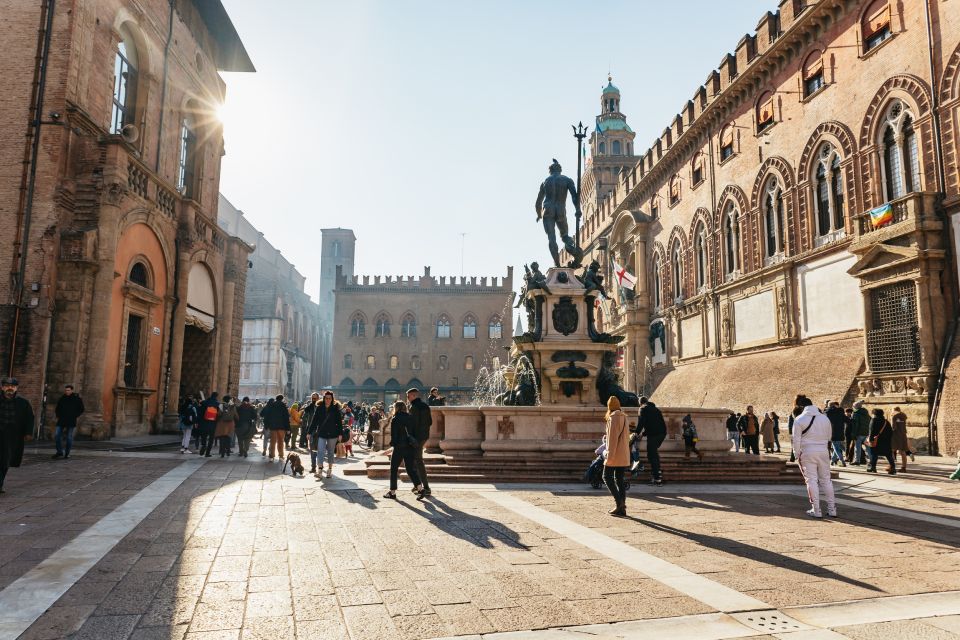
Between the headline landmarks, the itinerary threads through smaller but meaningful squares like Piazza della Mercanzia and Piazza Santo Stefano. This is where you start to feel the texture of Bologna—how everyday life and long-standing tradition share the same sidewalks.
Piazza Santo Stefano is especially interesting because it adds a church-and-square contrast after the more civic feeling of Piazza Maggiore. When a guide explains the connection between these stops, it helps you understand Bologna as a layered city rather than a single-route checklist.
You’ll get the best experience by staying present. Don’t treat these as quick “pass-through” moments. Even a short stop with a story can make you notice details you’d normally walk right past.
Pacing and Timing: How the 2 to 3 Hour Walk Feels
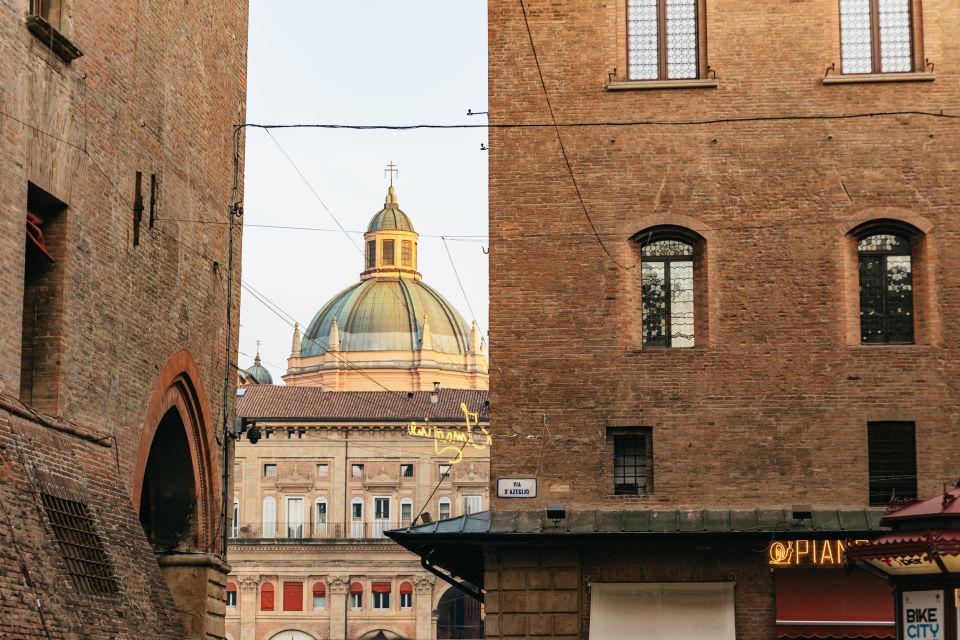
The duration is listed as 2 to 3 hours, and the overall design is efficient. You get major Bologna highlights without the pressure of spending an entire day on foot, which makes it a strong choice for your first afternoon or first morning.
Reviews often mention the walk not being strenuous, with plenty of stopping. That matches the tour style: short segments, story stops, and time to take photos. That said, it is still a walking tour, so you should plan to be on your feet for most of the window.
One more practical perk: in at least some departures, headphones help you hear the guide clearly while still keeping pace. If that option is available when you book, it can make a real difference in crowded squares.
Price and Value: Why $26 Can Make Sense Here
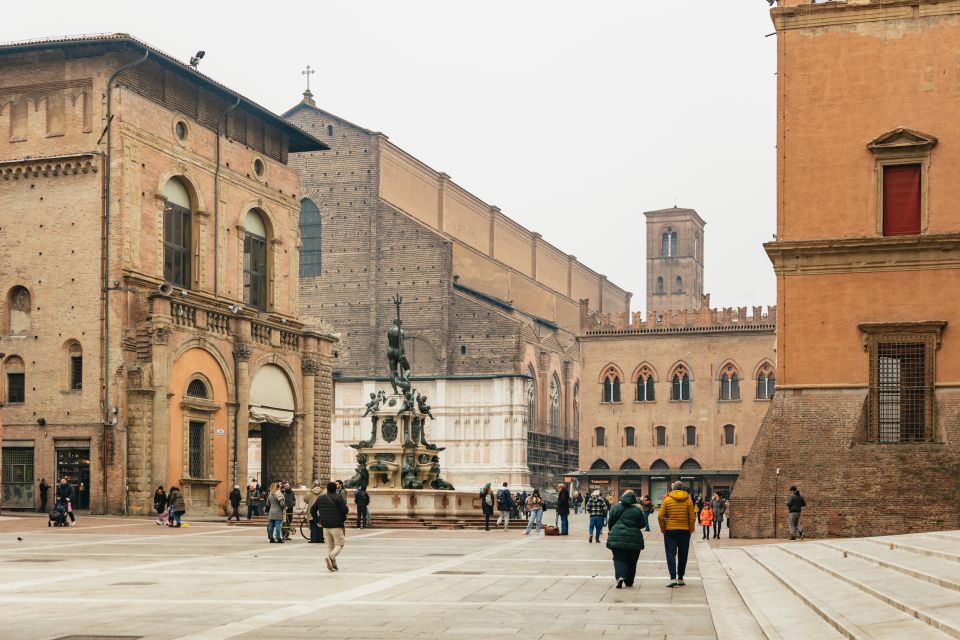
At about $26 per person, the value comes from what you’re paying for: a certified guide who connects multiple major stops into one coherent story. You’re seeing several signature sights—tower references, the Neptune fountain, San Petronio, and the Quadrilatero Market—so the cost isn’t just for walking. It’s for interpretation.
This is also a smart use of time. If you tried to piece all of this together yourself, you’d spend extra hours searching for context and routes. Here, the guide does the heavy lifting so you can spend your Bologna time actually looking, not reading your phone.
Is it worth it for everyone? If you love very self-guided travel and you already know Bologna history deeply, you might skip guided tours. But if you want your first pass to feel organized and meaningful, this price point is hard to beat.
What to Wear: Church Rules and Comfortable Shoes
You’ll want comfortable shoes, because you’re moving through a historic center with uneven surfaces and lots of stops. The tour also specifies a long-sleeved shirt, and it’s strict about clothing for worship spaces.
Not allowed:
- short skirts
- skirts
And for places of worship, you’ll need appropriate clothing, with restrictions like no vests, tops, shorts, or miniskirts. If you’re traveling in warm weather, pack a light layer that still meets the rules. It’s easier than trying to solve the problem at the last minute.
If you have limited mobility, the tour notes it’s not recommended. Even if you think you can manage a few city blocks, the combination of walking time and adherence to specific stop points is part of the experience.
Who This Tour Is Best For (And Who Should Skip)
I’d recommend this tour if you want:
- a fast, organized introduction to Bologna’s main sights
- a clear storyline connecting towers, squares, church architecture, and the market
- practical restaurant or food leads that fit the city rather than generic lists
It’s also a good fit if you’re traveling with limited time. Two to three hours is enough to get oriented, and it sets you up to explore on your own afterward with better instincts.
I’d skip it if:
- mobility is a concern
- you don’t want to follow worship-site clothing requirements
- you prefer long stays at one site over hitting several landmarks efficiently
Should You Book This Bologna City Center Walking Tour?
Book it if you want the smoothest first pass through Bologna: towers, Neptune, the big church moment at San Petronio, and the Quadrilatero Market area all in one guided loop. The strongest reason to choose it is the human factor—guides like Victoria and Maria show up with storytelling that makes the sights feel connected, not random.
Skip it if your travel style is purely independent and you already have a strong plan for Bologna’s history and layout. But if you’re aiming to understand the city as you see it, this tour hits the sweet spot of value, pacing, and focus.
If you go, do yourself a favor: wear the right clothing for churches, bring comfy shoes, and keep your phone charged—because you’ll want to revisit a few of these places after you’ve learned what to notice.
FAQ
How long is the Bologna city center walking tour?
The duration is listed as 2 to 3 hours.
How much does the tour cost?
The price is $26 per person.
Where does the tour start?
You’ll meet at a starting location that may vary by option. One listed option is the Fountain of Neptune area.
What are the main sights on the route?
The tour includes stops such as the Asinelli Tower, the Neptune fountain, the Basilica of San Petronio, and the Quadrilatero Market, along with several squares.
Is there a small group option?
Yes, the tour offers a small group.
What languages are the guides available in?
The tour is offered with live guides in Italian, English, Spanish, and French.
What should I bring?
Bring comfortable shoes and a long-sleeved shirt.
Are there any clothing restrictions?
Yes. Short skirts and skirts are not allowed, and for places of worship you’ll need appropriate clothing (no vests, tops, shorts, or miniskirts).
Is the tour suitable for people with limited mobility?
No, it is not recommended for people with limited mobility.
Is free cancellation available?
Yes, free cancellation is offered up to 24 hours in advance for a full refund.