REVIEW · HISTORICAL TOURS
Bologna : a walk into history
Book on Viator →Operated by Elisa Cornacchia · Bookable on Viator
Bologna rewards slow walking and smart stories. This 3-hour guided stroll links the big sights—Piazza Maggiore, San Petronio, the towers, and Santo Stefano—so you understand how Bologna became Bologna. I like that the route is compact, so you see a lot without racing. I also like that the guide, including Elisa Cornacchia, answers real questions as you go. The only watch-out is that most stops are in and around churches and historic lanes, so you’ll be on your feet the whole time.
If you care about how places got their meaning, this tour does it well. You’ll hear the story behind San Petronio and Petronius, and you’ll also get the medieval trade and student-world context that makes Bologna’s layout click. The pacing feels steady, with quick pauses for the good photo moments and enough time to actually connect the dots.
One possible drawback: Archiginnasio di Bologna is part of the walk, but the entrance ticket isn’t included. If you want to go inside there, plan for that extra cost on your own.
In This Review
- Key moments I think you’ll love
- A Walk That Explains Bologna’s Layout, Not Just Its Sights
- Where You Start: Via dell’Indipendenza and the 3-Hour Rhythm
- Piazza Maggiore: The City’s Big Stage and the Plan Behind It
- San Petronio Basilica: Petronius, Local Pride, and Art You Can Actually Spot
- Archiginnasio di Bologna: The University Seat That Changed the Vibe
- The Quadrilatero and Palazzo della Mercanzia: Food Lanes + Medieval Trade Power
- Santo Stefano’s Seven Churches: Sancta Jerusalem and Meaningful Symbols
- Le Due Torri and Via De’ Giudei: Bologna’s Symbols of Power and Its Darker Past
- Finestrella: The Little Venice Moment and a Look at How Bologna Shifted
- Price and Value: When $209.44 Per Group Makes Sense
- Who This Tour Fits Best
- Should You Book Bologna: A Walk Into History?
- FAQ
- How long is the Bologna walking tour?
- What is the price, and how many people are in a group?
- Where does the tour start and end?
- Are there tickets included for every stop?
- What’s included in the price?
- Is this tour private?
- Will I get a ticket on my phone?
- Is the guide available in multiple languages?
- What is the cancellation policy?
Key moments I think you’ll love
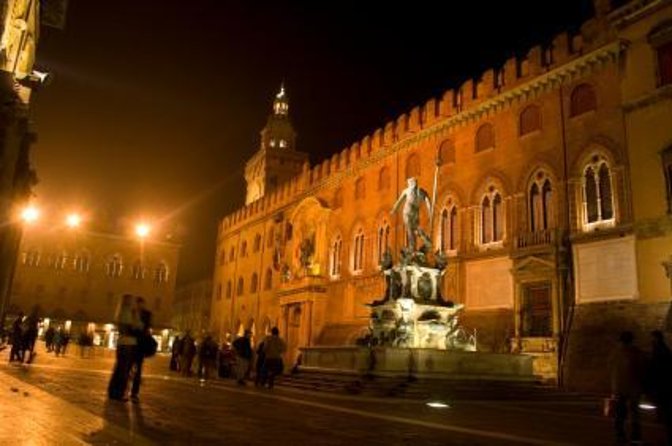
- Piazza Maggiore as a starting point for seeing how the city plan shifted over time
- San Petronio Basilica with the Petronius story and standout art you can spot inside
- Archiginnasio di Bologna as the first official university seat—great context even if you skip entry
- The Quadrilatero food lanes, where local market life still shapes the neighborhood feel
- Santuario di Santo Stefano and the seven-church complex tied to the Saint Sepulcher and symbols
- The mix of Two Towers + Via De’ Giudei, connecting Bologna’s power and its forced Jewish ghetto past
A Walk That Explains Bologna’s Layout, Not Just Its Sights
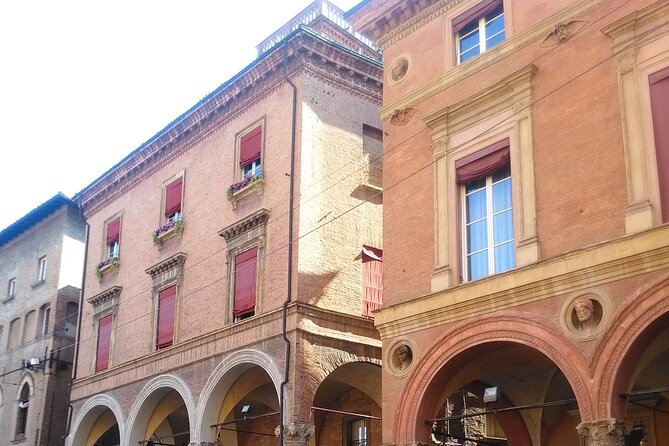
Bologna is one of those cities where the streets are part of the story. A guided walk helps you read the city like a map of ideas—politics, faith, education, and daily food life. Instead of treating landmarks like postcards, the guide connects them to how people lived and what they needed.
This is a private tour for your group (up to 10 people), which matters more than you might think. With a smaller group, the guide can keep the pace comfortable and handle questions without feeling rushed. It also means you’re not stuck listening over a crowd.
The route is built around “stop-and-understand” moments. Think of it as a slow reveal: the guide points out what you’re looking at, why it matters, and how it connects to the next place.
You can also read our reviews of more walking tours in Bologna


Where You Start: Via dell’Indipendenza and the 3-Hour Rhythm
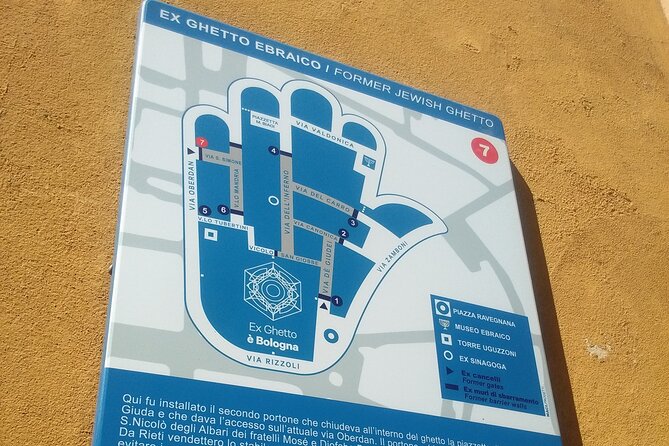
The tour begins and ends at Via dell’Indipendenza. That’s handy because it’s an easy area to orient yourself in and it’s near public transportation. The tour runs about 3 hours, and the stops are short—usually 5 to 15 minutes—so you get a lot of variety without losing the thread.
A practical tip: wear shoes you trust. Even with brief stops, you’ll be walking through uneven historic pavement and tight lanes. If you’re the kind of person who likes to linger, you might want to budget extra time afterward to revisit the spots you care most about.
The start time listed is 10:00 am, but the tour is offered in morning or afternoon options. Choose the time that matches your energy level—Bologna is best when you’re not tired.
Piazza Maggiore: The City’s Big Stage and the Plan Behind It
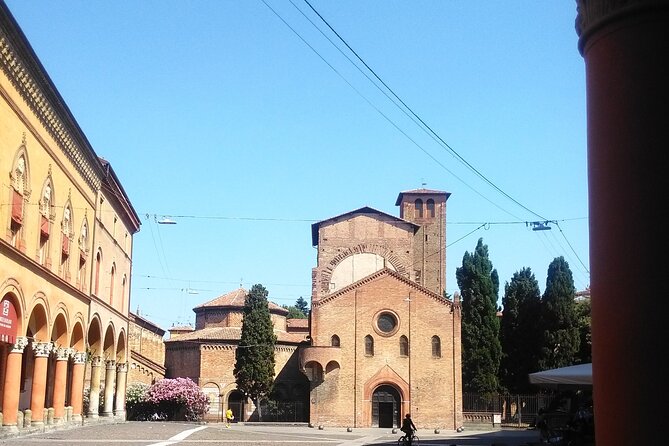
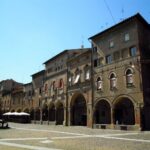
Most first-time Bologna stops start at Piazza Maggiore because it’s the center of gravity. Here, the guide helps you do more than admire the square. You’ll also look along via Rizzoli to understand the original plan of the city—and how Bologna changed.
That is the key value of this beginning. When you understand the logic of where things are placed, the rest of the walk feels less like a list and more like a story. Piazza Maggiore also gives you a visual anchor: you can keep the square in your head as you move through the historic parts of the city.
Time on this stop is short—about 5 minutes—but it’s designed to get your bearings quickly.
San Petronio Basilica: Petronius, Local Pride, and Art You Can Actually Spot
Then you move into Basilica di San Petronio, one of the city’s most important churches. This is where the tour leans into “why locals care.” You’ll hear the story of Petronius, Bologna’s patron saint, and the guide explains why this place matters to the Bolognesi.
What I like about this stop is the emphasis on inside details you can see. The guide points out important works of art inside the church, so you’re not just standing in the space guessing what to notice. When you walk out, you’ll understand the emotional and civic weight of the building, not just the architecture.
This stop is around 10 minutes, and it’s a free entry stop. Still, give yourself a moment before moving on. Churches can be cooler and quieter than the street, and that helps you reset for the next leg of the walk.
Archiginnasio di Bologna: The University Seat That Changed the Vibe
Next comes Archiginnasio di Bologna, described as the first official seat of the university in Bologna. Even if you don’t go deep inside, the context is powerful. Bologna became a known center for learning, and the guide’s framing helps you connect education to the city’s layout and its long tradition of students and scholarship.
This stop takes about 10 minutes. The important detail for your planning: entrance to Archiginnasio isn’t included. The walking portion and explanation are covered, but if you want to step into the parts that require a ticket, you’ll need to pay separately.
If you’re a museum-person, you’ll likely want that extra time. If you’re mainly after the “story layer,” the stop still works well as a meaningful transition from church to civic life.
You can also read our reviews of more historical tours in Bologna

The Quadrilatero and Palazzo della Mercanzia: Food Lanes + Medieval Trade Power
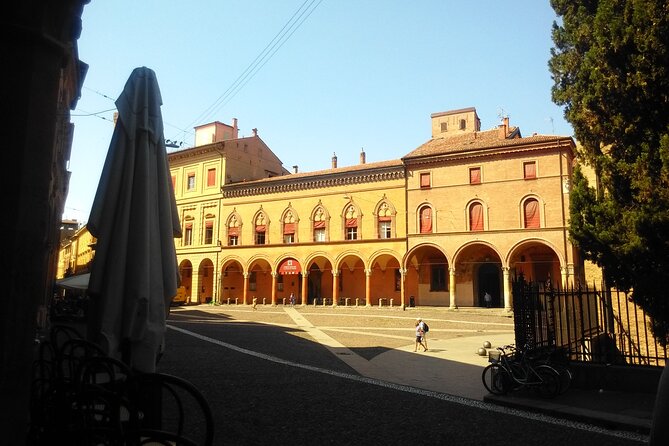
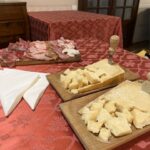
Then you hit the Quadrilatero, Bologna’s most famous food district. The guide walks you through the lanes where the local market happens every day. Even in a short stop (about 10 minutes), you can feel the neighborhood rhythm. This is where Bologna’s reputation for food goes beyond slogans. The market lanes shape how people move, shop, and socialize.
What makes this stop especially good on a guided walk is the contrast with what you learned earlier. Piazza Maggiore and San Petronio give you the civic and sacred side. The Quadrilatero adds the daily side: trade, ingredients, vendors, and routine.
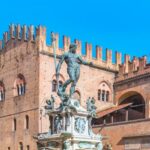
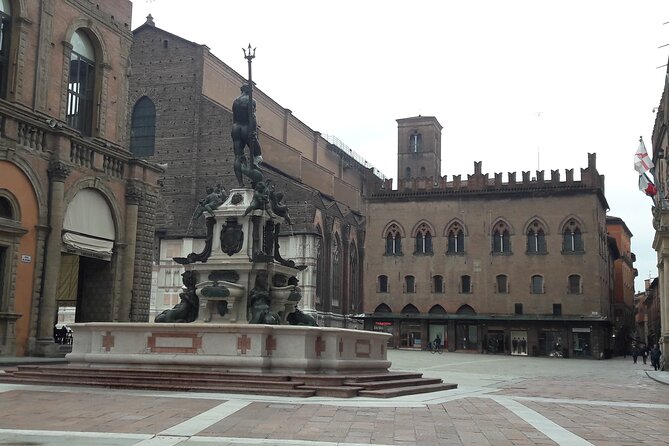
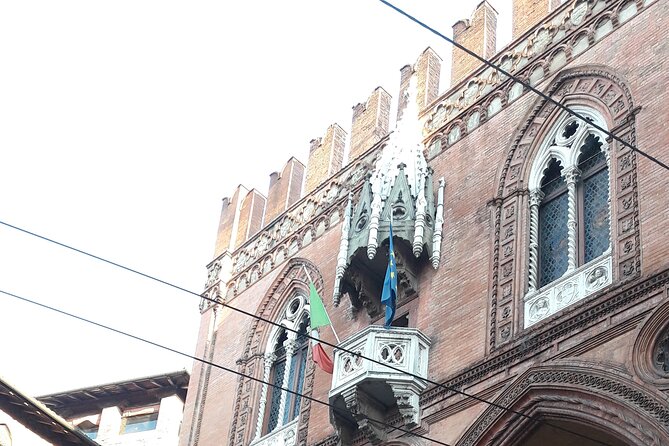
Right near it is Palazzo della Mercanzia, where the guide explains Bologna in the Middle Ages through the lens of foreign traders entering town. This is about commerce and power in stone form. The stop is brief (about 5 minutes), but it changes how you read the building’s presence in the area. You stop thinking of it as scenery and start thinking of it as a tool of the city’s economy.
Both of these stops are free, so you’re getting a lot of insight without extra ticket decisions.
Santo Stefano’s Seven Churches: Sancta Jerusalem and Meaningful Symbols
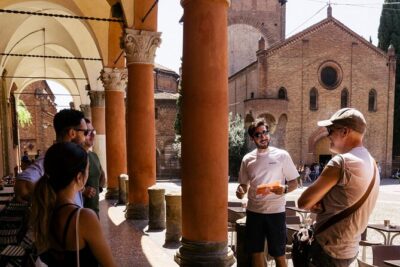
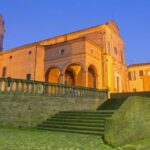
The walk then shifts to a truly distinctive complex: Santuario di Santo Stefano. Here the guide introduces why people call it the seven-churches—linked to the idea of Sancta Jerusalem—and explains the connections to the Saint Sepulcher. The goal isn’t to quiz you on religious history; it’s to help you recognize how symbols and references were built into everyday spaces.
This stop is about 15 minutes, which is longer than most, and that’s smart. A complex like this needs a bit more time because it’s layered. Even when you’re only there briefly, the guide’s explanation helps you notice patterns that you would otherwise miss.
This is also a free admission stop. If you enjoy architecture-as-story, this is one of the strongest moments on the route.
Le Due Torri and Via De’ Giudei: Bologna’s Symbols of Power and Its Darker Past
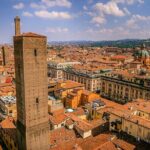
Two towers are hard to ignore in Bologna, and the tour includes Le Due Torri, specifically Torre degli Asinell. The guide explains what their ancient function was and why they became one of Bologna’s symbols.
This is a good stop for understanding how cities signaled authority. Towers weren’t just decoration. They were functional and political—visible power in the middle of the urban fabric. Even if you never climb anything (and climbing isn’t part of what’s described here), you’ll leave with a better sense of what towers meant to the people who built them.
Time here is short—around 5 minutes—but the meaning the guide brings makes it stick.
Then comes Via De’ Giudei, which takes you into the narrow streets tied to the Jewish ghetto. The tour explains that Jews were forced to live there until Italian Unification. This is a heavy topic, and the walk matters because it grounds history in a specific place you can see and navigate.
That’s the thing I appreciate: the walk doesn’t avoid tough parts. It gives you location-based context rather than leaving you with generic facts.
Finestrella: The Little Venice Moment and a Look at How Bologna Shifted
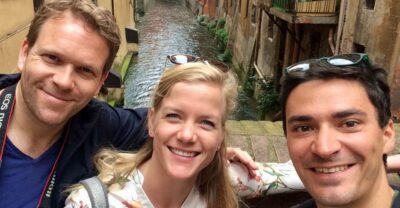
The last major visual payoff is Finestrella, known as the “little Venice.” The guide uses it to help you understand how Bologna looked in the past. This is one of those corners where the city feels like it’s showing you a different version of itself—through water references, openings, and that subtle shift in atmosphere.
The stop is about 10 minutes, and it’s free. You’ll likely want a moment to slow down here, even if your tour time is tight, because the point is not just to see the sight—it’s to understand the historical vibe the name points to.
When you finish, you’re back at Via dell’Indipendenza, with your brain full of connecting threads.
Price and Value: When $209.44 Per Group Makes Sense
The price is $209.44 per group (up to 10). On its face, that can sound like “how much for a walking tour?” But the value comes from how the tour is packaged: it’s a private experience with a professional guide, about 3 hours, and it hits multiple major landmarks without you having to plan the story.
If you’re traveling with other people, the cost spreads out fast. If you’re a solo traveler, you may feel the price more—but the private format and the fact that most stops are free can still make it reasonable compared with paying separate guide services.
Also, the tour includes a mobile ticket, and most admissions on the walk are free. That matters because you avoid the mental load of figuring out what’s ticketed on the spot. The one exception is Archiginnasio, where the entrance ticket isn’t included.
For value seekers, I see this tour as a “story discount.” You’re paying to make the city legible fast.
Who This Tour Fits Best
This tour is a strong match if you want:
- A guided explanation that connects architecture, education, trade, and faith
- A route you can handle easily in about 3 hours
- A chance to ask questions directly—especially since the guide stays engaged throughout the walk
It also suits people who don’t want to spend the whole day ticket-hopping. Most stops here are free or mostly explained from the outside, with the optional exception of Archiginnasio.
If you’re someone who wants a long church interior visit or a full museum-style deep ticket entry, you might want to add extra time on your own. The tour is designed for breadth and clarity, not for a long sit-down.
Should You Book Bologna: A Walk Into History?
I’d book it if you like walking with a guide who keeps things moving but still answers questions. The standout strength is the way the route ties together Bologna’s big landmarks and the quieter layers between them, and the guide—Elisa Cornacchia—is described as gentle, helpful, and very engaging while keeping a good walking speed.
Skip it only if you hate walking for three hours, or if Archiginnasio is the one stop you care most about and you don’t want any ticket logistics at all. Since that entrance isn’t included, you’d need to decide ahead of time.
Overall: this is a practical way to get real context fast in a city that rewards attention to detail.
FAQ
How long is the Bologna walking tour?
It lasts about 3 hours.
What is the price, and how many people are in a group?
The price is $209.44 per group, up to 10 people.
Where does the tour start and end?
It starts and ends at Via dell’Indipendenza, Bologna BO, Italy.
Are there tickets included for every stop?
Most stops are free, but the entrance ticket to Archiginnasio di Bologna is not included.
What’s included in the price?
A professional guide is included.
Is this tour private?
Yes. It’s listed as a private tour/activity with only your group participating.
Will I get a ticket on my phone?
Yes. The tour uses a mobile ticket.
Is the guide available in multiple languages?
It may be operated by a multi-lingual guide.
What is the cancellation policy?
Free cancellation is available up to 24 hours in advance for a full refund. If you cancel less than 24 hours before the start time, the amount paid isn’t refunded.