REVIEW · BOLOGNA HIGHLIGHTS & HIDDEN GEMS TOURS
Bologna: Historical Highlights Walking Tour with Local Guide
Book on GetYourGuide →Operated by Walks In Europe · Bookable on GetYourGuide
Bologna’s history starts at a seashell fountain. This 2.5-hour walk gives you a smart route through the city’s main medieval and Renaissance landmarks, with real stories tied to what you’re seeing right in front of you. I like the small group (max 8) because it stays conversational, not crowded. I also love getting inside San Petronio and Santo Stefano, not just photos from the sidewalk. The one snag to plan for: this tour is not suitable for people with mobility impairments since it involves walking on city streets.
You start at Piazza del Nettuno near Bar Vittorio Emanuele, and you finish back where you began, which makes it easy to plug into the rest of your day. The guide’s English is a big part of the value here, and the style can feel friendly and animated—like you’re chatting with someone who actually cares about Bologna. If you want to see a lot of top sights in one go, this tour is a solid way to get your bearings fast, with the right context.
One more practical thing: tickets are timed and you must arrive early—late means you lose your entry window.
In This Review
- Key highlights and what they mean for you
- Getting oriented at Piazza del Nettuno
- Piazza Maggiore: Bologna’s public living room
- San Petronio Basilica: Gothic, Renaissance, and the Meridian Line
- Archiginnasio: the University of Bologna’s inner courtyard
- Porticoes and street texture: why Bologna’s covered walkways matter
- The Two Towers (Le due Torri): medieval status from the outside
- Santo Stefano: the Seven Churches complex in a calm maze
- Guides really make this one: Maurizio, Vittoria, and strong English
- Price and value: what $55.80 gets you
- Timing and logistics that can trip you up
- Should you book this Bologna highlights tour?
- FAQ
- Where is the tour starting point?
- What time does the tour last?
- How big is the group?
- What’s included in the tour?
- What is not included?
- Which languages are available?
- Do I need to arrive early?
- Can I join after the tour starts?
- Are any parts unavailable on Sundays?
- Is the tour suitable for everyone?
Key highlights and what they mean for you
- Max 8-person group keeps the pacing comfortable and lets you ask questions.
- Two big interior visits: San Petronio Basilica and the Santo Stefano complex.
- Porticoes walkthrough shows why Bologna’s covered streets are more than pretty.
- Two Towers only from outside (no climb), which keeps the tour moving.
- Timed ticket entry means you should show up 15 minutes early.
Getting oriented at Piazza del Nettuno
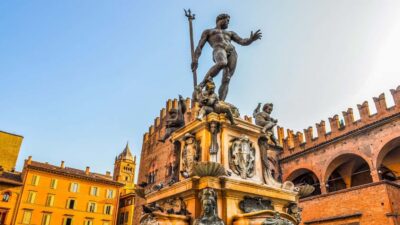
Most Bologna walks start in a landmark square, and this one begins at Piazza del Nettuno in front of the Statue of Neptune. It’s a great kickoff point because it sits right in the thick of the historic center, so you begin understanding the city layout immediately. Your guide will be holding a signboard that says Walks In Europe near Bar Vittorio Emanuele.
The Neptune Fountain itself is your first visual lesson. The sculpture shows the Roman god of the sea, and you’ll hear how it connects to Renaissance-era symbolism and what Bologna wanted to project: knowledge, power, and a sense of cultural seriousness. Even if you’re not a fountain person, this stop works. It gets your attention, and it sets the tone for what comes next—big civic identity in stone.
Practically, it’s also a good “meet here” location. You’re not hunting around for a hidden alley. You’re in a public, central spot—easy to find on foot once you’ve settled in for the day.
You can also read our reviews of more walking tours in Bologna


Piazza Maggiore: Bologna’s public living room
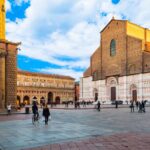
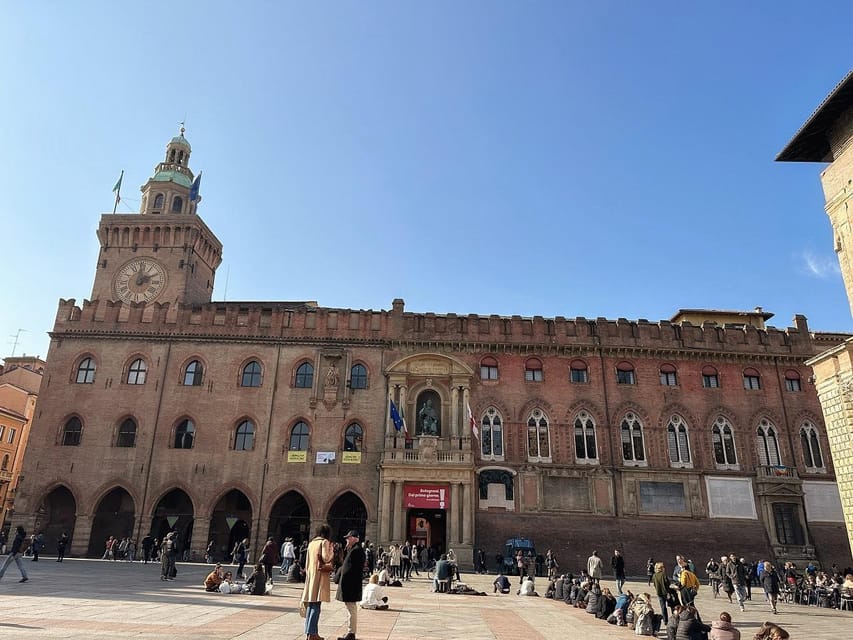
From Neptune, the route leads you to Piazza Maggiore, which feels like Bologna’s social and cultural center. The square is framed by historic buildings and palaces, and it’s the kind of place where you can already sense the city’s rhythm: ceremonial, civic, and very “people gather here.”
You’ll get a guided visit of about 30 minutes, which is just long enough to avoid the classic problem of staring at a square with no context. Instead of treating the buildings like background noise, you learn what made the area important and how it shaped daily life. This is where a good local guide really matters, because Bologna’s architecture doesn’t explain itself on first glance.
If you’re traveling with limited time, this stop is one of the best “bang for your walking” moments. You’re seeing a central stage for centuries, and you’re not spending hours just wandering.
San Petronio Basilica: Gothic, Renaissance, and the Meridian Line
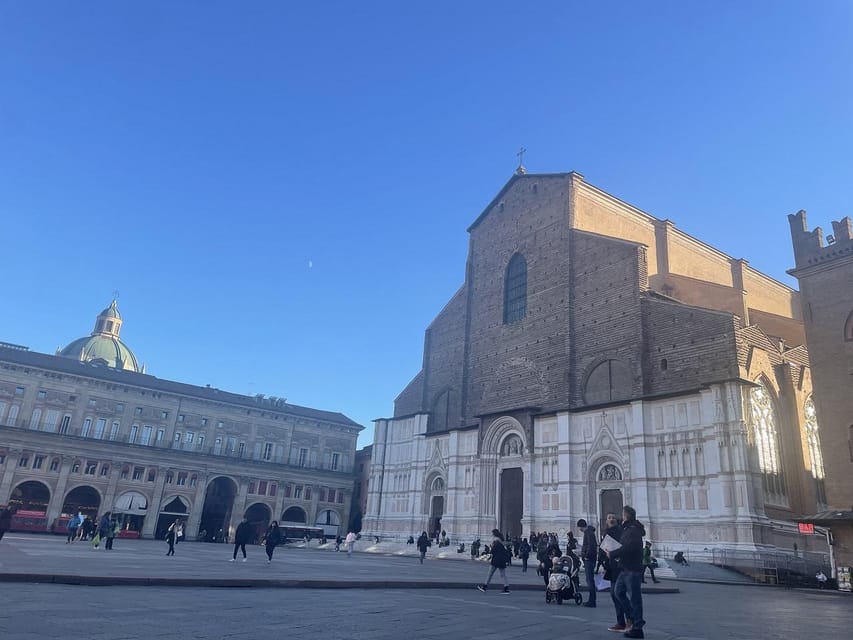
Next comes one of the real anchors of the tour: Basilica di San Petronio. This is a huge church, and the scale hits you right away. You’ll go inside for a guided visit of about 30 minutes, and you’ll see why it’s known as one of the largest churches in the world.
San Petronio is the perfect contrast stop. It mixes Gothic grandeur with Renaissance splendor, so it feels like two eras having an intelligent conversation. You’ll also focus on specific features—chapels, sculptures, and frescoes—so you’re not simply touring the building as a blur.
One detail I’d treat as a must-know is the Meridian Line. This is tied to Bologna’s scientific heritage, and hearing the story makes the basilica feel less like a standalone monument and more like a place where big thinking happened. Churches in Italy can be about art, ritual, and ceremony, but San Petronio adds another layer: science and measurement.
A quick heads-up: San Petronio is a sacred site, so plan to dress respectfully. And since the tour includes timed entry elements, you’ll want to arrive on time for every move you make.
Archiginnasio: the University of Bologna’s inner courtyard
After San Petronio, you’ll head to the Archiginnasio of Bologna, which was the main building of the University of Bologna—often described as the oldest university in the Western world. If you want a Bologna that’s not only towers and churches, this stop delivers.
You’ll have around 30 minutes for a guided visit, focused on the inner courtyard decorated with coats of arms. That kind of detail matters because it tells you the university wasn’t an abstract idea. It was connected to families, identity, and civic power.
This is also where the guide’s storytelling style can shine. When the tour is well led, you start noticing how education and architecture overlap—how the city physically hosted learning and how the university shaped Bologna’s reputation.
One note you should actually plan around: the inner courtyard is not available for visits on Sundays. If your schedule lands on a Sunday, ask ahead what will be covered instead, since the courtyard portion may not run as described.
Porticoes and street texture: why Bologna’s covered walkways matter
Bologna’s porticoes are famous, but a guided walk makes them more than a photo opportunity. You’ll stroll through streets where the porticoes stretch for kilometers, and you’ll learn why they shaped the city’s daily life.
This is the practical side of architecture: the porticoes act as covered walkways that protect people from the elements. They also create space for commerce, so it’s not just “pretty arches.” It’s infrastructure. It affects how you move, where you pause, and how the city functions on a rainy day.
As you walk, you’ll also be pointed toward picturesque squares and beautiful buildings. The goal isn’t to memorize every facade. It’s to understand the logic behind what you’re seeing, so you can look at Bologna after the tour and notice the patterns on your own.
If you love wandering but hate aimless wandering, this portion is a great balance. You get direction without feeling herded.
You can also read our reviews of more guided tours in Bologna


The Two Towers (Le due Torri): medieval status from the outside
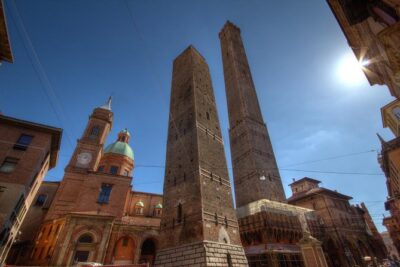
Next up is the Two Towers, Asinelli and Garisenda. Even viewed from the street, they’re impressive. You’ll learn how these towers became symbols of medieval heritage, and how they weren’t always the only towers around. In the past, many towers existed in Bologna, and their presence reflected the wealth and status of noble families.
Here’s what to expect: the tour includes an exterior visit, not a climb. That’s useful if you’d rather keep energy for the rest of the route, but it also means you won’t get the top-floor panoramic payoff. If climbing is your priority, this tour will feel a bit incomplete on that front.
Still, the exterior viewing works because the guide helps you interpret what you’re seeing—why the towers are shaped the way they are, and why they mattered politically and socially.
Santo Stefano: the Seven Churches complex in a calm maze
The last major stop is Basilica di Santo Stefano—often called the Seven Churches. You’ll visit the interior for about 30 minutes, and this is where the tone of the tour shifts. Instead of big open civic squares, you’re walking into a network of interconnected chapels.
The Santo Stefano complex is known for labyrinthine corridors and tranquil courtyards. That description isn’t just marketing language. In person, it feels like multiple little spiritual worlds linked together, and the guide helps you make sense of the layout so you don’t feel lost inside.
This is a quieter kind of sightseeing, and it’s a good way to end a walking tour. By the time you’re here, your feet are tired, but your head still wants the stories. A guided visit keeps it from becoming a vague walk through pretty rooms.
And because it’s a sacred site, you should keep the same respectful dress mindset you had for San Petronio.
Guides really make this one: Maurizio, Vittoria, and strong English
The most consistent praise centers on the people leading the walk. You’ll typically be with an expert local guide, and the energy matters because Bologna’s landmarks can get overwhelming if no one explains the connections.
In the feedback I paid attention to, guides like Maurizio stand out for having a command of Bologna’s place in world history, plus very impressive English delivery. Another name that shows up is Vittoria, praised for being engaging, sharing clear details, and being willing to answer questions. That combination—friendly, organized, and able to explain things in plain terms—changes how the tour feels.
Also, English is the tour language, so you’re not stuck piecing together what the guide says. It makes the 2.5 hours feel more like guided insight and less like “just walking with someone.”
Price and value: what $55.80 gets you
At $55.80 per person for a 2.5-hour small-group tour, the pricing makes sense if you think in terms of time and inclusion.
You’re paying for:
- A small-group guided experience (max 8)
- Interior access to San Petronio and Santo Stefano
- Guided interpretation, not just sightseeing
- Two Towers exterior viewing
- Skip the ticket line
You’re not paying for:
- Transport to the meeting point
- Two Towers climb (you only see them from outside)
If you’re doing Bologna for the first time and want a curated path through major landmarks, this is usually good value. One reason: it stacks key sights into one walk, so you don’t burn half a day figuring out logistics and timing on your own.
Timing and logistics that can trip you up
This tour uses timed tickets. You’re expected to arrive at the meeting point 15 minutes before the start time. Tickets can expire within 5 to 10 minutes, and it isn’t possible to join after the tour begins.
So treat this like an early appointment, not a casual stroll. If you’re the kind of traveler who likes to wander to the last second, set an alarm and build in buffer.
Also note the tour route includes walking and it’s not suitable for pregnant women, people with mobility impairments, or those with pre-existing medical conditions. And keep in mind there are rules for what you bring: no weapons or sharp objects, and no luggage or large bags.
Finally, religious-site schedules can change. Some sites may have occasional closures due to holy observances. If that happens, your guide will explain from outside, and last-minute adjustments can be communicated at the start.
Should you book this Bologna highlights tour?
Book it if you want:
- A focused way to see San Petronio, Archiginnasio, Porticoes, the Two Towers area, and Santo Stefano in one outing
- Interior time in two major religious landmarks, guided so you understand what you’re looking at
- A small-group format (max 8) with strong English support from the local guide
Skip it (or plan differently) if:
- You specifically want to climb the Two Towers, since this one is exterior only
- You need accessibility accommodations that aren’t compatible with walking-heavy routes
- You’re unlikely to arrive on time for timed entry
If you’re balancing Bologna with food stops and other neighborhoods, this tour is a smart backbone day. It helps you understand the city before you go taste things, wander further, or pick your next photo angle with confidence.
FAQ
Where is the tour starting point?
You meet in front of the Statue of Neptune in Piazza del Nettuno, near Bar Vittorio Emanuele. The guide holds a signboard that says Walks In Europe.
What time does the tour last?
The tour lasts about 2.5 hours. Starting times depend on availability.
How big is the group?
It’s a small-group tour with a maximum of 8 people.
What’s included in the tour?
Included are the 2.5-hour small-group guided experience, interior visits to Santo Stefano and San Petronio Basilica, an exterior visit of the Two Towers, and an expert local guide. It also includes skip-the-ticket-line access.
What is not included?
Transport to the meeting point is not included. Also, climbing the Two Towers is not included.
Which languages are available?
The tour is offered in English.
Do I need to arrive early?
Yes. You must arrive 15 minutes before the start time because tickets are timed and can expire within 5 to 10 minutes.
Can I join after the tour starts?
No. It isn’t possible to join once the tour has commenced.
Are any parts unavailable on Sundays?
Yes. The Inner Courtyard of Archiginnasio is not available for visits on Sundays.
Is the tour suitable for everyone?
No. It is not suitable for pregnant women, people with mobility impairments, and people with pre-existing medical conditions.