Bologna teaches you to look closer. This 2.5-hour guided walking tour connects major university landmarks with the stories that made Bologna a learning hub. I especially like how you cover both the “big-name” university sights and the more human teaching details. And I like that the experience is paced for a small group of up to 15, so you can ask questions as you go.
My favorite part is the mix of places: Piazza San Domenico for professor monuments, then the Museo Medievale’s teaching bas-reliefs, and finally the Archiginnasio di Bologna and its famous anatomy spaces. The guide’s job is to make these sites feel connected, not like separate stops. It also helps that the tour is offered in English.
One thing to consider: museum and site entrance tickets are not included for the Museo Medievale and Archiginnasio, and the Anatomy Theater visit is partly optional. Also, like any popular walking tour, you’ll want to show up on time—there has been at least one reported no-show case—so keep an eye on your messages close to start time.
In This Review
- Key points before you go
- Why Bologna’s oldest university matters on foot
- Meeting at Piazza del Nettuno: simple logistics that save time
- Piazza San Domenico: professor monuments in the middle-ages spotlight
- Museo Civico Medievale: teaching scenes carved in bas-relief
- Archiginnasio di Bologna: from university schools to medical theater
- What makes the guiding different (and what you should ask)
- Price and value: what you pay for, and what you’ll still need
- Rain, no-show risk, and other gotchas to plan around
- Who this tour suits best (and who might want something else)
- Should you book this Bologna University walking tour?
- FAQ
- How long is the Bologna City & Europe Oldest University private guided tour?
- What language is the tour offered in?
- How many people are in the group?
- Where does the tour start and end?
- What are the main stops on the itinerary?
- Are museum and entrance tickets included?
- Is the museum open every day?
- Is the Anatomy Theater visit included?
- Does the tour run in the rain?
- Can I cancel for a full refund?
Key points before you go
- Small-group size (up to 15) keeps the walk moving but still leaves room to ask questions
- Professor monuments + teaching scenes give context beyond famous buildings
- Archiginnasio’s 17th-century Anatomy Theater is the standout visual stop
- Museo Medievale closure on Mondays can affect your day
- Entrance tickets not included means you’ll budget a bit extra
- Rain-ready route, with possible cancellation only in heavy weather
Why Bologna’s oldest university matters on foot
Bologna’s university is a big deal for one simple reason: it helped set the pattern for how higher education looked in Europe. On a walking tour like this, you don’t just see architecture—you see the physical map of learning. You’ll move from public squares tied to teaching fame, into spaces where instruction was literally on display in art, and then into university halls built for study.
What I like about this format is that it connects ideas to objects. The professor monuments in Piazza San Domenico aren’t random statues. They’re tied to reputation and teaching identity. Then the Museo Medievale bas-reliefs show teaching as a scene: students, the act of instruction, and the way knowledge was staged for an audience. By the time you reach Archiginnasio, you’re primed to notice what the buildings were designed to do.
If you’re the type who likes history you can point to—this one works.
You can also read our reviews of more guided tours in Bologna



Meeting at Piazza del Nettuno: simple logistics that save time
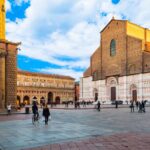
This tour starts at Piazza del Nettuno, 3 (the meeting point is listed as F8VR+PQ). You’ll end back at the same meeting spot. That’s practical. It means you don’t need to plan a separate rendezvous or figure out transit from a different neighborhood.
The walking portion runs about 2 hours 30 minutes. In that window, you’re not meant to “sightsee for hours” on your own. Instead, the timing is set up so each stop gives a specific piece of Bologna University’s story. Shoes matter here. Even if the pace is comfortable, you’ll still be on your feet for a long enough stretch that you’ll want good soles.
The tour is private for your group, but it’s also limited to a small group size. Translation: you get the social feel of a group walk without the chaos of huge crowds.
Piazza San Domenico: professor monuments in the middle-ages spotlight
Your first stop is Piazza San Domenico, where you spend about 30 minutes. The focus is on monuments to the most illustrious professors of the Middle Ages. This is a smart opening because it frames Bologna University as something with public status, not only an academic institution tucked away behind doors.
You also get a free admission element here, which helps you start the tour without immediately thinking about ticket logistics. More importantly, Piazza San Domenico gives you “context in stone.” You’re seeing how teaching fame was celebrated in a public setting.
What to watch for: look for the way the space feels like a civic stage. Later, when you’re in the museum and university halls, you’ll understand that teaching wasn’t just private study—it was part of public identity too.
Museo Civico Medievale: teaching scenes carved in bas-relief
Next is Museo Civico Medievale (often referenced as the Museo Medievale). Plan on about 1 hour, and note that the admission ticket is not included. This stop is where the tour shifts from monuments to the visual language of instruction.
Inside, you’ll learn through vivid bas-reliefs that depict professors teaching an audience of students. That detail matters. Instead of hearing abstract claims about education, you see how teaching looked as a formal event. The guide narration is what ties the scenes to the bigger story of Bologna’s university culture.
One practical drawback: the museum is closed on Mondays. If your travel plans include Monday, you may need to pick a different day—or you may find the tour route can’t include this stop depending on scheduling. The museum hours are also specific: Tuesday to Friday from 9:00am to 3:00pm, and Saturday and Sunday from 10:00am to 6:30pm.
If you like history that’s visual, not just textual, this is the moment you’ll feel the tour earning its time.
Archiginnasio di Bologna: from university schools to medical theater
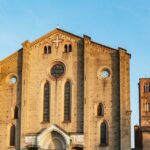
Your third stop is Archiginnasio di Bologna, also about 1 hour. Here you walk to the palace area that served as the city’s school hub from the 16th to the 19th centuries. That broad range is useful. You’re not stuck in one era—you’re watching Bologna’s academic identity change over time.
The big hook is the 17th-century Anatomy Theater, decorated with wooden sculptures tied to medicine. If you’ve seen anatomy spaces in other European cities, you’ll notice the difference here is how the theater is part of a teaching building, not a standalone attraction. It’s meant to support learning and public understanding of medicine.
Teatro Anatomico (the Anatomy Theater experience) is described as optional, and the ticket price isn’t included. That means you’ll want to decide on the spot. If you’re especially interested in medicine history, you’ll probably want to add it. If you’re short on time or budget, you can still get the core university architecture story without it.
Practical note: because some elements here require separate tickets, your total cost can shift depending on what you choose at the Archiginnasio stop.
You can also read our reviews of more city tours in Bologna

What makes the guiding different (and what you should ask)
A major reason this tour earns strong ratings is the way the guide handles questions and adapts on the fly. One highlight from the feedback: the guide was able to adjust to the group’s needs, which is exactly what you want when you’re mixing museum time, outdoor monuments, and a big indoor anatomy-related stop.
So what should you ask? Here are good, low-effort questions that match the tour’s focus:
- How did Bologna’s university shape education beyond the city?
- Why were professors celebrated publicly in spaces like Piazza San Domenico?
- What does the Anatomy Theater setting tell you about how medicine was taught?
Because you’re in a small-group setting, you’re more likely to get direct answers rather than a one-size-fits-all script.
One caution based on communication feedback: the tour’s communication wasn’t perfect in one case. That’s not something you can fully prevent, but you can reduce the risk by watching for any updates and double-checking where you should meet shortly before you leave your hotel.
Price and value: what you pay for, and what you’ll still need
The price is $153.78 per person for an about 2.5-hour experience with an expert guide. On value, here’s the honest breakdown:
Included
- Expert professional guide
- This is described as a private tour/activity (your group participates)
Not included
- Food and drinks
- Entrance tickets for museums and other paid sites
What you get for the money is mostly interpretation: someone turns Bologna’s university landmarks into a connected story you can carry around in your head for the rest of the trip. The stop choices are curated to cover major themes—professors, teaching scenes, and medicine-themed instruction spaces—without forcing you to read a bunch of signs.
Where the cost can rise is straightforward. You’ll likely pay entrance for the Museo Medievale and for parts related to Archiginnasio, and the Anatomy Theater component is optional with its own ticket. One stop is free in the route (Piazza San Domenico), which helps keep the “extra ticket” burden from feeling constant.
If you’re budgeting, treat the advertised price as the guiding cost, then add an estimate for paid entrances based on your choices at the museum and Archiginnasio.
Rain, no-show risk, and other gotchas to plan around
The tour says it runs even when it’s raining, which is great in a city where weather can turn fast. In heavy rain, the tour may be cancelled with a full refund. That’s the kind of policy that keeps you from losing money outright.
The bigger “risk you can manage” is timing and communication. There has been at least one reported case where a tour was cancelled without advance notice, leaving people waiting and not getting an alternative that day. You can’t control the operator’s behavior, but you can protect yourself:
- Arrive a bit early at Piazza del Nettuno, 3 so you aren’t waiting with cold hands and an empty square.
- Keep your phone charged and check app messages close to departure.
- If you’re traveling on a tight schedule day, don’t stack this tour as your only single option for that day’s Bologna plan.
Also remember: the museum is closed Mondays, so if your trip lines up with that day, the route may not match what you’re expecting.
Who this tour suits best (and who might want something else)
This is a strong pick if you:
- Want an easy walking structure for Bologna’s university story
- Like history connected to real places—monuments, teaching scenes, university halls
- Have a limited time window and want the core landmarks in one pass
- Prefer small-group attention rather than a huge bus-style tour
It may be less ideal if you:
- Only want free sights and don’t want to pay museum entries
- Need fully flexible pacing throughout, since the route is set by the planned stops
- Are traveling on a Monday and can’t adjust your schedule for the Museo Medievale closure
Should you book this Bologna University walking tour?
Yes, I think you should book it if you want a compact, story-driven walk through Bologna’s university identity. The best reason: the route isn’t just about impressive buildings—it’s about the idea of teaching and the way it shaped Bologna’s public reputation, from professor monuments to carved teaching scenes to the anatomy-focused spaces at Archiginnasio.
Book it with eyes open on two points. First, budget separately for paid entrances, especially if you plan to add the optional Anatomy Theater element. Second, give yourself a little buffer on the meeting time and keep an eye on day-of messages, since one cancellation/no-show complaint has appeared in the feedback.
If you like your travel history with context you can see, this one is worth the time.
FAQ
How long is the Bologna City & Europe Oldest University private guided tour?
It’s listed as approximately 2 hours 30 minutes.
What language is the tour offered in?
The tour is offered in English.
How many people are in the group?
The tour is limited to a small group size, capped at 15 people.
Where does the tour start and end?
It starts at Piazza del Nettuno, 3, 40124 Bologna (meeting point listed as F8VR+PQ) and ends back at the same meeting point.
What are the main stops on the itinerary?
The tour includes Piazza San Domenico, the Museo Civico Medievale (Museo Medievale), and Archiginnasio di Bologna.
Are museum and entrance tickets included?
No. Entrance tickets for museums and other paid sites are not included. (The stop at Piazza San Domenico is noted as free.)
Is the museum open every day?
No. The Museo Medievale is closed on Mondays. It’s open Tuesday to Friday from 9:00am to 3:00pm, and Saturday to Sunday from 10:00am to 6:30pm.
Is the Anatomy Theater visit included?
A visit to the Teatro Anatomico is described as optional, and its ticket price is not included.
Does the tour run in the rain?
It takes place even when it’s raining. In heavy rain, it may be cancelled and you’re given a full refund.
Can I cancel for a full refund?
Yes. You can cancel up to 24 hours in advance for a full refund.