REVIEW · BOLOGNA
All the wonders of the Bologna hills
Book on Viator →Operated by Riccardo Bacchi · Bookable on Viator
Frescoes and quiet brickwork on a hillside walk. This short, private Bologna hills outing links three places that feel worlds apart, guided by Riccardo Bacchi and culminating at Bagni di Mario. You’ll see how art, faith, and practical engineering all shaped life just outside the city core.
I love the Renaissance fresco trail at San Michele in Bosco, especially the names tied to the cycles, and I also love the deep calm of the Cenobio di San Vittore, with its warm red-brick look and well-kept medieval feel. One drawback to plan for: this is a hill day with a moderate fitness requirement, so comfy shoes matter and you shouldn’t expect zero walking or uneven ground.
In This Review
- Key highlights you’ll feel right away
- Why the Bologna Hills Tour Hits Different Than a City Walk
- Price, Tickets, and Private-Group Time in the Bologna Hills
- Stop 1: San Michele in Bosco, a Church Complex with Carracci-Era Frescoes
- Stop 2: Cenobio di San Vittore, Red Brick and Medieval Peace You Can Still Feel
- Stop 3: Bagni di Mario (Conserva di Valverde), Pope Pius IV’s Water Cistern
- The Guide Factor: How Riccardo Bacchi Makes Art and History Stick
- How Much Walking Is Involved, and What to Bring
- Who This Bologna Hills Tour Suits Best
- Should You Book This Bologna Hills Tour?
- FAQ
- What is the duration of the Bologna hills tour?
- What time does the tour start?
- Where is the meeting point?
- Does the tour end back at the meeting point?
- What language is the tour offered in?
- Is this a private tour?
- Is pickup offered?
- Are admission tickets included?
- What fitness level is required?
- What is the cancellation policy?
- When will I receive confirmation after booking?
Key highlights you’ll feel right away
- Three distinct sites in one half-day without long drives between them
- San Michele in Bosco’s art wall: church + fresco cycles + an octagonal cloister
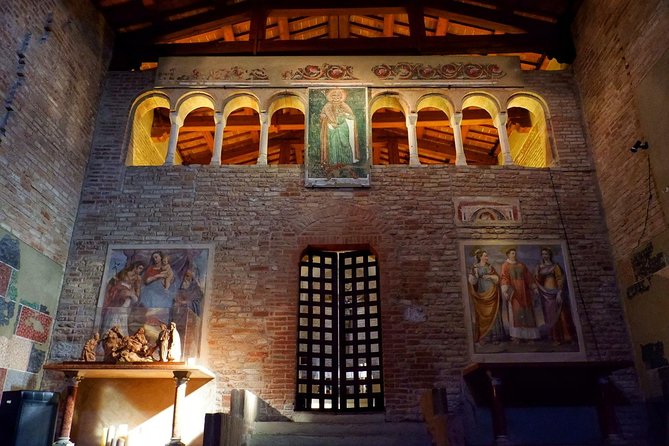
- Cenobio di San Vittore’s medieval calm with 13th-century frescoes and a wooden choir
- Bagni di Mario hydraulic engineering: Pope Pius IV and one of the best-preserved 16th-century water structures
- English guidance by Riccardo Bacchi with humor and clear explanations
Why the Bologna Hills Tour Hits Different Than a City Walk
Bologna is famous for food, arcades, and big-city energy. Up on the hills, the mood changes fast. You trade crowds for stone, brick, and quiet corners where time feels slower.
This tour works because it doesn’t treat the hills like scenery. You focus on real places with layered purpose: a church complex tied to an active hospital, a medieval religious retreat, and a Renaissance cistern built for daily city needs. That mix gives you both beauty and context.
And the guide matters here. Riccardo Bacchi is known for taking art and history and turning them into plain-language stories you can actually follow. It makes the buildings feel less like museum stops and more like places you understand.
You can also read our reviews of more tours and experiences in Bologna.


Price, Tickets, and Private-Group Time in the Bologna Hills
At $189.36 per person for about 4 hours, this is priced like a guided experience with included access at key stops. You’re paying for more than the view: you’re paying for a focused route, a live English guide, and entry support where the tour includes tickets.
Here’s how the time is structured. You start at 9:00 am at Hotel Porta San Mamolo, Vicolo del Falcone, 6/8, 40124 Bologna. The visit ends back at the meeting point, and the tour runs until about 2:30 pm.
Ticket mix is important for value. San Michele in Bosco is listed as free admission for this stop, while Cenobio di San Vittore and Bagni di Mario have admission included. That reduces your out-of-pocket costs compared to doing everything independently, and it keeps the schedule tight.
Also, you get a private format: it’s only your group. That tends to make questions easier and pacing less rushed, especially in churches and cloisters where moving politely matters.
Stop 1: San Michele in Bosco, a Church Complex with Carracci-Era Frescoes
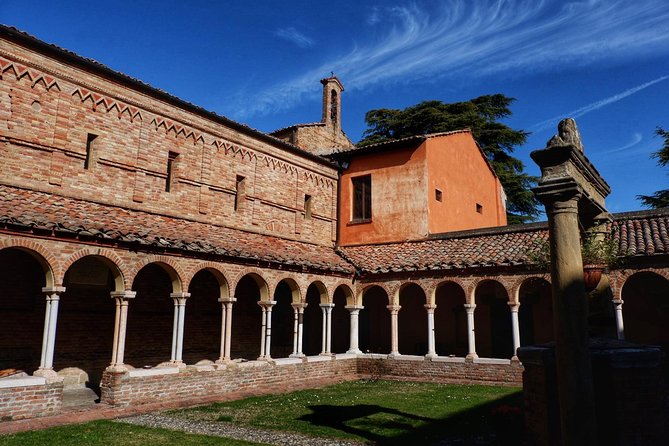
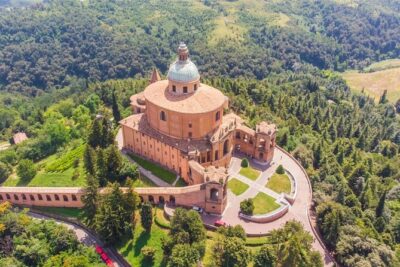
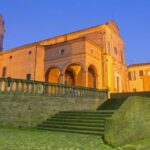
San Michele in Bosco is the kind of place where you feel why people built big and artistic on purpose. The complex has enormous architectural and artistic value, and today it also houses an orthopedic hospital. That blend of sacred art and real-world use adds an interesting layer—this isn’t frozen behind glass.
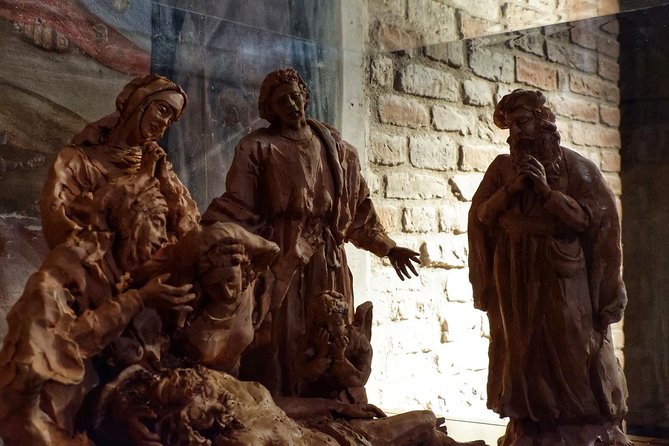
The church is the anchor. You’ll be looking at a church space with standout features plus Renaissance fresco cycles tied to artists such as Bagnacavallo, Prospero Fontana, and Amico Aspertini. If you’ve ever wondered why Renaissance art in Bologna feels distinctive, this is a good place to start making those connections.
Then there’s the cloister. The octagonal cloister sits in a partial state of neglect, but that doesn’t make it less worth seeing. If anything, it makes the history feel more honest—frescoes by the three Carracci brothers are part of what you’ll encounter here, alongside the quieter convent-style atmosphere.
A practical note: this stop is 1 hour and includes free admission for the experience. That’s just enough time to see the big artistic elements without feeling like you’re being rushed through a maze of rooms.
Stop 2: Cenobio di San Vittore, Red Brick and Medieval Peace You Can Still Feel
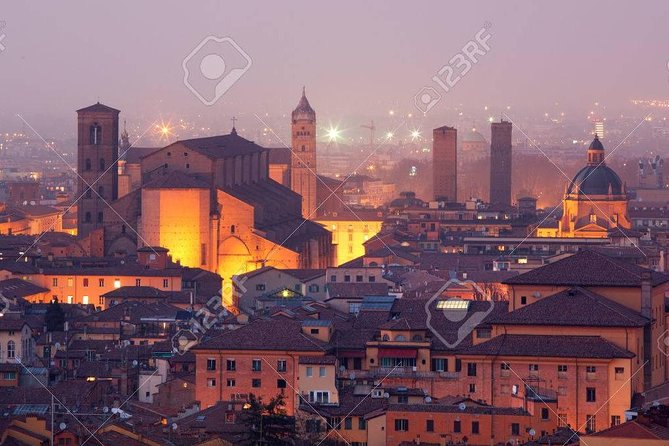
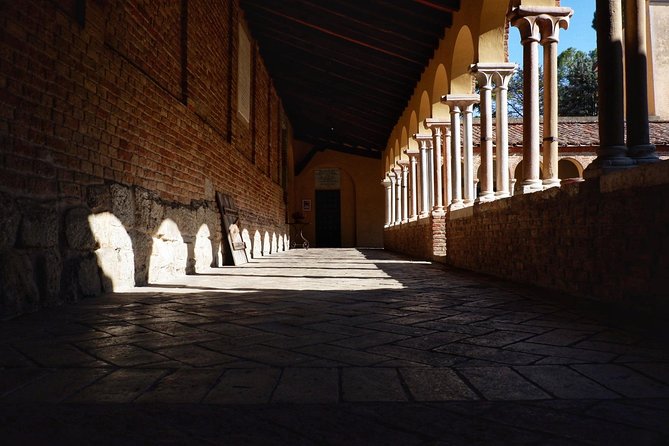
If San Michele in Bosco feels like a layered art complex, the Cenobio di San Vittore leans into stillness. It’s described as a corner of peace and meditation desired by friars in medieval times, and the key word is perfectly preserved.
Visually, you’ll notice the red brick of Bolognese clay right away. That color matters because it shapes how the frescoes and interior light read. This isn’t just background—it’s part of the experience.
The art focus here is strong. You’ll see 13th-century frescoes, noted as the oldest in Bologna after those of the Rotonda di Villa Aldini. Expect warm colors in a local Gothic style, and then a different rhythm with a Renaissance wooden choir. Add the other art treasures, and the whole place feels like a carefully held mood rather than a single highlight.
This stop lasts 40 minutes, and the admission ticket is included. For me, the value is how quickly it transports you. In under an hour you get medieval imagery, a sense of how religious life was shaped, and a physical space that still carries that atmosphere.
Stop 3: Bagni di Mario (Conserva di Valverde), Pope Pius IV’s Water Cistern
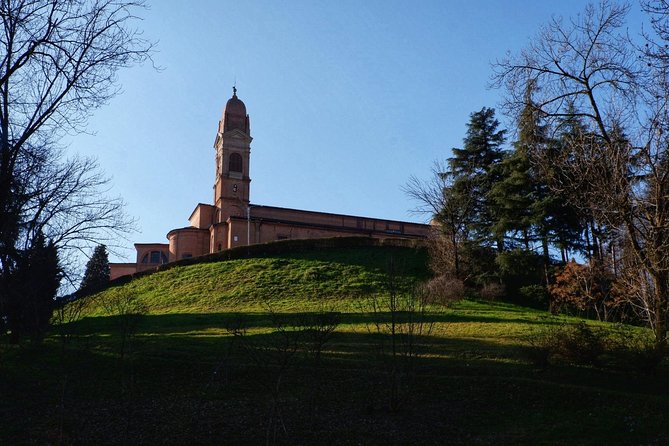
From prayer and frescoes, you switch to practical engineering—and it’s one of the most fascinating turns you can take in Bologna’s hills.
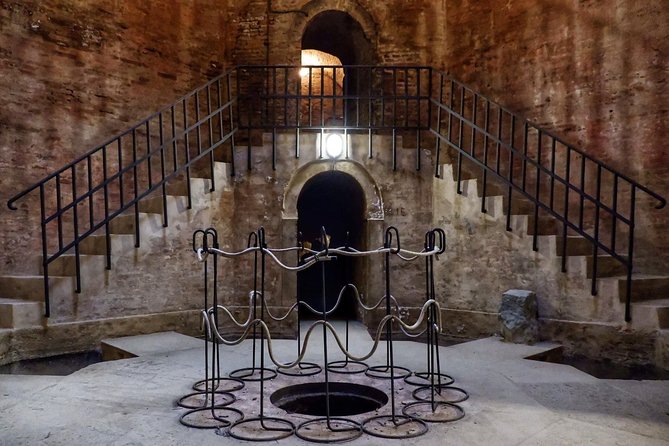
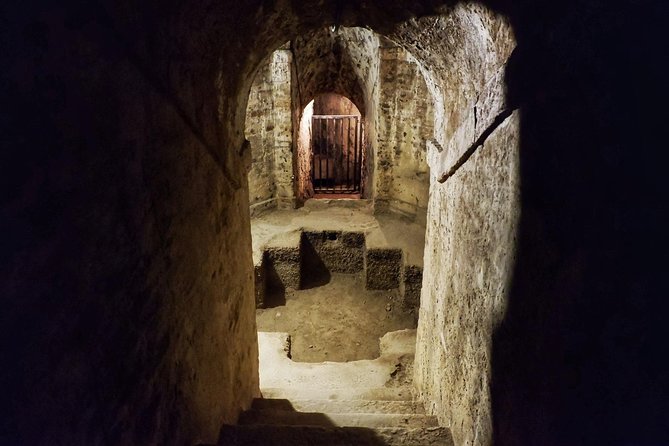
Bagni di Mario, also called Conserva di Valverde, is a Renaissance cistern excavated in the sandstone heart of the hill. The big name is Pope Pius IV, and the purpose was practical: supplying the city with fresh and drinking water.
The cistern survives in a way that makes it feel almost unreal. It’s described as one of the best preserved hydraulic structures of the 16th century, and that preservation changes how you experience it. Instead of hearing abstract “old infrastructure” talk, you can actually look at how it was built and how it served daily life.
This stop is also 40 minutes, with admission included. The timing fits well because it’s near the end of the tour—so you finish with something that’s not just pretty, but useful in a very human way. Water systems kept cities alive. That’s a story worth understanding.



The Guide Factor: How Riccardo Bacchi Makes Art and History Stick
One of the strongest reasons to choose this tour is the guide. Riccardo Bacchi gets praised for English that’s clear and easy to follow, plus a sense of humor that keeps the stops from becoming lectures.
What I like about that approach is how it changes your attention. Frescoes can look like a busy wall until someone helps you see the structure: what’s where, why that subject matters, and how artists connected to Bologna shaped what you’re seeing. The same goes for the softer spaces like Cenobio di San Vittore—humor and clarity help you notice details you might otherwise miss.
This tour also pairs well with a guide who can connect big themes without overcomplicating them. You’re seeing art, religious life, and water engineering in one half-day. A good guide stitches that together so you leave with understanding, not just photos.
And yes, the guide’s personality can make the day feel lighter. Even when you’re standing still in quiet interiors, you’re engaged.
How Much Walking Is Involved, and What to Bring
The hills setting means you should have moderate physical fitness. The tour is short in hours, but not necessarily short on steps. Also, church and cloister spaces tend to mean uneven surfaces and slow pacing.
Bring:
- Comfortable walking shoes with grip
- A small water bottle (you’ll appreciate it even if the stops are inside)
- A light layer if weather is changeable in the hills
- Your camera, though remember to be respectful where photography rules may apply
Good shoes are the biggest takeaway. If your feet are happy, you can enjoy the slower, detail-focused stops instead of counting minutes.
Service animals are allowed, and the tour is near public transportation, which is handy if you want flexibility around the meeting time.
Who This Bologna Hills Tour Suits Best
This tour is a great match if you like art, but you also like it when someone explains why the art is there and what it was for.
It also fits well if you:
- Want a private half-day option starting from central Bologna
- Prefer fewer stops with more time at each place (this is paced in 1 hour + 40 minutes + 40 minutes)
- Like mixing beauty with practical stories, like water engineering at Bagni di Mario
- Enjoy travel days guided in English, without awkward translation or hurried explanations
If you’re someone who wants a full-on museum day with long free time to roam on your own, this might feel structured. But if you want a guided “great hits” route that still feels authentic, it’s a strong fit.
Should You Book This Bologna Hills Tour?
I’d book it if you want a focused half-day that shows Bologna’s hills as living spaces, not just views. San Michele in Bosco gives you Renaissance fresco names and a cloister atmosphere. Cenobio di San Vittore gives you medieval quiet with red-brick warmth and 13th-century frescoes. Bagni di Mario adds that memorable shift into Renaissance water infrastructure linked to Pope Pius IV.
The main reason to hesitate is the moderate fitness requirement. If you know you struggle with walking on uneven ground, you may feel more strain than you expect.
If that’s not a concern for you, this tour is a solid value: private group time, English guidance by Riccardo Bacchi, and included admissions where it counts. It’s the kind of trip that makes the hills feel like part of Bologna’s real story.
FAQ
What is the duration of the Bologna hills tour?
The tour lasts about 4 hours.
What time does the tour start?
It starts at 9:00 am.
Where is the meeting point?
Hotel Porta San Mamolo, Vicolo del Falcone, 6/8, 40124 Bologna BO, Italy.
Does the tour end back at the meeting point?
Yes, the activity ends back at the meeting point.
What language is the tour offered in?
The tour is offered in English.
Is this a private tour?
Yes. Only your group participates.
Is pickup offered?
Pickup is offered.
Are admission tickets included?
Admission is free for San Michele in Bosco. Admission is included for Cenobio di San Vittore and Bagni di Mario (Conserva di Valverde).
What fitness level is required?
Travelers should have a moderate physical fitness level.
What is the cancellation policy?
Free cancellation is available up to 24 hours in advance for a full refund.
When will I receive confirmation after booking?
You’ll receive confirmation at the time of booking unless you book within 9 days of travel, in which case confirmation is received within 48 hours (subject to availability).