REVIEW · CITY TOURS
Bologna Murder Mystery: Self-Guided City Quest
Book on Viator →Operated by Questo · Bookable on Viator
Mystery turns Bologna into a game. This self-guided city quest lets you chase clues through famous spots without the hassle of a group schedule. I especially like that the clues work offline, so you won’t burn through mobile data while you’re hunting answers on the street.
The second big plus for me is how much control you get. You can choose your own start and end time, and the experience supports pause/resume, which is great when you hit a long line at a church or need a quick espresso break.
One thing to keep in mind: the story side may not fully click for everyone, and since you’re walking and looking for answers, it’s easy to feel a little disoriented for a few minutes if you stop too long between clues.
In This Review
- Key things I’d bet on before you go
- A Bologna murder mystery you control (not a rigid group tour)
- Price and value: $6 for a city-wide game is a fair deal
- Getting started in Bologna: where the quest actually begins
- The 1-hour route: 11 puzzle challenges across Bologna landmarks
- Porta Galliera: a decorated gate from Bologna’s fortified past
- Piazza VIII Agosto: market energy in a real public square
- Arena del Sole: a historic theatre with a modern comeback
- Fountain of Neptune: bronze details completed in the 1500s
- An oratory built around an ancient Madonna image
- Basilica of San Petronio: a cathedral with an unfinished face
- The Baroque church sanctuary and Niccolò dell’Arca’s sorrow
- The leaning duo: Torre degli Asinelli and Torre Garisenda
- Bologna’s oldest university teaching before it had a home
- Park of Montagnola: Napoleonic-era planning in a public space
- Bologna Cathedral (San Pietro): mostly 1600s, with older edges
- Archiginnasio: the university building named from the old word for study
- Palazzo dei Banchi: Vignola’s façade and the story behind the name
- How to make it enjoyable (instead of annoying)
- Who should book this Bologna self-guided mystery walk?
- Should you book the Bologna Murder Mystery self-guided city quest?
- FAQ
- How long is the Bologna Murder Mystery self-guided city quest?
- Do I need an internet connection to play?
- What’s the price per person?
- What language is the experience offered in?
- Where do I start and where does it end?
- Can I pause and resume the quest?
- Can I get a refund if I cancel?
Key things I’d bet on before you go
- Offline puzzle solving: no internet connection needed to play.
- Your pace, your timing: start and end whenever you want, with pause/resume.
- 11 puzzle challenges: real-world clues that push you to look closely at landmarks.
- A walk that goes past the top picks: you’ll notice places you might otherwise skip.
- Good for groups: works well for families or friends because it’s independent.
- Android or iPhone friendly (mobile access code): you’re guided by the Questo app.
A Bologna murder mystery you control (not a rigid group tour)
This is the kind of sightseeing that feels lighter than a guided tour but still structured enough to keep you moving. You’re not stuck with “listen and look” for an hour. Instead, you’re solving mini challenges that make you scan the details on façades, monuments, and squares—things you’d normally walk right past.
I like that it’s completely independent. You can time it for when you actually want to see Bologna in daylight, during evening air, or right after lunch. And because it’s mobile-based rather than a person leading you, you don’t have to worry about matching someone else’s walking speed.
If you’re the type who likes history but gets bored with lectures, this hits a better rhythm. You’re learning by hunting clues, not by sitting through facts. The trade-off is you’ll do more “finding your way” yourself, especially when you get pulled into reading inscriptions or admiring architecture.
You can also read our reviews of more guided tours in Bologna



Price and value: $6 for a city-wide game is a fair deal
At about $6 per person, this is priced like a budget activity, not a big-ticket tour. That matters in Bologna, where you can spend money fast once you start stacking museums, taxis, and guided experiences.
Here’s what you’re paying for: an app-based quest, a set of 11 puzzle challenges, and an on-the-street mystery storyline that uses real locations. You also get flexibility through pause/resume, which can turn the experience from a rushed hour into a calm, properly enjoyed walk.
The best value part for me is the offline setup. If you’ve ever wandered through a city while your data drains, you’ll appreciate that you’re not constantly paying for internet just to play a game. Still, bring common sense: your phone battery matters, even if the clues don’t require mobile data.
Getting started in Bologna: where the quest actually begins
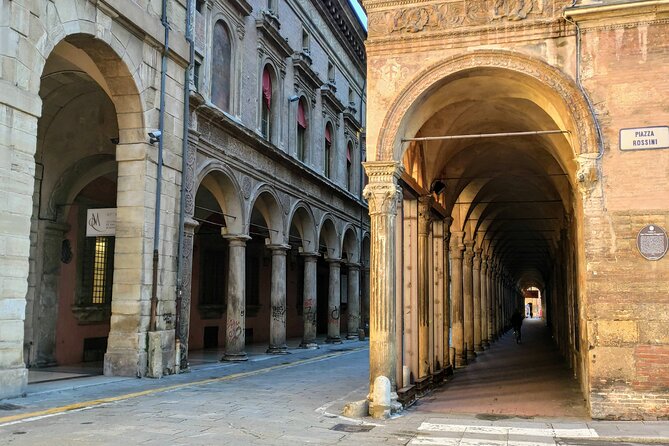
The experience starts at Piazza XX Settembre, 15 in Bologna and ends at Piazza Rossini, 1. The app provides step-by-step guidance to get you to Piazza Rossini as you complete the story beats.
The hours listed run essentially all day, which is helpful when you want flexibility. You also receive confirmation at booking time, and you’ll get a mobile access code to use with the Questo app.
A practical note: since it’s self-guided, your success depends on paying attention to the app instructions at each stop. If you drift off to admire one building too long, you might feel like you’re late to the next clue—but that’s part of the fun, as long as you keep moving.
The 1-hour route: 11 puzzle challenges across Bologna landmarks
This quest is designed as a walking route through central Bologna. You’ll move from outer-city gate remnants toward major squares, then through university-and-education landmarks, and finally into the area around Piazza Maggiore and nearby historic sites.
Even though the time target is about 1 hour (approx.), your pace will set the feel. If you stop for photos and read plaques, expect to stretch it a bit. If you keep a steady rhythm, it stays close to the hour mark.
Below is what you’ll be looking at along the way, and why each spot works well for clue-finding.
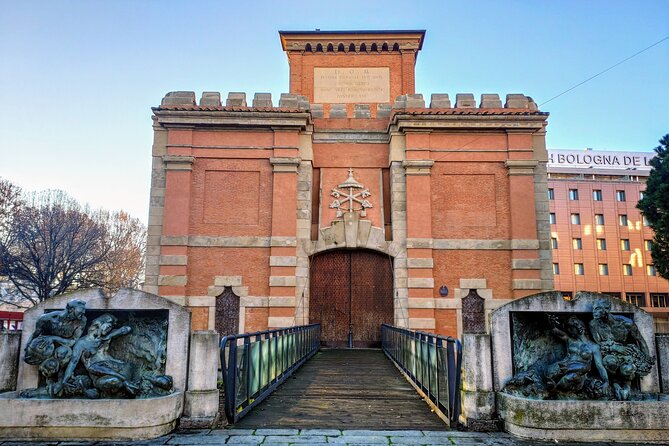
Porta Galliera: a decorated gate from Bologna’s fortified past
You start at Porta Galliera, one of the most ornamented remaining gates from Bologna’s former outer medieval walls. The gate was built in 1659–1661, using designs by architect Bartolomeo Provaglia.
This stop is great for the game style because gates always have details: shapes, carvings, and architectural cues that make your “find the answer” task feel natural. If you’re tempted to walk past it quickly, don’t. Pause and look around like the puzzle expects.
You can also read our reviews of more city tours in Bologna


Piazza VIII Agosto: market energy in a real public square
Next up is Piazza VIII Agosto, where on Friday and Saturday you’ll find a traditional, large street market called the Piazzola market, with 400+ street stalls. Even if you don’t catch the market, the square still gives you open space for app hints and quick orientation.
As a clue location, markets work because there’s always activity and sightlines. Just be mindful of crowds if you’re playing with kids or a group who needs to stay together.
Arena del Sole: a historic theatre with a modern comeback
You’ll then reach Arena del Sole, a historic theatre whose origins date to 1810. It reopened in 1995 after eight years of reconstruction, so it carries both history and a story of renewal.
This is a clever stop for a quest because theatres are full of symbols—names, functions, and architectural features that invite close looking. Expect the app to point you toward something you can spot without needing a museum ticket.
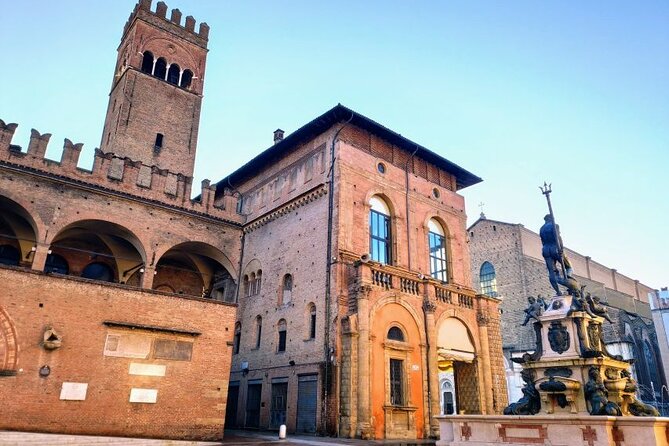
Fountain of Neptune: bronze details completed in the 1500s
The quest takes you to the fountain where Neptune dominates in bronze. The fountain was completed in 1565, and the life-size bronze figure of Neptune was completed and fixed around 1567.
This is one of those Bologna moments where you get a pay-off for looking carefully. Instead of rushing past, you’ll have a reason to scan the sculptural details and surrounding elements, which makes the stop feel personal rather than just scenic.
An oratory built around an ancient Madonna image
You’ll visit an oratory built between 1481 and 1497. It was tied to the celestine fathers of the nearby church of San Giovanni Battista, who built a small church over an area connected to an early medieval wall door and an ancient image of the Madonna, protected in a tabernacle.
For clue play, this kind of layered backstory is gold. It rewards careful reading and attention to religious architecture details. If you like “how did this place become what it is?” this stop gives you that kind of payoff.
Basilica of San Petronio: a cathedral with an unfinished face
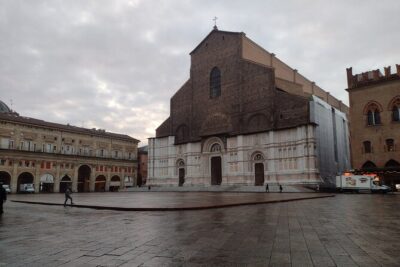
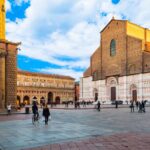
You’ll move to a landmark that dominates Piazza Maggiore: the Basilica of San Petronio, dedicated to Bologna’s patron saint Saint Petronius. Construction began in 1390, and the main facade has remained unfinished.
This stop is perfect for a scavenger hunt because unfinished doesn’t mean unimpressive. It invites you to look at structure, symmetry, and where the plan changes. The app clue here nudges you to notice things most people skip because they assume they already know the view.
The Baroque church sanctuary and Niccolò dell’Arca’s sorrow
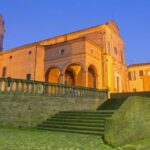
Another highlight is the Baroque church area where construction began around 1687–1690, designed by Giovanni Battista Bergonzoni. The plan is elliptical with a dome by Giuseppe Tubertini, completed in 1787, and the facade was added later in 1905.
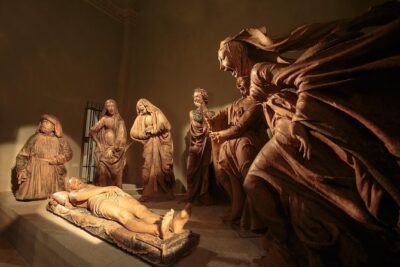
The sanctuary houses the sculptural group Sorrow over Dead Christ (1463) by Niccolò dell’Arca. This is the kind of stop that can turn a puzzle walk into a genuinely memorable art encounter—because once you see the work, it sticks with you.
The leaning duo: Torre degli Asinelli and Torre Garisenda
You’ll then hit the towers: the taller Asinelli and the smaller but leaning Garisenda. Their names come from families traditionally credited with constructing them between 1109 and 1119.
This is a fun checkpoint because towers are a visual magnet. You can spot them from a distance, then use the app to look for the clue details that make the tower story feel specific, not generic.
Bologna’s oldest university teaching before it had a home
One of the more interesting stops in the route is about education itself. The clue here references the fact that Europe’s oldest university didn’t have a base until well into the Renaissance, and before then classes happened in professors’ homes or public spaces.
That angle makes this quest more than sightseeing. You’re not just looking at buildings—you’re learning how people learned here, which changes how you see the city around you.
Park of Montagnola: Napoleonic-era planning in a public space
Next is the Park of Montagnola, a public park in Bologna. Its original construction dates to 1805, linked to Napoleonic rule, and the park design was commissioned from Giovanni Battista Martinetti.
Parks are useful on a puzzle route because they let you reset. Use the open space to regroup, check your phone for the next clue prompt, and plan your next walk segment without rushing.
Bologna Cathedral (San Pietro): mostly 1600s, with older edges
You’ll also see Bologna Cathedral, dedicated to Saint Peter. Most of the current building dates to the 17th century, with a few parts from the late 16th century.
As a clue location, cathedrals work because there’s a lot to notice at eye level—façade elements, architectural rhythm, and religious symbolism. The game format gives you a reason to slow down even if you’ve seen a cathedral look before.
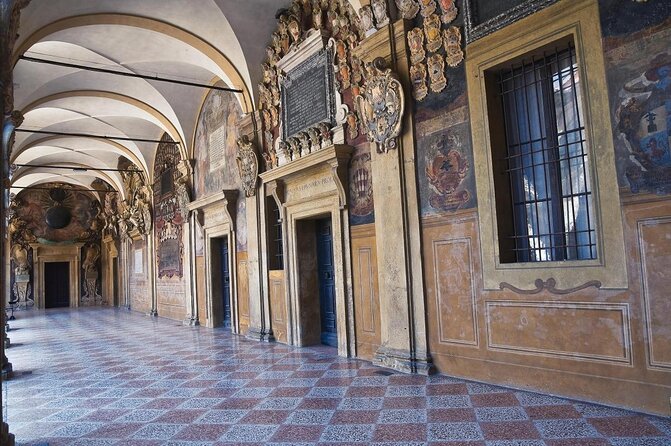
Archiginnasio: the university building named from the old word for study
The quest continues to the Archiginnasio, which began at the end of February 1562 and was built very quickly. It was inaugurated on October 21, 1563, and its name connects to the classical term Studium, the way the University was first called in Bologna.
This stop makes sense for a mystery walk because the building itself is a “clue.” It tells you something about Bologna’s priorities—education, civic pride, and permanence. If you like to feel history in structures, this one will land.
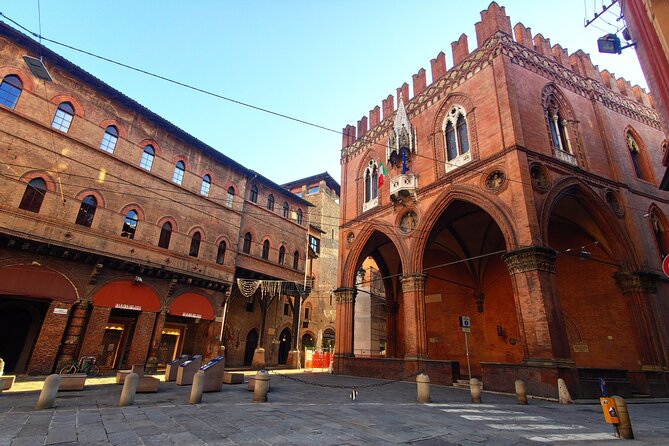
Palazzo dei Banchi: Vignola’s façade and the story behind the name
Finally, you’ll reach Palazzo dei Banchi, designed by Vignola in the 16th century. The façade was intended to hide the alleys of the rear market, and the name comes from the ancient presence of currency exchange banks.
This is a satisfying finish because it blends architecture and everyday commerce. The quest helps you notice how cities used grand fronts to manage busy markets behind the scenes.
How to make it enjoyable (instead of annoying)
This experience is simple in concept, but it works best when you treat it like a gentle investigation rather than a race. I recommend starting with a fully charged phone and a quick look at where you’re going, even if the app is doing the guiding.
If you’re playing with a group, set one expectation: everyone solves together at each stop. That way you don’t end up with the classic split-up moment, where half the group is hunting the clue and the other half is still admiring the bronze Neptune.
Also, plan for a little extra walking time on days with market activity. Even without a market, Bologna can slow you down with side streets and beautiful façades, and that can be good—just keep moving enough that the app doesn’t feel like it’s dragging behind you.
Who should book this Bologna self-guided mystery walk?
This is a strong fit if you like walking and want your sightseeing to feel interactive. It’s also a good option for families or groups of friends because you can keep the experience together without worrying about matching a strict guided group pace.
If you’re in Bologna for a short time and want more than the usual highlights, this quest nudges you beyond the standard top list. The puzzle format makes you pay attention to details, so you carry away more than photos.
On the other hand, if you dislike self-guided experiences or you need a strong story arc to stay engaged, you might find the mystery component only partly satisfying. You’ll still learn a lot from the places, but you’re choosing a puzzle walk more than a full narrative performance.
Should you book the Bologna Murder Mystery self-guided city quest?
I’d book it if you want an easy, low-cost way to explore Bologna with a plan that doesn’t control your whole day. The combination of offline play, 11 challenges, and a flexible start/stop makes it a practical choice for real life—especially if you hate being herded.
Skip it only if you strongly prefer a live guide, or if you know you get frustrated when you’re navigating without constant human direction. Otherwise, this is exactly the kind of “one-hour mission” that turns a walk into something you remember.
FAQ
How long is the Bologna Murder Mystery self-guided city quest?
It’s listed as about 1 hour (approx.).
Do I need an internet connection to play?
No. You don’t need internet connection to play, so you won’t use up your data.
What’s the price per person?
The price is $6.00 per person.
What language is the experience offered in?
It’s offered in English.
Where do I start and where does it end?
You start at P.za XX Settembre, 15, 40121 Bologna BO, Italy and it ends at P.za Rossini, 1, 40126 Bologna BO, Italy.
Can I pause and resume the quest?
Yes. Flexibility is included, so you can pause and resume anytime.
Can I get a refund if I cancel?
Yes, free cancellation is available. You can cancel up to 24 hours in advance for a full refund.