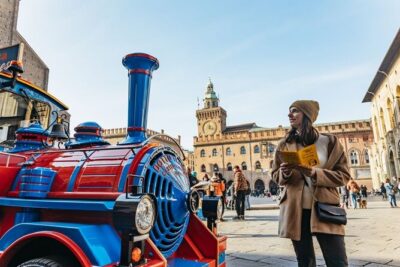
Bologna can feel like a lot at once. This 2.5-hour walk turns the big sights into a clear story, starting at Neptune’s Fountain and ending along the famous porticoes. I love how you get interior access to major religious sites instead of just passing by, and I love the way the local guides connect details to what you’re seeing on the street. The main drawback is simple: it’s not a good fit for reduced mobility, and you’ll be walking most of the time.
This tour also has a practical edge. It’s small, capped at 8 people, and it’s organized around timed entry for the ticketed interiors. If you show up late, you can miss those entry windows—so plan to arrive early and don’t count on running in at the last second.
You’ll finish back at the meeting area, which makes the rest of your day easier. Just dress respectfully for the churches, keep your daypack within monument rules, and expect that a site could occasionally close for holy observances (your guide will explain from outside when that happens).
In This Review
- Key things to know before you go
- Starting at Neptune’s Fountain in Piazza del Nettuno
- Piazza Maggiore: Bologna’s civic stage
- San Petronio Basilica: one of the world’s biggest churches, plus real science
- Archiginnasio: stepping into the University of Bologna’s past
- Le Due Torri (Asinelli and Garisenda): medieval power in stone
- Santo Stefano: the Seven Churches as a slow-moving maze
- Portici di Bologna: where the city shelters you and the shops thrive
- Why the guides (Maurizio and Andrea) make the difference
- Small-group pacing and what to watch for
- How to get the most from each stop
- Should you book this Bologna historical highlights tour?
- FAQ
- How long is the Bologna Historical Highlights Walking Tour?
- Is the tour offered in English?
- What’s included in the tour price?
- Which sites do we visit during the tour?
- Where is the meeting point?
- What time should I arrive at the meeting point?
- Can I join the tour after it has started?
- Is the Archiginnasio courtyard available on Sundays?
- Is the tour suitable for reduced mobility?
- FAQ
- What if I need to cancel?
- Do I need to dress a certain way for the churches?
- Are bags allowed inside the monuments?
Key things to know before you go
- Small group of up to 8 means more questions and less bottlenecking at entrances
- Interior visits included for San Petronio and Santo Stefano, not just exterior photos
- Timed entry matters: arrive 15 minutes early at Piazza del Nettuno
- Archiginnasio courtyard differs on Sundays (it isn’t available that day)
- Occasional closures happen, and you’ll get outside explanations when needed
- Mostly walking on uneven historic streets, so comfortable shoes matter
Starting at Neptune’s Fountain in Piazza del Nettuno
Your tour begins at Piazza del Nettuno, where Neptune’s Fountain anchors the whole scene. This is one of those spots that looks like decoration until you learn what it’s doing there—why it was designed, and why a city like Bologna would put myth and meaning right in the public heart of town.
I like how the start point sets your mindset. Instead of treating each landmark like a separate postcard, you start with a symbol and then learn to spot the same kinds of symbols in other places you’ll visit right after.
You can also read our reviews of more walking tours in Bologna


Piazza Maggiore: Bologna’s civic stage
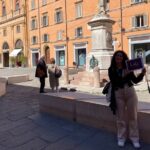
From there, you head to Piazza Maggiore, Bologna’s central square and a natural magnet for street life. The open space works like a theater: palaces and major buildings frame the square, and the sheer scale helps you understand why people used to meet here for commerce, politics, and celebrations.
You also get a quick orientation moment. Standing in the middle of Piazza Maggiore, you can start picturing the city layout as a series of connected places rather than a maze of streets.
If you’re hoping for a lot of inside time at this stop, don’t. This is more about context and looking—then moving on.
San Petronio Basilica: one of the world’s biggest churches, plus real science
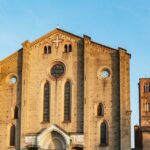
Next comes the interior of Basilica di San Petronio, included with your tour. It’s a huge church with Gothic muscle and Renaissance finesse, and the best way to appreciate it is slowly, from chapel to chapel, while your guide connects architectural choices to Bologna’s long memory.
The highlight inside is the Meridian Line. It’s the kind of feature that makes you pause, because it ties religion to observation and puts Bologna’s scientific heritage into physical form. If you like history that isn’t just dates and names, this is one of the places where the story feels tangible.
Practical note: dress respectfully here and plan for quiet, slow movement inside sacred spaces.
Archiginnasio: stepping into the University of Bologna’s past
After the church, you move to Archiginnasio di Bologna, the former main building of the University of Bologna, which has deep roots in Western education. You’ll spend time in the interior courtyard, where coats of arms decorate the space and hint at the university’s old social world—students, scholars, and the city’s elite all tied together.
This stop is especially valuable if you’re the kind of traveler who likes to know why a city thinks the way it does. Bologna isn’t only about churches and towers. It’s also about institutions that shaped how people learned, argued, and built careers.
Two timing details matter here. The courtyard visit is described as part of the experience, but the inner courtyard is not available on Sundays, so your time inside may be different depending on the day.
Le Due Torri (Asinelli and Garisenda): medieval power in stone
Then you’ll reach Le Due Torri, the Two Towers: Asinelli and Garisenda. This is one of those skyline moments where the towers don’t just look dramatic—they explain how medieval Bologna signaled status and wealth.
Your guide frames them in the larger context: there used to be many towers, but most didn’t survive. The Two Towers remain, so they become the symbols for a whole lost layer of the city’s history.
If you’re trying to get photos, do it without rushing. Street viewpoints can be tight, and the best angles usually take a few steps and a quick reposition.
You can also read our reviews of more guided tours in Bologna


Santo Stefano: the Seven Churches as a slow-moving maze
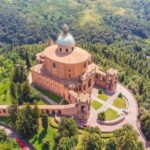
Your final major interior stop is Basilica Santuario Santo Stefano – Complesso delle Sette Chiese, also included. Instead of one grand hall, you explore interconnected chapels, with corridors and courtyards that feel more like a small pilgrimage route than a single church visit.
I like how this kind of layout changes your pace. Even on a guided walk, you tend to slow down here because the space invites it. It’s quiet, it’s layered, and it’s easier to understand why people visited in earlier centuries as part of a spiritual journey.
There’s also a practical benefit: this stop gives you a meaningful close to the tour because it feels restful compared with the more open squares and busy streets.
Portici di Bologna: where the city shelters you and the shops thrive
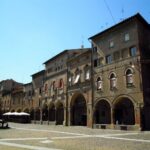
To wrap things up, you’ll walk through Portici di Bologna—the iconic arcades that stretch for kilometers. These covered walkways are more than scenery. They explain how daily life in Bologna works: commerce under shelter, pedestrians protected from weather, and a built environment that shapes how far you’ll walk comfortably.
I find porticoes work great for a last stop because they blend architecture with real movement. You get the sense of the city as a place people live in, not just a place you look at.
Expect a gentle wind-down here, and you may have a brief sit-down near the end as part of the flow. It’s not a lecture break; it’s more like a chance to reset your legs before you head back.
Why the guides (Maurizio and Andrea) make the difference
The biggest strength of this experience is the human one. In past tours, guides such as Maurizio have stood out for deep local roots and a style that isn’t scripted. He’s described as having a PhD in medieval history and bringing that into plain language, then adapting the talk based on questions and interests.
Another name that comes up is Andrea, praised for historical explanations and also for sharing practical local ideas like where to eat and drink. One of the more useful details from that feedback: his official guide status helped with access in ways you wouldn’t always assume are possible.
Even if your guide isn’t the exact same person, this points to the right expectation. You should get more than a checklist. You should get someone who can connect what you’re standing in front of to why it exists.
Small-group pacing and what to watch for
This is a 2.5-hour walking tour with a maximum of 8 people, so it moves at a comfortable-but-active pace. That’s ideal for first-time visitors who want the central hits without losing the thread to a long day.
Still, there are a few considerations:
- The tour is not suitable for people with reduced mobility, so be honest about your walking tolerance.
- Large bags and backpacks aren’t allowed in the monument spaces, so bring a small day bag.
- Some entrances can involve security screening, and prohibited items can be confiscated at the monument entrance.
- Sites can close occasionally for holy observances; in that case, your guide will explain from outside and adjust if needed.
If you’re traveling with kids, decide based on your family’s walking stamina and patience for churches. It’s not a park-and-play tour.
How to get the most from each stop
Here’s how to make this tour pay off beyond photos.
- Ask one good question early. With small groups, questions shape the route flow and the depth of explanations.
- In the churches, plan to move slowly with the guide. The Meridan Line and the big interior spaces make more sense when you’re not rushing.
- Wear shoes you can trust. Bologna’s streets around the center look lovely, but they can be uneven.
- On Sundays, remember the Archiginnasio inner courtyard may be unavailable, so don’t plan your expectations around that specific interior view.
And yes, tips are appreciated. If your guide hits the sweet spot for you, a gratuity is a nice way to say thank you.
Should you book this Bologna historical highlights tour?
If you want a smart, focused route through Bologna’s most important landmarks, this is a strong choice. The combination of a local guide, a small group size, and included interior visits (San Petronio and Santo Stefano) gives you better value than a tour that only skims exteriors.
I’d skip it if you need step-free access or you’re dealing with limited mobility. I’d also consider a slower self-guided approach if you hate walking and you’d rather linger for long periods at just one site.
Otherwise, book it. You’ll leave with a clearer picture of Bologna: myth at the fountain, civic identity in the square, learning at the university building, medieval power in the towers, and devotion in the Seven Churches—then a final dose of everyday architecture under the porticoes.
FAQ
How long is the Bologna Historical Highlights Walking Tour?
It runs for about 2 hours 30 minutes.
Is the tour offered in English?
Yes, it is offered in English.
What’s included in the tour price?
You get a 2.5-hour guided tour, interior visits to San Petronio Basilica and Santo Stefano, an expert local guide, and a small group limited to max 8 people.
Which sites do we visit during the tour?
The tour includes Neptune’s Fountain, Piazza Maggiore, San Petronio Basilica, Archiginnasio di Bologna, the Two Towers (Torre degli Asinell and Garisenda), Basilica Santuario Santo Stefano (Complesso delle Sette Chiese), and Portici di Bologna.
Where is the meeting point?
The tour starts at Piazza del Nettuno, 40124 Bologna BO, Italy.
What time should I arrive at the meeting point?
Arrive 15 minutes before the start time because there are timed entries for tickets.
Can I join the tour after it has started?
No. It is not possible to join after the tour has commenced.
Is the Archiginnasio courtyard available on Sundays?
No. The Inner Courtyard of Archiginnasio is not available for visits on Sundays.
Is the tour suitable for reduced mobility?
No, the tour is not suitable for people with reduced mobility.
FAQ
What if I need to cancel?
You can cancel for free up to 24 hours in advance for a full refund.
Do I need to dress a certain way for the churches?
Yes. You’re requested to dress respectfully when visiting sacred sites.
Are bags allowed inside the monuments?
Large bags and backpacks are not allowed in the monument spaces. Prohibited items may be confiscated at entrances and not returned.