REVIEW · WALKING TOURS
Bologna: Guided Walking Tour
Book on GetYourGuide →Operated by Stephanie Foulkes Tourist Guide ER · Bookable on GetYourGuide
Stepping into Bologna feels like walking inside a storybook of brick and stone. This guided walking tour threads together the city’s big sights—San Petronio Basilica and the leaning towers—with the lived-in alleyways of the Quadrilatero, where you can see how traditional pasta gets made.
What I really like is how the walk mixes landmarks with explanations you can use, fast. I also love the way the guide keeps things human and interactive, the kind of guiding where questions get answered and the route can shift to your interests, like it did with guides such as Stephanie Foulkes and Tiziana.
One possible drawback: it’s a walking tour, and it doesn’t include food, so plan a meal stop before or after.
In This Review
- Key highlights you’ll remember
- Why Bologna’s brick-and-arcade core feels like a living map
- Where the tour starts (and how to meet without stress)
- Maggiore Square: the arcades that set the tone
- San Petronio Basilica: the interior scale that surprises you
- Paviglione portico and Archiginasium: from silk-worm markets to stories
- Neptune Square, the fountain, and Bologna’s symbols in plain view
- Santo Stefano church: why it earns the word mysterious
- Quadrilatero and traditional pasta-making: the lived-in Bologna moment
- Clock tower lingering: a small add-on that changes the ending
- Price and what you’re really buying for $70
- Who this Bologna walk suits best (and who might prefer something else)
- Should you book this Bologna guided walking tour?
- FAQ
- How long is the Bologna guided walking tour?
- What is included in the price?
- Is food or drinks included?
- Are tickets included for Archiginasium?
- Where do I meet the guide?
- Which languages are available for the live guide?
- Is the tour wheelchair accessible?
- Can I cancel for a full refund?
Key highlights you’ll remember
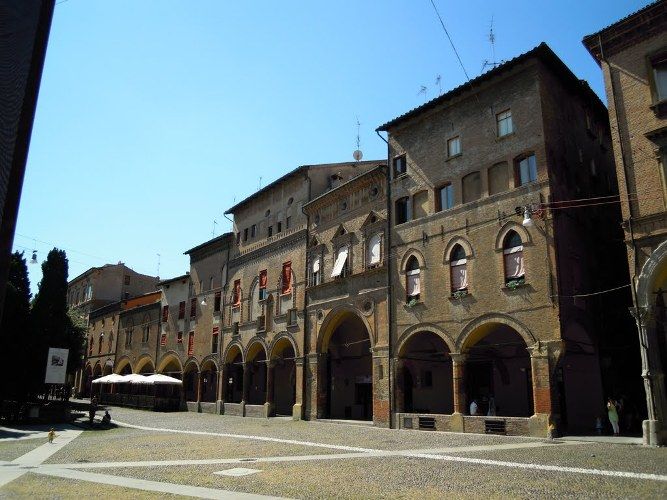
- Maggiore Square energy: arcades, mellow terracotta façades, and the start of the old-city loop
- San Petronio’s size in real life: it’s the kind of interior that makes you slow down and look up
- Paviglione portico to Archiginasium: a silk-worm market past you can picture while you walk
- Neptune Square landmarks: the fountain and the visual symbols that define Bologna
- Asinelli and Garisenda: the leaning towers, plus the nicknames they connect to
- Quadrilatero pasta-making: see traditional homemade pasta methods in action
Why Bologna’s brick-and-arcade core feels like a living map
Bologna has a look that sneaks up on you. The medieval center wears warm terracotta brickwork and plaster, and the arcades make everything feel connected—like you’re always one turn away from a view, a church doorway, or a little shop that’s been there for generations.
On this tour, the guide doesn’t just point. I like that you learn how to read the city: why certain buildings matter, what the legends are about, and which spots are best for photos, but also best for understanding. You’ll hear the city nicknames too—the red, the fat, and the learned—so when you see brick, food culture, or the reputation for learning, it actually clicks instead of staying a vague fact.
You can also read our reviews of more walking tours in Bologna


Where the tour starts (and how to meet without stress)
The meeting point can vary by the option you book, but you’ve got two easy anchors based on what’s offered: you can meet in front of the Neptune Fountain, or you can opt for pickup outside your accommodation if you’re in the city centre.
Plan for a smooth start by arriving a few minutes early with your walking shoes on. Even with no set-up drama, you’ll get more out of the first stretch if you’re not figuring out where to stand while everyone else is moving. This tour runs in rain or shine, so if the forecast is sketchy, bring something light you’ll actually wear.
If you book a private group, you can usually expect the pacing to feel closer to your group’s rhythm. If you book a non-private tour, it’s still organized, but you’re more likely to follow the flow of the group rather than steer it.
Maggiore Square: the arcades that set the tone
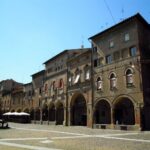
You begin at Maggiore Square, a place that instantly explains why Bologna is so walkable. The colonnades create that classic covered promenade effect—mellow, sheltered, and perfect for taking in the look of the historic center without feeling exposed.
From here, the tour moves toward San Petronio, and that matters because you’re not learning Bologna in random order. You’re starting from a central visual anchor, then turning it into a path where each stop makes the next one easier to understand.
If you’re the type who likes getting bearings fast, this is a good start. By the time you’ve walked under the arcades and seen how the buildings frame the space, you’ll already feel like the city is working with you instead of against you.
San Petronio Basilica: the interior scale that surprises you
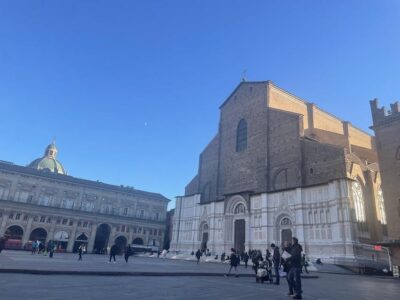
San Petronio is the kind of place that looks dramatic even before you enter. Once inside, the real lesson is scale: the basilica’s interior feels vast, and it’s not just architectural bragging rights. The size affects your mood. You naturally start looking up more, noticing details longer, and slowing down your pace.
What I like about getting this early is that it sets the “tone” for the entire walk. After San Petronio, the next churches and old corridors feel less like isolated stops and more like pieces of one big cultural puzzle.
Because the guide explains what you’re seeing, you’ll likely notice things you would otherwise pass over on your own. That’s especially useful here: basilicas can be overwhelming, and a guiding voice makes the experience less about wandering and more about understanding.
Paviglione portico and Archiginasium: from silk-worm markets to stories
Next up is the Paviglione portico, which leads you toward the Archiginasium area. Even without going deep into museum-style facts, the guide’s storytelling turns the architecture into a timeline.
The Archiginasium connection is big because it was once linked to a silk-worm market. That’s the kind of detail that changes the way you look at a building. You start thinking about trade, craft, and daily life—not just postcard images.
A practical note: tickets for the Archiginasium aren’t included. If you want to go in, you should be ready to pay extra. That’s not a deal-breaker, though. If you skip the interior, you can still enjoy the exterior context and keep the pace moving.
You can also read our reviews of more guided tours in Bologna


Neptune Square, the fountain, and Bologna’s symbols in plain view
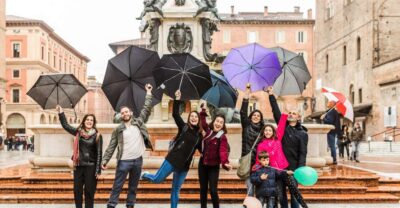
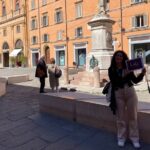
When the tour reaches Neptune Square, the experience shifts from religious monuments to public-life icons. You’ll see the Neptune fountain, a clear visual centerpiece for the area, and it’s a classic spot to connect the guide’s legends with what you can actually see in front of you.
This is also where the guide brings in Bologna’s main symbols: the two leaning towers, Asinelli and Garisenda. These towers aren’t just landmarks. They’re part of the city’s identity—so once you hear what they represent, you’ll recognize them everywhere, even in how locals talk about the skyline.
If towers are your thing, good. If you’re more into street-level atmosphere, it still works, because the towers give you a sense of where the city’s center of gravity is.
Santo Stefano church: why it earns the word mysterious
The walk continues toward Santo Stefano, described for good reason as mysterious. This is the kind of place where architecture and layout can feel a bit maze-like, and the guide’s role becomes really important: you’re not just staring at stone—you’re being shown how the complex is meant to be read.
Even if you’ve visited churches before, this stop can feel different because you’re moving through Bologna with a storyline already in your head. That makes Santo Stefano more than a detour. It feels like a chapter.
As you move through this area, you may also catch signs of pasta-making activity. The tour can include a chance to see sfogline (traditional pasta makers) in action, depending on what’s available. If the timing lines up, it’s one of those moments where you go from watching to understanding.
Quadrilatero and traditional pasta-making: the lived-in Bologna moment
The Quadrilatero area is where Bologna gets very real. This is where you connect the food side of the city—your “fat” nickname—with how people actually cook and work.
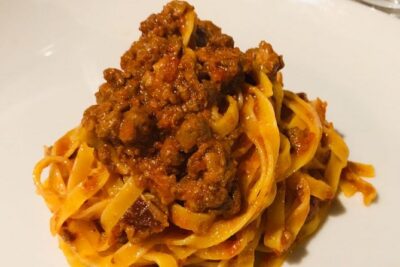
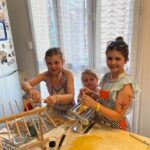
The tour includes time to see how traditional homemade pasta is made, and that’s the heart of why I think this walk is worth doing even if you already like architecture. You get the sensory side: hands-on craft, techniques, and the logic behind the shapes and steps.
You won’t leave with a recipe you wrote down in your notebook (food lessons aren’t guaranteed in this format), but you will come away with a clearer picture of pasta-making as a tradition, not just an item on a menu. If you’re a curious eater, this part hits.
Also, because it happens alongside the walking route, you avoid the common travel problem where food experiences feel pasted on at the end. Here it’s woven into the neighborhood you’re walking through.
Clock tower lingering: a small add-on that changes the ending
The tour finishes with a chance to linger up the clock tower. It’s a simple idea, but it’s a smart way to end a walking day. Going up gives you one broad view that ties together everything you just saw—brick, arcades, church domes, and those familiar tower silhouettes.
Even if you’re not obsessed with viewpoints, this is a good reset. After a couple hours of street-level detail, looking out helps your brain place the city in context.
Price and what you’re really buying for $70
At $70 per person for a 2–4 hour walk, you’re paying for something more than access to sights. You’re paying for interpretation and organization: a professional tour guide, plus a route that connects Bologna’s big symbols with smaller, meaningful places along the way.
Here’s how I think about the value:
- If you’d visit San Petronio and see a fountain anyway, the guide helps you spend less time guessing and more time understanding.
- The optional Archiginasium ticket can be an extra cost, but the guide’s storytelling keeps the experience coherent even if you choose not to enter.
- Seeing pasta-making adds value that a standard photo-walk doesn’t provide.
The other cost is time and footwear. You’ll be on your feet, and you’ll want comfortable shoes and weather-ready clothing. If you’re someone who likes to move at a steady, guided pace, this price feels fair. If you prefer to wander without explanations, you might feel you could do it cheaper on your own.
Who this Bologna walk suits best (and who might prefer something else)
This tour is a strong fit if you want a guided route that balances landmarks with local culture. It also suits families, couples, and solo travelers who like asking questions and getting straightforward answers.
It’s especially good for you if:
- You want the leaning tower photo moment with context, not just a skyline snap
- You care about craft and tradition, like pasta-making rather than only famous buildings
- You’d rather spend part of your day outside in a structured plan than research stops one by one
It may be less ideal if:
- You’re mainly chasing long museum hours (this is a walking tour, not a deep ticketed day)
- You don’t want any optional extra costs (Archiginasium entry is not included)
- You’re hoping food is part of the included price (it isn’t)
Should you book this Bologna guided walking tour?
I’d book this tour if you’re coming to Bologna for your first time and you want the city to make sense fast. The mix of big-square landmarks, San Petronio scale, Santo Stefano’s mood, and Quadrilatero pasta-making gives you a half-day that feels like Bologna instead of a checklist.
Choose it with confidence if you like a guide who’s prepared, friendly, and willing to work with your questions and preferences. The pacing stays built around the route, rain or shine, and that structure is exactly what helps a short trip feel full.
Skip it only if you want a purely self-guided experience or you’d rather avoid optional ticket costs and keep the day free of any extra stops. If that sounds like you, you’ll still enjoy Bologna on your own. But if you want a guided story you can walk along, this one’s a smart bet.
FAQ
How long is the Bologna guided walking tour?
The duration is listed as 2–4 hours, and it depends on the starting time availability.
What is included in the price?
The tour includes a professional tour guide.
Is food or drinks included?
No. Food and drinks are not included.
Are tickets included for Archiginasium?
Tickets for the Archiginasium are not included if you choose to enter.
Where do I meet the guide?
The meeting point can vary. Options include meeting in front of Neptune Fountain, or pickup outside your accommodation if it’s in the city centre.
Which languages are available for the live guide?
The tour offers live guided commentary in Spanish, English, French, German, Italian, and Portuguese.
Is the tour wheelchair accessible?
Yes, the tour is wheelchair accessible.
Can I cancel for a full refund?
You can cancel up to 24 hours in advance for a full refund.