REVIEW · FOOD
Bologna: Food and Wine Tasting with Interactive Game
Book on GetYourGuide →Operated by Bottega botlé · Bookable on GetYourGuide
Bologna turns the volume up when your wine tasting includes a game. In this small-group session at Bottega botlé, you taste standout Emilia-Romagna wines and local bites, then test your senses with the tablet-based Sommelier Game. The pairing stays practical, not stuffy.
I especially like the tight, focused flight: Pignoletto plus two different Sangiovese styles, each explained with food pairings. I also like the lineup of classic Bologna/E-R favorites, from mortadella Bologna to aged Parmigiano and Aceto Balsamico IGP di Modena, so you understand what changes on your palate.
One possible drawback: it’s in a wine bar setting, so depending on the time slot you book, you may notice a bit less quiet than a private room style tasting.
In This Review
- Key things that make this tasting work
- Why this Bologna food-and-wine tasting feels different
- The wine lineup: what you’ll taste and why it matters
- Pignoletto Fermo (La Vallona) — your fresh entry point
- Sangiovese In Purezza (La Casetta) — the “core” expression
- Sangiovese Appassimento (Santodeno) — same grape, different behavior
- Rewine technology adds a personal layer
- Emilia-Romagna food valley: the bites that teach pairing fast
- Prosciutto crudo: salt and perfume before the heavier stuff
- Mortadella Bologna: why a specialty can be a palate-shaper
- Parmigiano Reggiano 12/24 months: the age test
- Aceto Balsamico IGP di Modena: a tiny taste with big impact
- Local cheese and food: the comfort of variety
- The Sommelier Game: how the quiz trains your senses
- Guided tastings: who’s talking, and what you’ll get from the pairing notes
- Where it fits in your Bologna day (and how long to plan)
- The oil tasting you might not expect (but should)
- Price and value: what $34 buys you in real terms
- Who should book this Bologna tasting (and who might not)
- Should you book the Bologna food and wine tasting with Sommelier Game?
- FAQ
- How many wines are included?
- What food tastings are part of the experience?
- Is there an interactive component?
- Does the experience include oil tasting?
- Can I cancel and get a refund?
- Can I reserve without paying today?
Key things that make this tasting work
- Three wine styles that show how Sangiovese changes (in purity vs appassimento)
- Tablet-based Sommelier Game that trains sight and smell, not just taste
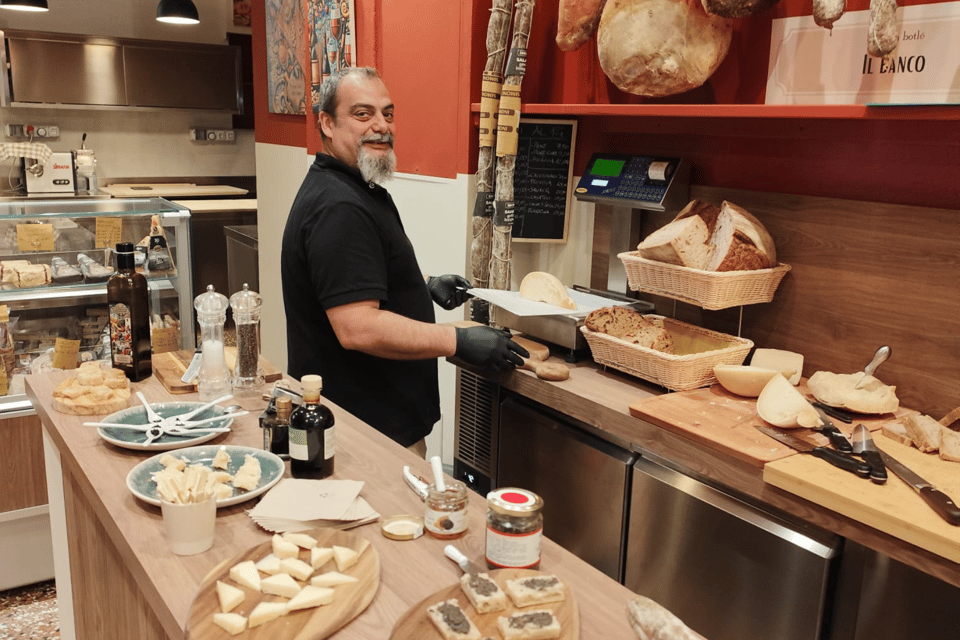
- Bologna food valley staples: prosciutto crudo, mortadella, Parmigiano, balsamic
- Oil tasting with monocultivar options (Coratina, Peranzana, Ogliarola)
- Small group capped at 10, so questions don’t get swallowed
- Fridge magnet souvenir tied to the I.Art exhibition
Why this Bologna food-and-wine tasting feels different
If you’ve done tastings that are basically “taste, swallow, move on,” this one teaches you to notice. The format is built around pairings and rapid comparisons, so you’re not just consuming wine. You’re learning how wine behaves when it meets real local food.
The interactive element is the big hook. During the meal-style tasting, you’ll use tablets for the Sommelier Game, a quiz-style challenge that pushes you to pay attention to details like aroma and visual cues. It’s competitive in a fun way, the kind of thing that keeps you from zoning out mid-pour.
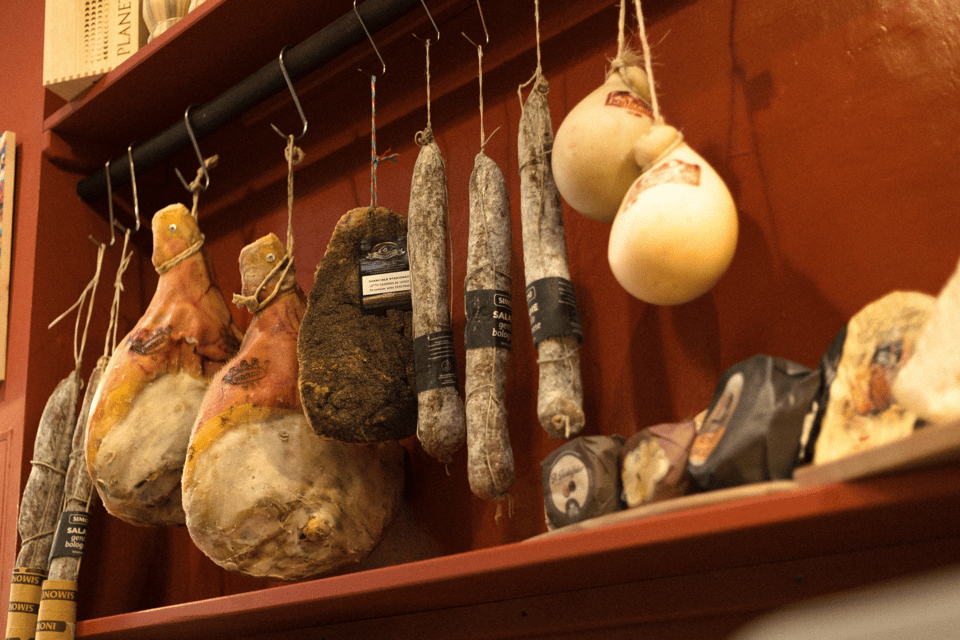
Then there’s the comfort factor: it’s Bologna and Emilia-Romagna food, not a far-off “mystery” menu. You get the classics people actually eat and buy: prosciutto crudo, mortadella Bologna, Parmigiano Reggiano aged 12/24 months, and balsamic with an IGP stamp. That means the “lesson” connects to flavors you can recreate later at home.
You can also read our reviews of more food & drink experiences in Bologna
The wine lineup: what you’ll taste and why it matters
This experience is built around a clear progression, which I like because it prevents that common wine-tasting problem: too many new terms, not enough structure.
Pignoletto Fermo (La Vallona) — your fresh entry point
You start with Pignoletto Fermo (70 ml). Pignoletto is a smart opener because it’s approachable and helps you reset your palate before you move into deeper, more complex grapes.
Sangiovese In Purezza (La Casetta) — the “core” expression
Next comes Sangiovese In Purezza (130 ml). That larger pour is telling. You’re meant to taste the grape’s baseline personality without extra tricks. In plain terms: this is your reference point for what Sangiovese tastes like when it’s not stretched by drying methods.
Sangiovese Appassimento (Santodeno) — same grape, different behavior
Finally, you taste Sangiovese Appassito/Appassimento (70 ml). Appassimento means grapes are dried before winemaking, which tends to shift flavor depth and texture. This is where the “wait, why does it taste different?” lightbulb usually clicks for most people, even if you’re not a self-declared wine nerd.
You can also read our reviews of more tours and experiences in Bologna



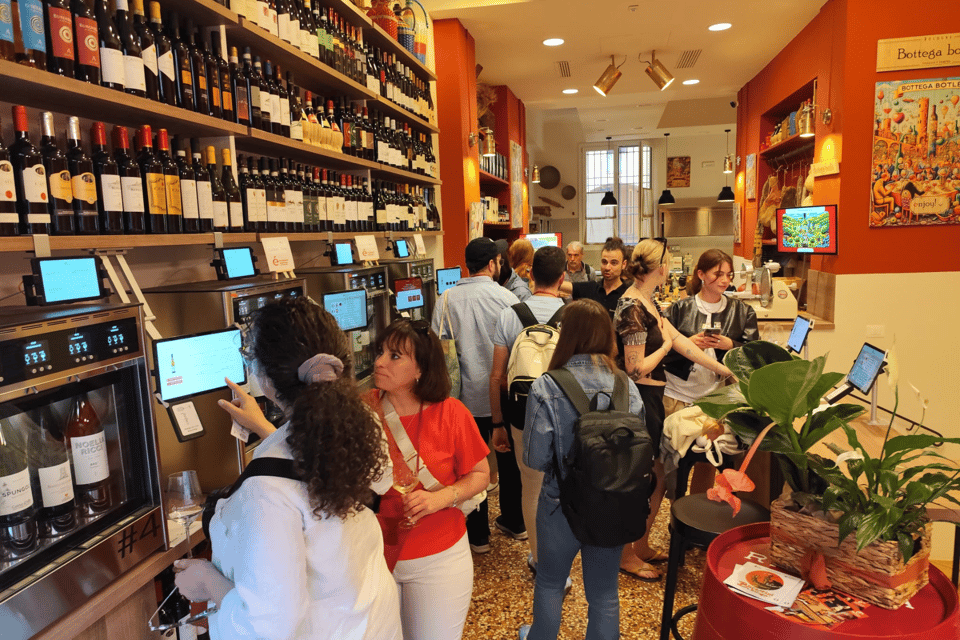
Rewine technology adds a personal layer
Alongside the guided tastings, there’s Rewine technology, which supports personalized recommendations. You’re still tasting with experts, but the tech component helps connect what you like to why you like it.
Emilia-Romagna food valley: the bites that teach pairing fast
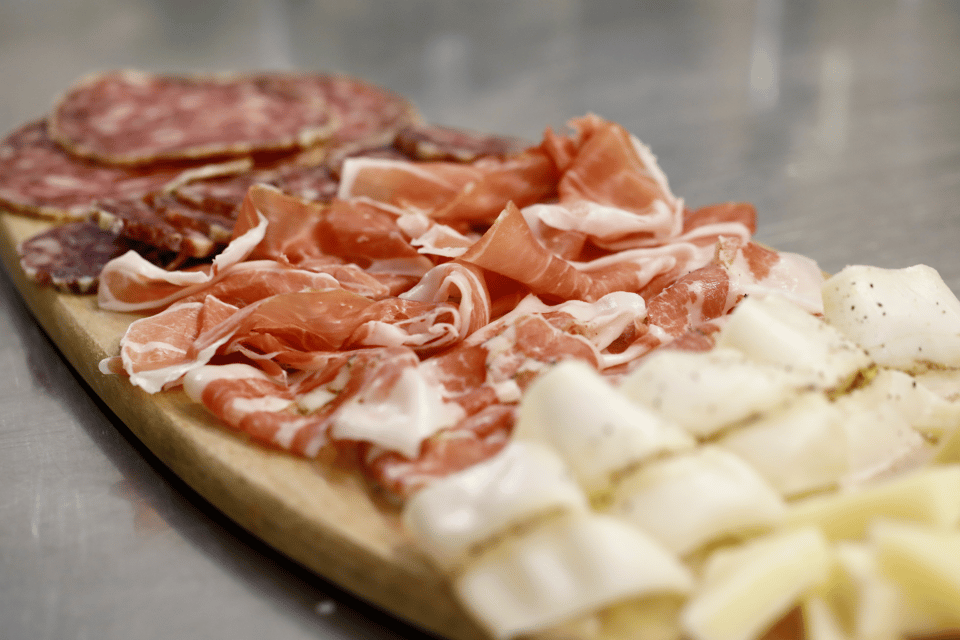
The food portion isn’t a token snack. It’s a sequence designed to show how each local product changes the wine. Expect multiple tastings across the main classics.
Prosciutto crudo: salt and perfume before the heavier stuff
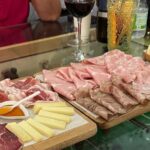
You’ll taste Prosciutto Crudo paired as part of the progression. Prosciutto’s role here is simple: salt + richness. That combo often sharpens fruit notes and makes wine feel more structured.
Mortadella Bologna: why a specialty can be a palate-shaper
Then comes Mortadella Bologna. This isn’t your bland deli cube. Mortadella brings fatty texture and distinct flavor character, which usually makes tannins feel softer and helps the wine read as smoother on your tongue.
Parmigiano Reggiano 12/24 months: the age test
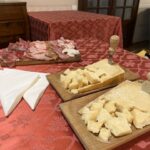
You also taste Parmigiano Reggiano with ages listed as 12/24 months. Age matters. Younger Parmigiano tends to feel creamier and milder; older Parmigiano tends to be bolder and more savory. When you pair it through the lineup, you learn fast how aging translates into the wine’s perceived flavor.
Aceto Balsamico IGP di Modena: a tiny taste with big impact
Aceto Balsamico IGP di Modena is one of the most powerful “pairing lessons” on the table. A spoon of balsamic can change aroma perception, boost sweetness impressions, and highlight fruit. It’s the kind of ingredient you remember because it’s small but loud.
Local cheese and food: the comfort of variety
Beyond the highlighted items, you’ll get local cheese and food tastings that keep things moving and prevent palate fatigue.
The Sommelier Game: how the quiz trains your senses
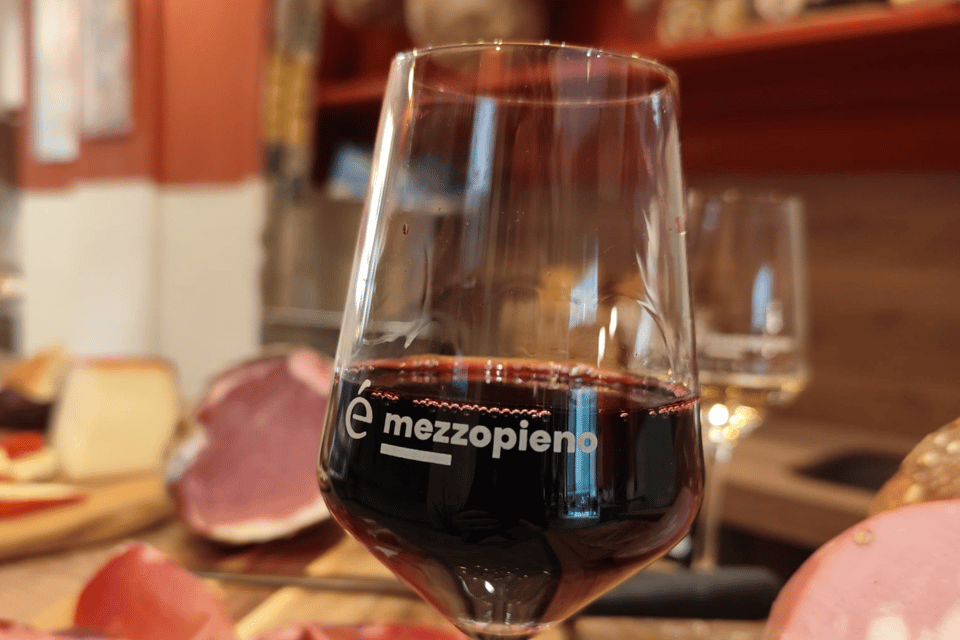
This is the part I think works especially well for non-experts. The questions are described as a short series of easy prompts, and that matters. You don’t need to know wine jargon to play.
The game runs while you’re tasting, using tablets. That timing is key. Instead of learning concepts in theory, you answer while the wine and bites are right there, so your brain links the cue to the sensation.
In practice, the Sommelier Game makes you pay attention to things like:
- Sight cues (color intensity, clarity)
- Smell cues (fruit vs earthy notes)
- Taste cues (how flavors change after each bite)
The reviews point out that the game helps people identify wine properties more accurately. One person even described it as getting them to notice different aspects of the wines so they can figure out what they like more than others. That’s the value: you leave with a method, not just memories.
Guided tastings: who’s talking, and what you’ll get from the pairing notes
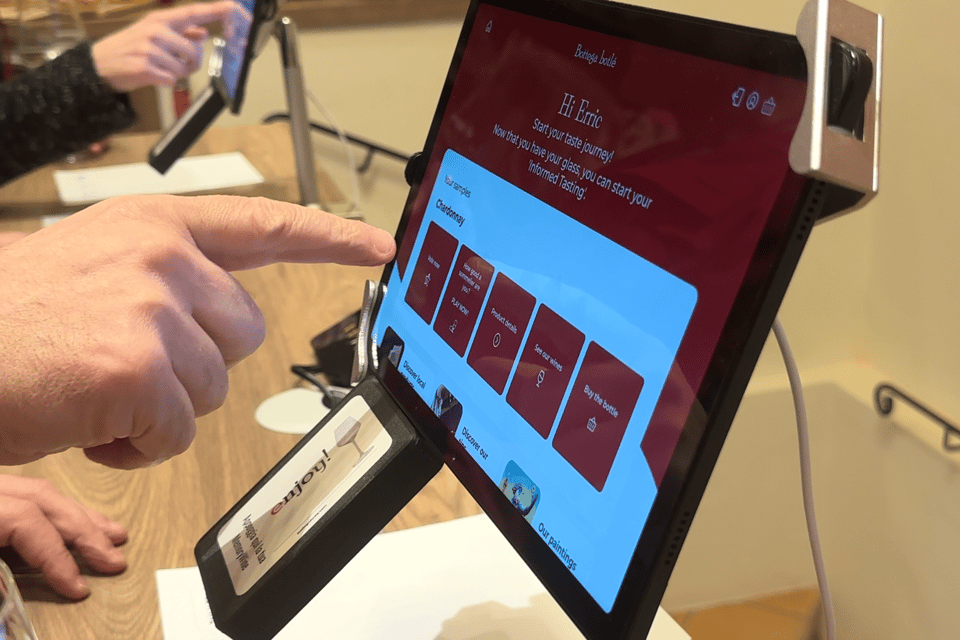
You’ll be guided by an expert sommelier and a taste artisan guide, with language support in Italian and English. Multiple guides show up across the experience descriptions, including Massimo, Ixchel, Danilo, and Claudio. In other words, you can expect a real human behind the pours.
What you’re really paying for here is translation: taking something complex (Emilia-Romagna wines and traditional products) and explaining how they interact. The best part of the guidance is pairing logic. You’re not just told what’s on the plate—you’re told what the pairing is doing to the wine.
That pairing explanation is what makes this more useful than a standard bar flight. It gives you a playbook for ordering wine later.
Where it fits in your Bologna day (and how long to plan)
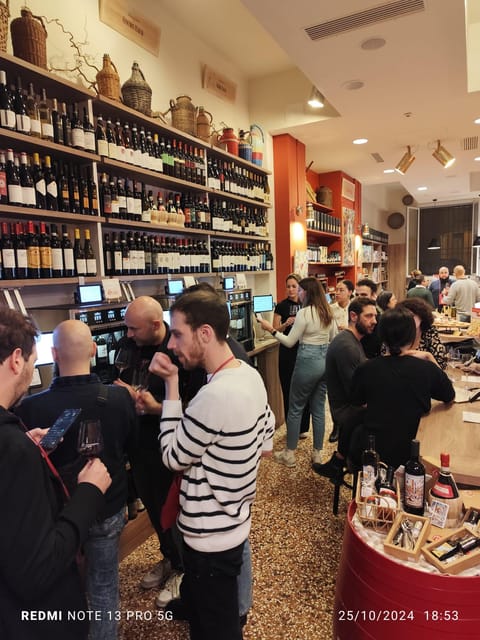
The session is offered as a 1-day activity, with starting times you can check. Reviews describe the experience as lasting around 90 minutes.
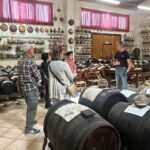
One helpful detail: because it takes place in a wine bar atmosphere, you’ll likely feel a bit of buzz during busier times. If you’re the type who wants maximum privacy, consider choosing a quieter time slot.
Also, plan your meal timing. One strong tip from the experience style: don’t eat a full lunch beforehand. You’ll want room for prosciutto, mortadella, Parmigiano, balsamic, oils, and the extra local cheese and bites.
The oil tasting you might not expect (but should)
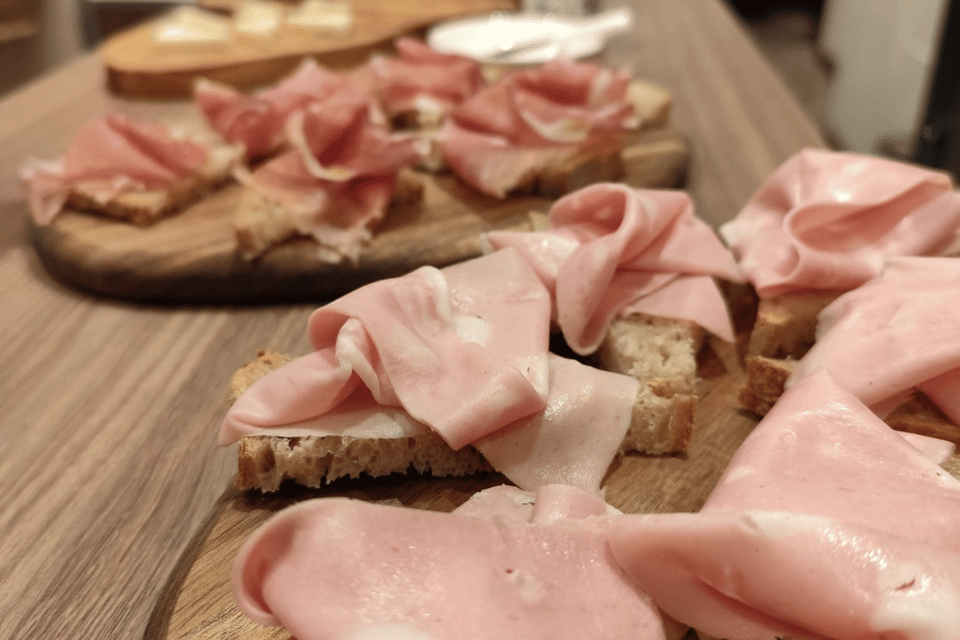
Most Bologna wine tastings focus only on wine and cheeses. Here, you’ll also taste Monocultivar Oil with specific varieties: Coratina, Peranzana, and Ogliarola.
Why this matters: oil changes texture and how flavors ride on the palate. Tasting multiple monocultivar options also reinforces that local producers work with distinct profiles, not just “generic olive oil.” It’s a smart bonus for anyone who likes food more than formality.
Price and value: what $34 buys you in real terms
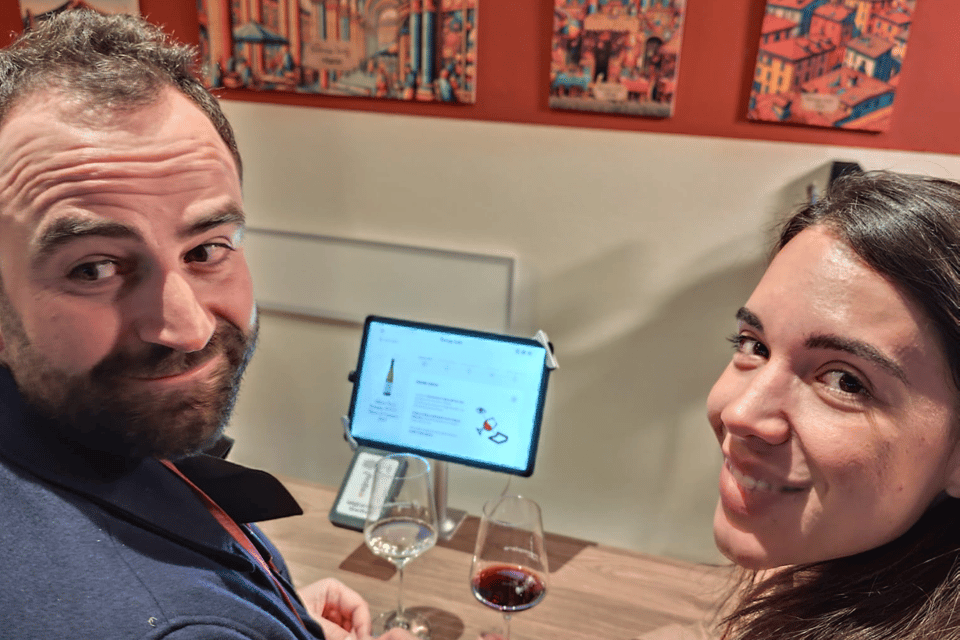
At about $34 per person, this isn’t just a cheap snack. You’re getting:
- Three wine servings (with specific measurements listed for each)
- A full set of local food tastings (prosciutto, mortadella, Parmigiano, balsamic, plus local cheese/food)
- Monocultivar oil tasting
- Interactive Sommelier Game on tablet
- A souvenir fridge magnet from the I.Art exhibition
That combination is why the price feels fair. Many tastings either give you a few drinks with small bites, or they give you food without meaningful wine instruction. Here, you get both: enough wine to compare, enough food to understand why pairings matter, and enough interactivity to make it stick.
If you’re deciding between a purely “drink and listen” tasting and this experience, I’d choose this one when you want practical learning, not passive sipping.
Who should book this Bologna tasting (and who might not)
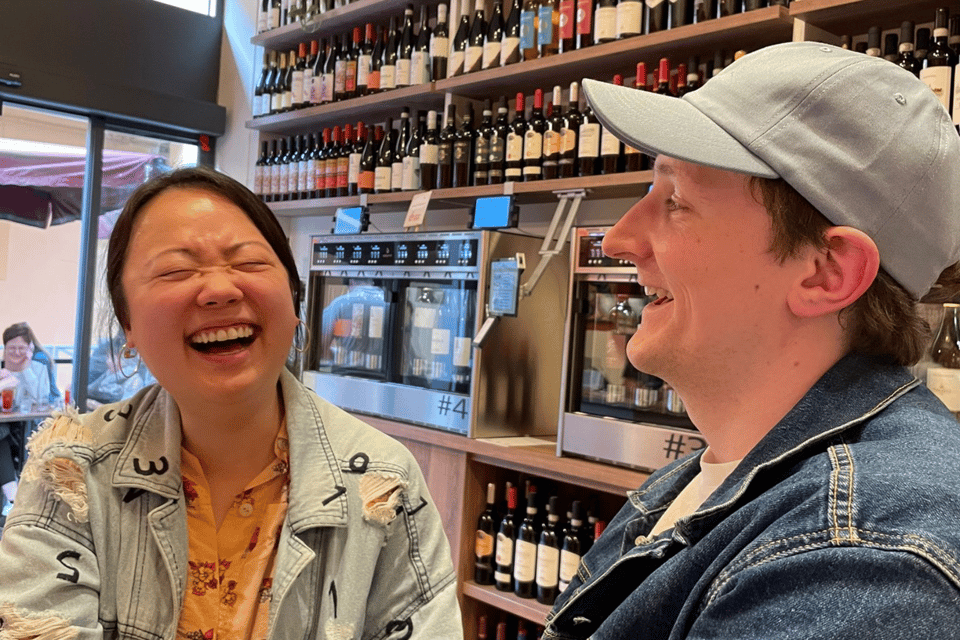
This experience is a great match if:
- You like learning while you taste, not after
- You want a fun structure (the game keeps energy up)
- You’re visiting Bologna for food and want local products front and center
- You’re traveling as a couple or even solo and like small-group interactions
It may be less ideal if:
- You need a perfectly quiet, private tasting room every time
- You prefer long, slow wine speeches and don’t care about quizzes or pairings
Good news: even solo visitors tend to find it welcoming, since the format invites questions and participation.
Should you book the Bologna food and wine tasting with Sommelier Game?
I think you should book it if you want a short, high-impact Bologna experience that mixes local flavors with real pairing education. The standout strengths—the Sommelier Game, the clear wine lineup, and the classic Bologna/Emilia-Romagna foods—make it more memorable than a standard tasting menu.
Go ahead and book if you’re planning a food-forward day and want to come away with a pairing sense you can use later. Skip it only if privacy matters most to you, or if you already know you dislike interactive formats.
FAQ
How many wines are included?
You’ll taste three wines: Pignoletto Fermo (70 ml), Sangiovese In Purezza (130 ml), and Sangiovese Appassito/Appassimento (70 ml).
What food tastings are part of the experience?
The tasting includes prosciutto crudo, mortadella Bologna, Parmigiano Reggiano (12/24 months), Aceto Balsamico IGP di Modena, plus local cheese and food.
Is there an interactive component?
Yes. You’ll play the Sommelier Game on a tablet during the tastings.
Does the experience include oil tasting?
Yes. You’ll taste Monocultivar Oil in three varieties: Coratina, Peranzana, and Ogliarola.
Can I cancel and get a refund?
Yes. Free cancellation is available up to 24 hours in advance for a full refund.
Can I reserve without paying today?
Yes. Reserve now & pay later is available, so you can hold your spot without paying immediately.