REVIEW · FERRARI & LAMBORGHINI MOTOR VALLEY TOURS
Bologna: Ferruccio Lamborghini Museum Entry Ticket
Book on GetYourGuide →Operated by Arcadia Tour Operator e DMC · Bookable on GetYourGuide
Car culture meets industrial design in Bologna.
The Ferruccio Lamborghini Museum ticket is one of the smoothest ways to see the brand through Ferruccio’s eyes. I love the way the exhibits connect 1947 to the Miura era, and I also like that the ticket comes with a reserved time slot so you can plan your day. One drawback to consider: this is a museum experience, not a guided road show, so if you’re hunting for a very specific car lineup detail, you may want to double-check what you expect to see before you go.
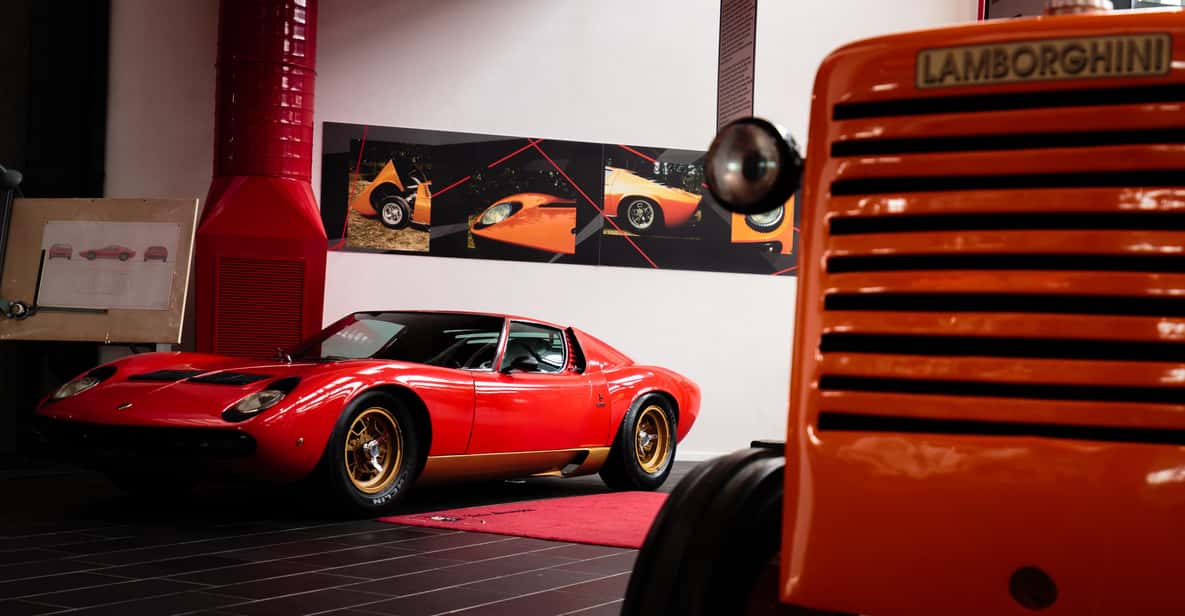
Inside, you’ll walk through a large 9,000-square-meter space where early tractors sit beside later sports cars, and even a few unusual machines. You’ll also get a close look at Ferruccio’s personal car collection and a recreated office scene that shows what life looked like inside the Lamborghini world during the economic boom. The collection is impressive, but it’s still curated—so a hardcore fan might wish for a couple of extra items based on what shows up in the lineup.
In This Review
- Key things to notice before you book
- Your timed ticket to the Ferruccio Lamborghini Museum in Bologna
- The 9,000-square-meter layout: how to read the museum
- From the Carioca Tractor (1947) to the P400 Miura era
- The legendary vehicles: Miura SV, Espada, and the famous gull-wing moment
- Ferruccio’s personal car collection and why it feels different
- The unusual machines: helicopter prototype and Fast 45 Diablo boat
- Display details, lineup quirks, and what to watch for
- Practical value in Bologna: time, pace, and best fit
- Price check: does $18 feel fair?
- Should you book the Ferruccio Lamborghini Museum ticket?
- FAQ
- How do I enter with the ticket?
- Is there a reserved entry time?
- How long is the ticket valid?
- What can I see at the Ferruccio Lamborghini Museum?
- What is the museum size?
- Is the museum wheelchair accessible?
- Are unaccompanied minors allowed?
- How much does it cost?
- Can I get a refund if my plans change?
Key things to notice before you book
- Timed entry: you present your voucher at your selected timeslot, which helps you avoid guesswork.
- 1947 to the Miura era: the museum’s story line runs from the Carioca tractor to key Lamborghini vehicles like the P400 Miura.
- Cars plus prototypes: beyond the famous models, you’ll see items like a helicopter prototype and a Fast 45 Diablo Class 1 offshore boat.
- Personal collection focus: the museum includes Ferruccio’s own cars, not just factory displays.
- Office reconstruction: you can stand in a recreated Ferruccio office from the Lamborghini Tractors company period.
- Worth it for car design nerds: one review specifically flagged display layout and missing-piece issues as a fan detail to watch for.
Your timed ticket to the Ferruccio Lamborghini Museum in Bologna
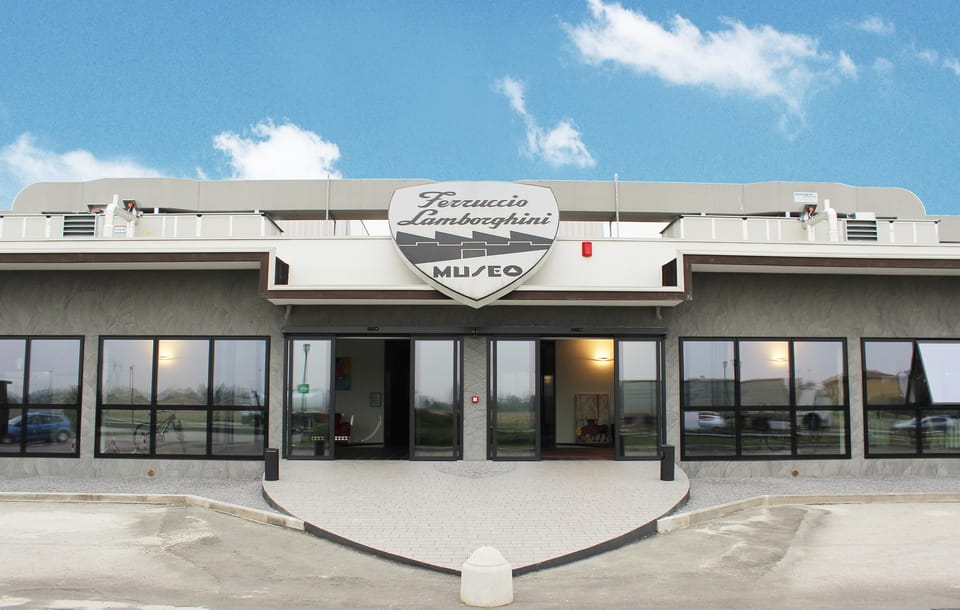
This is a straight-up entry ticket with a reserved time slot. You’re not signing up for a bus ride or a roaming tour of town. Instead, you’re buying controlled access to a single place: the Ferruccio Lamborghini Museum in Bologna (run by Arcadia Tour Operator e DMC).
At $18 per person, it’s priced like a serious museum visit rather than a quick photo stop. And because the ticket includes reserved time entry, you can fold it into your Bologna schedule with less stress. You’ll present your voucher at the museum at your selected timeslot, then go in and do the museum at your own pace.
Your ticket is valid for one day, and start times depend on availability. That matters because a timed slot changes the feel of the visit—you’re less likely to show up and have to wait around until you can enter.
You can also read our reviews of more tours and experiences in Bologna



The 9,000-square-meter layout: how to read the museum
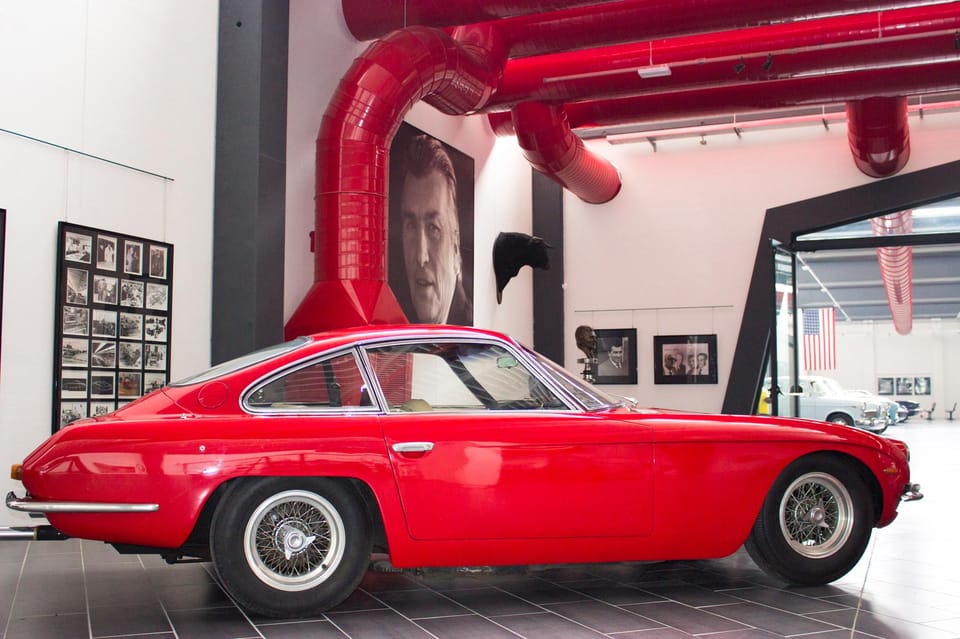
The museum is large: 9,000 square meters. That size is a big deal. It means you can actually absorb the progression of Lamborghini’s work instead of speed-walking past everything in 30 minutes.
What you’ll notice as you move through the space is the museum’s strategy: it’s organized around key moments and key machines. The exhibits span the brand’s evolution across decades, and the car designs are treated like more than just metal. They’re shown as part of a creative and entrepreneurial story.
Also, don’t treat this as a one-room highlight reel. Even if you’re mostly there for supercars, you’ll get value from the surrounding context: early tractor history, later sports-car breakthroughs, and the personal side of Ferruccio himself.
From the Carioca Tractor (1947) to the P400 Miura era
If you only know Lamborghini from headlines and poster cars, start here. The museum builds its credibility by beginning with the Carioca tractor from 1947—the launch point for the Lamborghini name. You’ll then move forward through important vehicles from the 1950s, 1960s, and 1970s, including the P400 Miura era.
This is where the museum becomes more than a collection. The story explains that Lamborghini’s identity wasn’t created overnight through one famous model. It grew from engineering decisions, experimentation, and a company mindset that could pivot between categories—from tractors to sports cars.
For your planning: expect this early section to set the tone. If you’re the type who loves seeing how ideas evolve, you’ll likely spend more time here than you think.
The legendary vehicles: Miura SV, Espada, and the famous gull-wing moment
The museum doesn’t just mention famous Lamborghini models—it displays them. Two standouts in the information you’ll see include the Miura SV and the Espada.
The Espada is especially fun because of the gull-wing doors. The museum connects those doors to pop culture by noting they inspired the car used in Back to the Future. Even if you’re visiting for car history, that kind of link helps you place the design in a wider world of imagination.
Here’s a practical note: give yourself time to slow down near the vehicles that have a strong visual signature. The Miura SV and Espada are the kinds of cars where angles matter. If you walk fast, you’ll miss why they look the way they do.
Ferruccio’s personal car collection and why it feels different
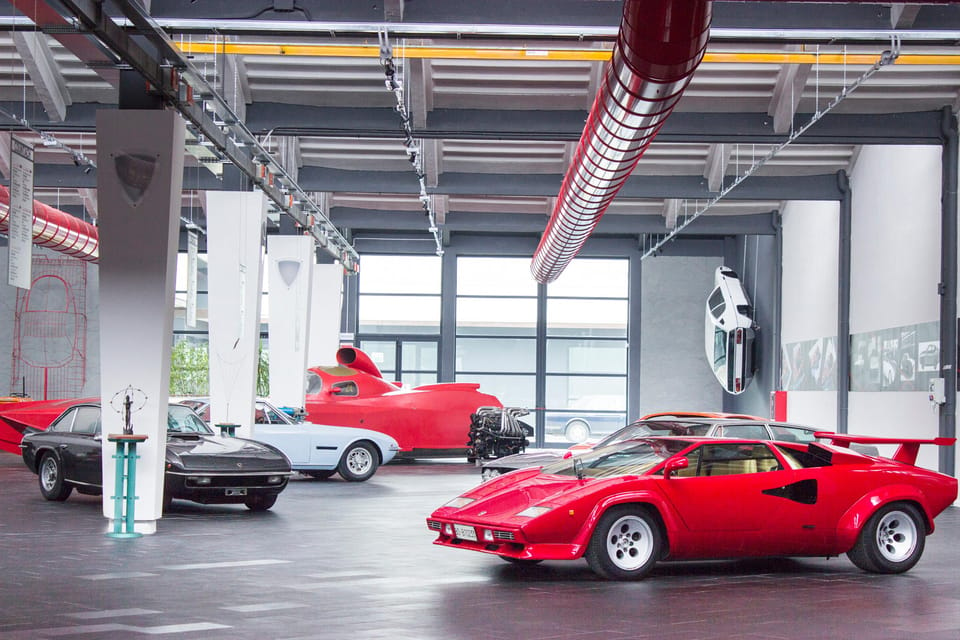
One reason this museum visit is memorable is that it includes Ferruccio’s personal car collection, not only company highlights. That personal framing changes the vibe from generic brand museum to something closer to a creator’s workspace.
You’ll also see context around Ferruccio as a charismatic entrepreneur and innovative designer. The exhibits connect his creations with the people and the company environment that shaped the work, including the period of growth during the late 1950s and 1960s.
The museum goes one step further with an office reconstruction tied to the Lamborghini Tractors company. Standing in a recreated office is a smart move in any museum because it turns history from flat dates into everyday life—paperwork, decisions, and the human scale behind the machinery.
You can also read our reviews of more museum experiences in Bologna




The unusual machines: helicopter prototype and Fast 45 Diablo boat
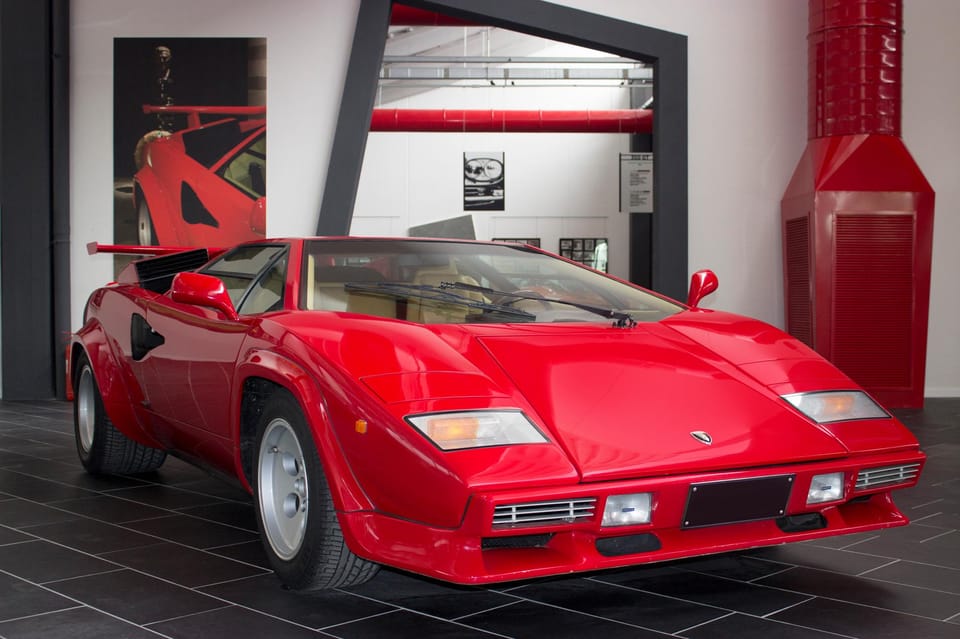
Lamborghini is known for roads and racing. Here, you’ll also see proof that the imagination didn’t stay locked to cars.
Two items called out in the museum’s offering are a helicopter prototype and the Fast 45 Diablo Class 1 offshore boat. These aren’t the usual “check the box” museum objects. They show experimentation across engineering challenges, and they broaden how you think about Ferruccio’s creative reach.
If you’re visiting with someone who’s less interested in classic cars but still likes design and engineering, these are the exhibits that can bridge the gap. Cars will likely be the main draw, but these add variety and keep the visit from feeling one-note.
Display details, lineup quirks, and what to watch for
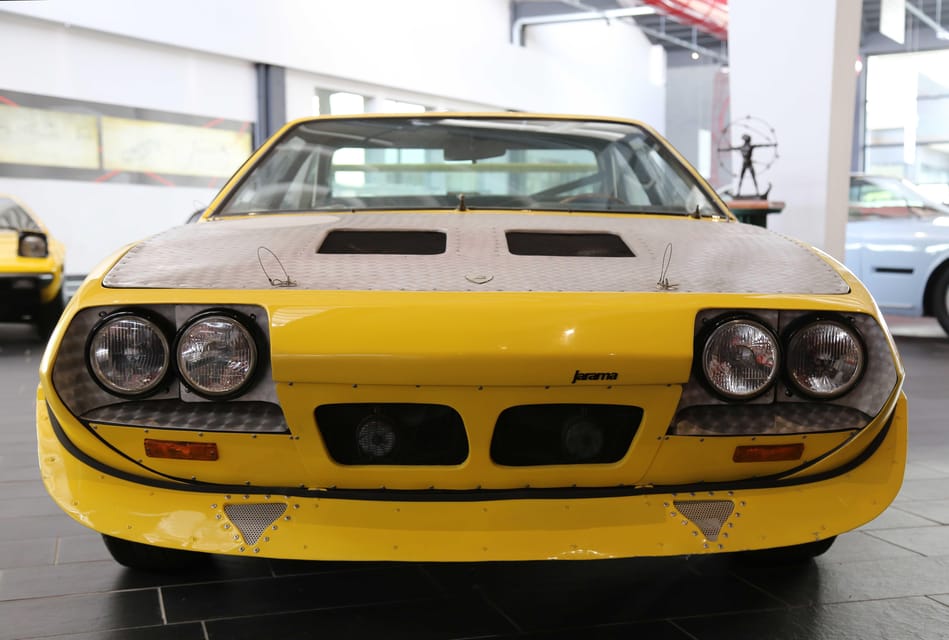
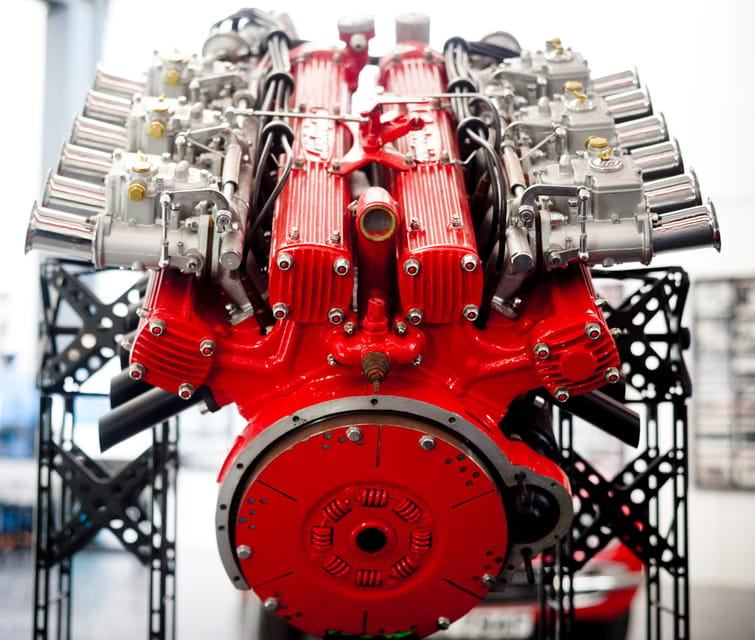
I love museums that get the big ideas right, but I also value honesty about expectations. One review highlighted a fan-style concern: display completeness and layout details—specifically mentioning an LM002 placement alongside an LM001 prototype, plus the idea of an F1 engine being displayed.
I’m not saying those items are missing for every visitor or that the whole collection is incomplete. But the takeaway is useful for you: if you’re a technical superfan with a very exact wishlist, go in knowing that museum exhibits are curated and may not match every collector’s dream arrangement.
For most people, though, the overall experience is still strong: the museum clearly prioritizes key Lamborghini milestones and notable personal/prototype items, not just random cars.
Practical value in Bologna: time, pace, and best fit
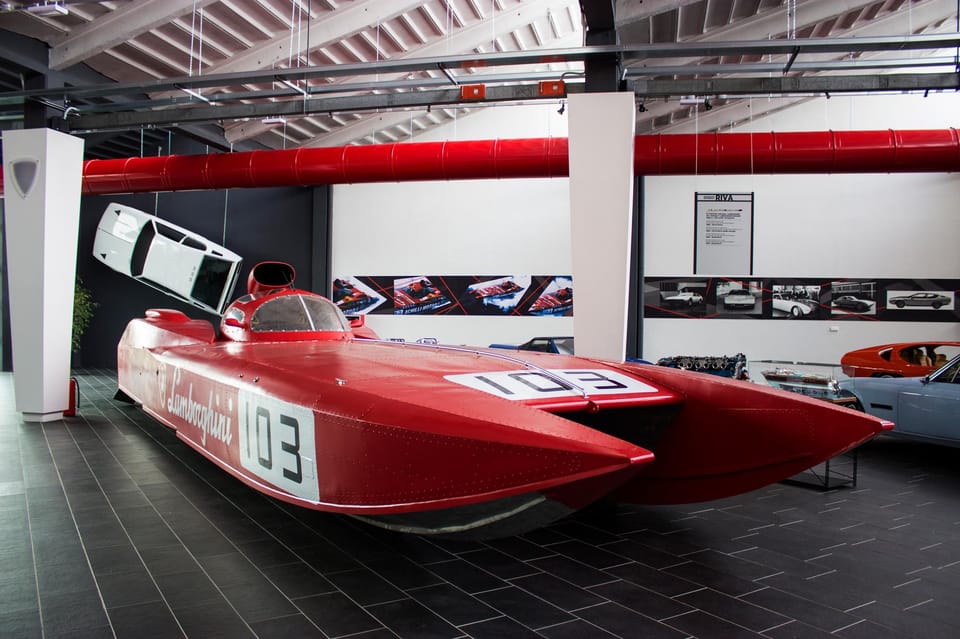
Because this is reserved time entry, the main logistics question becomes simple: pick a timeslot that matches your energy level. The museum is big enough that you’ll feel the difference between a relaxed visit and a rushed one.
Duration is presented as valid for one day, so plan for a meaningful chunk of your day. Bologna has plenty to do, but this museum earns time because it tells a story from early tractor roots to iconic Lamborghini road machines.
This ticket fits best if you:
- are a Lamborghini fan or car design fan
- like seeing how brands evolve across decades
- enjoy industrial history, not just the “greatest hits”
- want a museum stop that’s meaningful even if you’re not chasing racing stats
It’s also wheelchair accessible. And one important boundary: unaccompanied minors are not allowed, so plan accordingly if you’re traveling with teens.
Price check: does $18 feel fair?
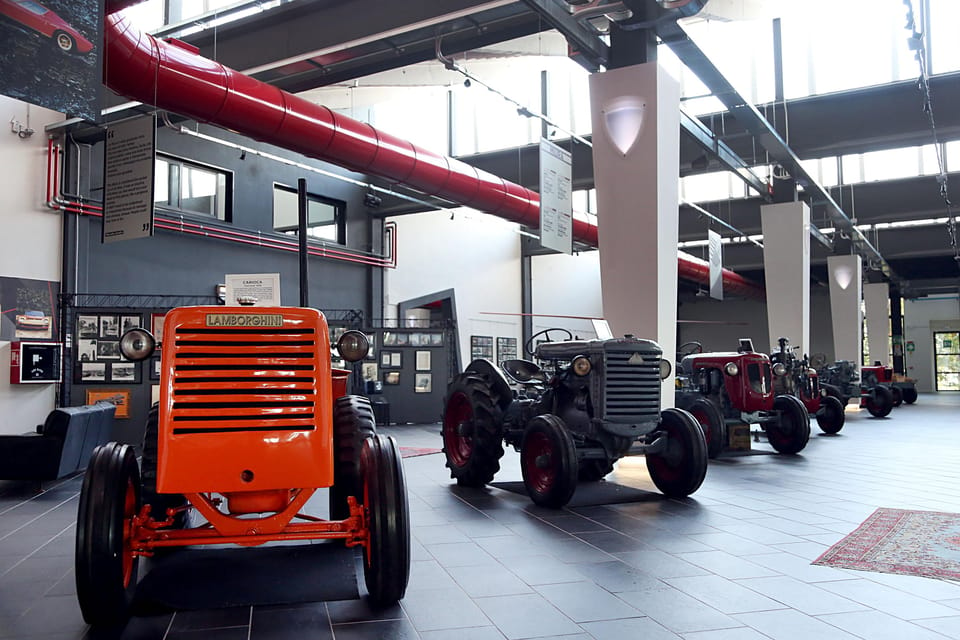
For $18 per person, you’re paying for entry to a large museum space (9,000 square meters) that covers multiple decades, includes Ferruccio’s personal collection, and adds prototypes like a helicopter and a boat. That’s more than a quick showroom visit.
The reserved time entry is also part of the value. It reduces friction, and it helps you avoid wasting time when you’re in Bologna with limited hours. In plain terms: if you’re already planning a museum day, this ticket price is easier to justify because the content density is high.
If your visit is strictly 20 minutes of photos and you don’t care about the evolution story, then $18 won’t feel like much. But if you want to understand the brand through Ferruccio’s work, it becomes a solid deal.
Should you book the Ferruccio Lamborghini Museum ticket?
Yes—if you want an organized, high-content museum visit centered on Ferruccio Lamborghini’s work. The timed entry helps, the museum’s structure connects the 1947 Carioca tractor story to later icons like the Miura era, and the personal collection plus the office reconstruction make it more human than a standard car display.
If you’re a hardcore collector expecting a very specific lineup detail (like the exact placement of certain prototypes or additional engines), keep your expectations flexible. But for most people, the mix of legendary cars, off-road/industrial roots, and unusual prototypes (helicopter and boat) makes this one of the more distinctive “car museums” in Italy.
FAQ
How do I enter with the ticket?
Present your voucher at the museum at your selected timeslot.
Is there a reserved entry time?
Yes. The ticket includes reserved time entry.
How long is the ticket valid?
It’s valid for one day.
What can I see at the Ferruccio Lamborghini Museum?
You can see Lamborghini vehicles from the early Carioca tractor era onward, Ferruccio’s personal car collection (including the Miura SV and the Espada), plus special items like a helicopter prototype and the Fast 45 Diablo Class 1 offshore boat. There’s also a reconstruction of Ferruccio’s office at the Lamborghini Tractors company.
What is the museum size?
The museum covers 9,000 square meters.
Is the museum wheelchair accessible?
Yes, it is wheelchair accessible.
Are unaccompanied minors allowed?
No, unaccompanied minors are not allowed.
How much does it cost?
The price is $18 per person.
Can I get a refund if my plans change?
Free cancellation is offered up to 2 days in advance for a full refund.